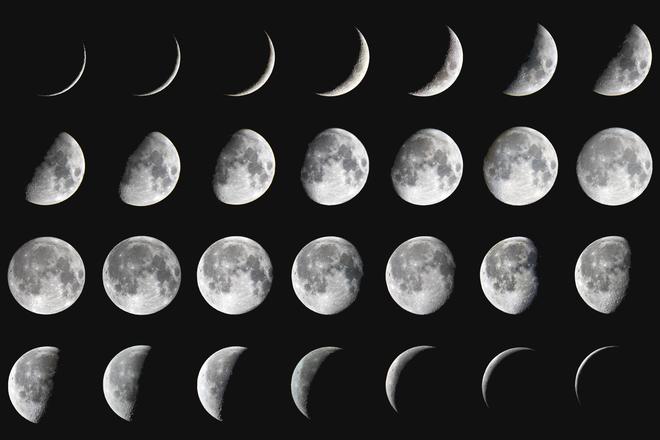
下弦月

Search documents
今晚8点28分,抬头看!
Xin Lang Cai Jing· 2026-02-24 12:07
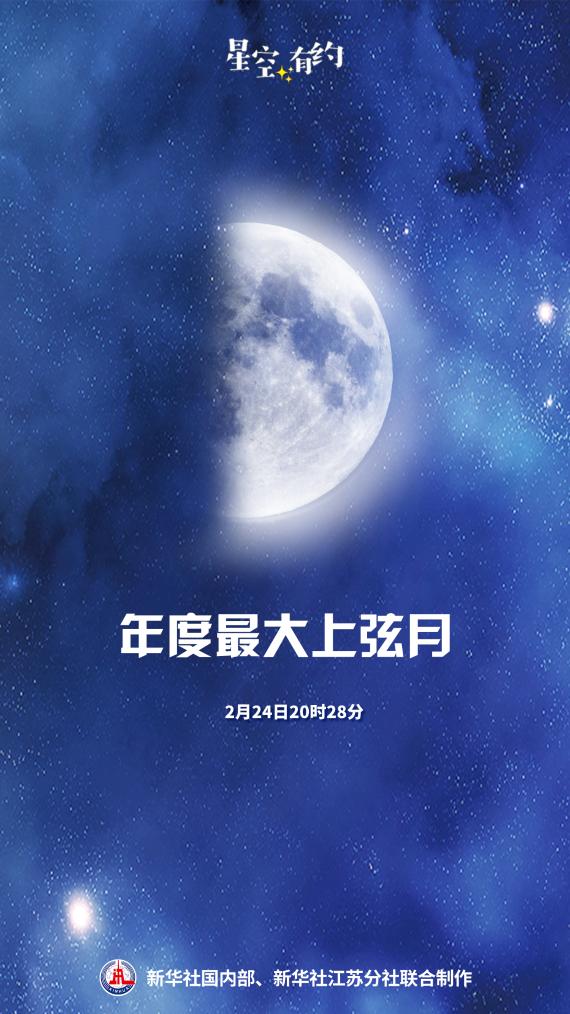
Group 1 - The largest first quarter moon of the year will occur at 20:28 today, with the moon positioned near its perigee, approximately 370,000 kilometers from Earth [1] - This "half-covered" first quarter moon will be a spectacular celestial event that can be enjoyed with the naked eye, without the need for professional equipment [1] - The first quarter moon typically appears around the 7th, 8th, or 9th day of the lunar month, rising around noon and setting before midnight, making it more suitable for public viewing compared to the last quarter moon [8] Group 2 - In 2026, there will be 12 occurrences of the first quarter moon and 13 occurrences of the last quarter moon [11] - The reason this first quarter moon on February 24 is termed the "annual largest first quarter moon" is due to its occurrence near the moon's perigee, making it appear larger and brighter than other first quarter moons [11] - Interestingly, the smallest last quarter moon of the year will appear 15 days later, as the moon takes an average of about 14 days to travel from perigee to apogee [14]


24日将迎年度最大上弦月 公众仅凭肉眼即可欣赏
Xin Lang Cai Jing· 2026-02-22 08:41
Core Viewpoint - The article discusses the upcoming largest first quarter moon of the year, which will occur on February 24, 2026, when the moon is at its perigee, approximately 370,000 kilometers from Earth, making it appear larger and brighter than usual [1]. Summary by Relevant Sections - **Moon Phases and Visibility** - The first quarter moon will be visible to the public without any special equipment, allowing for easy observation [1]. - The moon's phases change due to the relative positions of the sun, Earth, and moon, leading to the phenomenon of lunar waxing and waning [1]. - The first quarter moon typically appears around the 7th to 9th day of the lunar month, rising around noon and setting around midnight, making it more suitable for public viewing compared to the last quarter moon [1]. - **Significance of the Upcoming First Quarter Moon** - The February 24 first quarter moon is termed the "largest first quarter moon of the year" because it coincides with the moon's perigee, where it is closest to Earth [1]. - The moon's orbit is elliptical, causing the distance to vary, with the farthest point exceeding 400,000 kilometers and the closest point being less than 360,000 kilometers [1]. - The proximity of the moon during this phase results in a larger and brighter appearance compared to other first quarter moons [1]. - **Future Lunar Events** - Following the largest first quarter moon, the smallest last quarter moon of the year will occur 15 days later [1]. - The average time for the moon to transition from perigee to apogee is approximately 14 days, with the average interval between first and last quarter moons being about 15 days [1]. - This timing often results in the largest first quarter moon and the smallest last quarter moon appearing in the same or adjacent lunar months [1].
星空有约丨24日将迎年度最大上弦月
Xin Lang Cai Jing· 2026-02-22 08:40
Core Points - The largest first quarter moon of the year will occur on February 24 at 20:28, with the moon positioned near its perigee, approximately 370,000 kilometers from Earth, making it a spectacular celestial event visible to the naked eye [1][11][13] Group 1 - The first quarter moon appears when the relative positions of the sun, Earth, and moon form a right angle, with the moon illuminated on its western hemisphere, resembling the letter "D" [6][8] - This moon phase typically occurs around the 7th, 8th, or 9th day of the lunar month, rising around noon and setting before midnight, making it more suitable for public viewing compared to the last quarter moon [10] - The reason this first quarter moon is termed the "largest of the year" is due to its occurrence near the moon's perigee, resulting in a larger and brighter appearance compared to other first quarter moons [11][13] Group 2 - The average distance of the moon from Earth varies, being over 400,000 kilometers at its farthest and less than 360,000 kilometers at its closest, which affects the visual size of the moon during different phases [13] - The largest first quarter moon and the smallest last quarter moon typically appear in the same or adjacent lunar months due to the average 14-day travel time of the moon from perigee to apogee and the 15-day interval between the first and last quarter moons [14][16]
年度最小上弦月和最大下弦月为啥总“挨着来”?
Xin Hua She· 2025-08-15 10:02
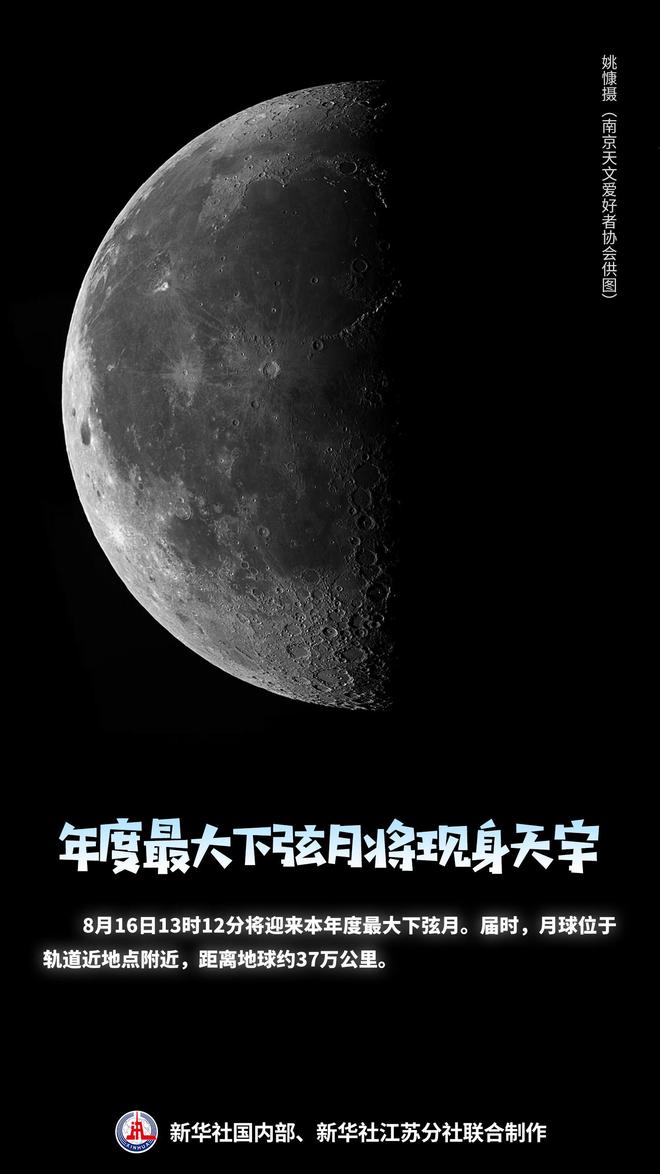
Core Viewpoint - The largest waning crescent moon of the year will occur on August 16, with the moon positioned near its perigee, approximately 370,000 kilometers from Earth [1][4]. Group 1: Moon Phases - The waning crescent moon appears as a half-moon shape and will be visible in the night sky after midnight on August 16, resembling a reversed "D" [1][7]. - The phenomenon of moon phases, including the waning crescent, is influenced by the relative positions of the sun, Earth, and moon [4][7]. Group 2: Size Comparison - The upcoming waning crescent moon is considered the "largest of the year" because it is near the perigee, making it appear larger than the smallest waning crescent moon of the year, which is about 9.2% smaller in visual diameter [7][11]. - The moon's elliptical orbit causes variations in distance from Earth, leading to the largest and smallest appearances of the waning crescent moon [7][11]. Group 3: Observation Tips - To observe the largest waning crescent moon, it is recommended to wake up early before dawn, as it rises in the late night and is best viewed before sunrise [14].
呈“D”形!年度最小上弦月8月1日现身夜空
Xin Hua She· 2025-07-30 09:26
Core Viewpoint - The article discusses the occurrence of the smallest first quarter moon of the year on August 1, 2023, and provides insights into lunar phases and their significance in astronomy and culture [1][2]. Group 1: Lunar Phases - The first quarter moon appears between the 7th and 10th day of the lunar month, visible in the southwestern sky with a "D" shape [2]. - The article distinguishes between the first quarter moon and the last quarter moon, the latter appearing between the 22nd and 24th day of the lunar month, visible in the eastern sky with an inverted "D" shape [2]. Group 2: Moon's Distance and Characteristics - The moon's orbit around the Earth is elliptical, with distances varying from over 400,000 kilometers at apogee to less than 360,000 kilometers at perigee, a difference of about 50,000 kilometers [4]. - The smallest first quarter moon occurs when the moon is at its farthest point from Earth, while the largest first quarter moon occurs at its closest point [4]. Group 3: Future Lunar Events - In 2025, there will be 13 occurrences of the first quarter moon and 12 occurrences of the last quarter moon [2]. - The largest first quarter moon of the year will occur on January 7, 2025, while the smallest last quarter moon will appear on January 22, 2025 [7].