
不动产资产管理

Search documents
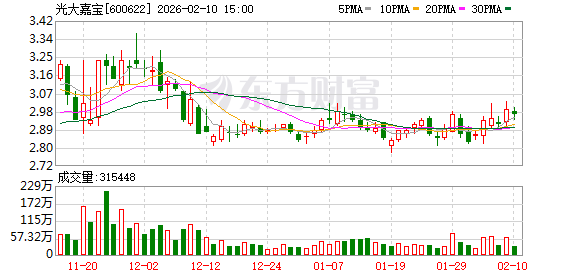
光大嘉宝:坚定以不动产资产管理为核心主业
Zheng Quan Ri Bao· 2026-02-10 13:37
Core Viewpoint - The company emphasizes its commitment to real estate asset management as its core business, highlighting its established resources and competitive advantages in the industry [2] Group 1: Company Strengths - The company has developed a professional talent team, a comprehensive business system, and a strong shareholder background and brand image over several years of operation [2] - It has built a wide industry resource network in the real estate asset management sector, accumulating rich customer resources [2] - The company possesses a complete asset management business system, demonstrating the capability for a full industry chain operation including fundraising, investment, management, and exit [2]


深圳控股(00604)以2.74亿元出售晶华电子70%股权 进一步集中资源发展核心业务
智通财经网· 2026-02-06 13:09
Core Viewpoint - Shenzhen Holdings (00604) announced the conditional sale of a 70% stake in Crystal Electronics for a total cash consideration of RMB 274 million, aligning with the company's strategic transformation towards becoming a real estate asset management and comprehensive operation service provider [1]. Group 1: Transaction Details - The transaction involves Shenzhen Holdings' wholly-owned subsidiary, Shen Ye Peng Ji, selling its 70% stake in Crystal Electronics to Shahe Industry and Jinghua Electronics [1]. - Upon completion of the transaction, Shenzhen Holdings will no longer hold any equity in Crystal Electronics, which will cease to be a subsidiary of the company [1]. Group 2: Strategic Alignment - The sale is part of Shenzhen Holdings' strategy to focus on real estate asset management and operational services, as Crystal Electronics operates in the advanced manufacturing sector, specifically in IoT smart display controllers and LCD devices, which is less aligned with the company's future focus [1]. - The company has been actively exploring ways to realize the intrinsic value of Crystal Electronics through capital markets, and this transaction is seen as beneficial for the long-term development strategy of Crystal Electronics [1]. - The transaction is expected to help release market value and further optimize the overall business structure of Shenzhen Holdings, allowing the company to concentrate resources on its core business and accelerate its strategic shift towards a light asset and service-oriented business model [1].
广州市不动产资产管理服务平台正式投入运营
Zhong Zheng Wang· 2026-01-31 07:49
Group 1 - The real estate investment and financing exchange conference held in Guangzhou aims to revitalize existing real estate assets and support new investments for high-quality urban development [1] - The establishment of the Guangzhou real estate asset management service platform and the Guangzhou real estate investment fund marks the official operation of the asset management service platform [1] - Guangzhou has achieved significant progress in real estate asset management since the introduction of measures to promote the sector, including the creation of a comprehensive asset management ecosystem [1] Group 2 - Guangzhou Urban Investment Group provides full lifecycle investment and financing services for real estate, utilizing asset securitization to revitalize existing assets and support new investments [2] - The group has developed a multi-tiered, convertible asset securitization system and plans to issue real estate asset revitalization products across three major exchanges [2] - Guangzhou Urban Investment Group aims to establish a real estate asset management hub in China, leveraging its AAA credit rating and partnerships with leading asset managers and financial institutions [2]
广州不动产S基金成立,已有超6000亿证券化资本储备
Di Yi Cai Jing Zi Xun· 2026-01-30 13:52
Core Insights - Guangzhou has implemented asset revitalization through various financial instruments such as CMBS, quasi-REITs, and public REITs, covering multiple asset types including office buildings, commercial properties, industrial parks, and highways [2][3] Group 1: Asset Management Development - The real estate investment and financing exchange conference in Guangzhou focused on strategic development for the city's real estate asset management sector, aiming to revitalize existing assets and support new investments [2] - Guangzhou's Vice Mayor, Lai Zhihong, stated that the city has established an ecosystem for real estate asset management supported by policies, asset foundations, and service platforms, enhancing its attractiveness [2] - The Guangzhou Real Estate Asset Management Service Platform was officially launched, symbolizing the commitment of Guangzhou Urban Investment Group to create the nation's first dedicated trading platform for real estate private fund share transfers [2] Group 2: Institutional Support - The Guangdong Fund Industry Association announced the establishment of a special committee for real estate private funds, led by Guangzhou Urban Development Investment Fund Management Co., with representatives from 22 top domestic and international real estate investment institutions [2] - This committee aims to provide robust support for the healthy development of Guangzhou's real estate asset management ecosystem and offer comprehensive professional services for asset revitalization [2] Group 3: Asset Securitization - Guangzhou Urban Investment Group has developed a "multi-tiered, convertible" asset securitization system and plans to issue real estate asset revitalization products on three major exchanges this year [3] - The chairman of the Urban Development Fund, Huang Jiyuan, highlighted that the city has successfully revitalized assets through various financial tools, with the Linghua Exhibition Trade Asset-Backed Special Plan being the largest, longest-term, and lowest-interest CMBS project among Guangdong's local state-owned enterprises [3] Group 4: Future Initiatives - The Guangzhou Urban Development Fund will act as the execution agency for the real estate asset service management platform, continuing to advance the development of the city's real estate asset management sector through innovative financial tools like private funds and S funds [4] - Guangzhou currently has 26 municipal-level state-owned enterprises covering 13 categories of infrastructure assets, with over 40 trillion yuan in existing infrastructure assets and a capital reserve of over 600 billion yuan for securitization [4] - The city has introduced measures to promote the development of real estate asset management, including a work plan to support the establishment of a dedicated trading platform for real estate private fund share transfers and an asset information service platform [4]
广州不动产S基金成立 已有超6000亿证券化资本储备
Di Yi Cai Jing· 2026-01-30 10:15
Core Viewpoint - Guangzhou has successfully revitalized its real estate assets through various financial instruments such as CMBS, quasi-REITs, and public REITs, covering multiple asset types including office buildings, commercial properties, industrial parks, and highways [1][2]. Group 1: Asset Management Development - The real estate investment and financing exchange conference in Guangzhou focused on strategic development for the city's real estate asset management industry, aiming to revitalize existing assets and support new investments [1]. - Guangzhou has established an ecosystem for real estate asset management supported by policies, asset foundations, and service platforms, enhancing its attractiveness [1][2]. - The Guangzhou Urban Investment Group is committed to creating the country's first "private equity fund share transfer trading platform" for real estate [1]. Group 2: Establishment of Professional Committees - The Guangdong Fund Industry Association announced the establishment of a special committee for private equity real estate funds, led by Guangzhou Urban Development Investment Fund Management Co., with representatives from 22 leading domestic and international real estate investment institutions [2]. - The establishment of this committee is expected to provide robust support for the healthy development of Guangzhou's real estate asset management ecosystem and offer comprehensive professional services for asset revitalization [2]. Group 3: Asset Securities and Financial Tools - Guangzhou Urban Investment Group has developed a "multi-level, convertible" asset securitization system and plans to issue real estate asset revitalization products on three major exchanges this year [2]. - The city has implemented measures to promote the development of real estate asset management, including the establishment of a private equity fund share transfer trading platform and an asset management service platform [3]. - Guangzhou currently has over 26 state-owned enterprises covering 13 types of infrastructure assets, with more than 40 trillion yuan in existing infrastructure assets and over 600 billion yuan in securitized capital reserves [3].
房地产:中国房企发展与转型——迈向资产管理
2026-01-12 01:40
Summary of Conference Call on Real Estate Industry and Company Transformation Industry Overview - The report focuses on the transformation of the real estate industry in China towards asset management, driven by ongoing policy changes emphasizing high-quality housing development and operational real estate business [2][4] - The industry is at a dual turning point of urbanization and financial market development, with a consensus on the need for real estate companies to explore asset management as a necessary direction [4][5] Key Insights - **Historical Context**: The transformation of real estate companies into asset management firms has been primarily driven by financial deepening over the past 40 years, particularly in Western economies, while Asian markets are still in the early stages of this transition [3][10] - **China's Position**: China is expected to see a significant shift in real estate focus from traditional development to asset management, especially during the 14th Five-Year Plan period, which is anticipated to be crucial for institutional development [4][49] - **Challenges**: The pace of transformation in China's real estate sector is slower than expected, with companies facing challenges in their ability to adapt [5][49] Financial Dynamics - The report highlights that the real estate sector's contribution to GDP has been declining, with a shift towards financial mechanisms and asset management becoming more prominent [10][11] - The debt accumulation in the real estate sector has been manageable, but fluctuations in debt levels and asset prices have historically led to economic volatility [11][12] Structural Changes - The report discusses the need for a comprehensive process of transformation, including organizational restructuring and capability enhancement, as companies move from traditional development to asset management [4][19] - The emergence of new asset types in the REITs market, such as logistics and data centers, reflects the evolving landscape of real estate investment [14][28] Comparative Analysis - **International Examples**: The report draws comparisons between the evolution of real estate companies in the U.S., Japan, and Singapore, noting that U.S. firms have successfully transitioned to asset management platforms, while Japanese firms remain more conservative and focused on domestic markets [25][39] - **East vs. West**: There are significant differences in the development stages of real estate companies between East Asian and Western markets, with East Asian firms often maintaining a mixed business model while Western firms tend to specialize [20][23] Future Outlook - The report anticipates that the future of the real estate market in China will focus on managing existing assets and enhancing the quality of new developments, with urban renewal becoming a key area of opportunity [50][51] - The balance between rental and purchase markets is expected to shift, leading to a more stable housing market and potentially higher asset prices [51][52] Risks and Considerations - The report warns of potential risks associated with the slow pace of transformation and the challenges posed by existing market structures and regulatory environments [5][49] - It emphasizes the importance of developing a robust asset management framework to navigate the complexities of the evolving real estate landscape in China [49][50]
信达地产:公司打造不动产资产管理第二增长曲线
Zheng Quan Ri Bao Wang· 2026-01-09 14:11
Core Viewpoint - The company aims to innovate its business model and actively develop distressed real estate investment, light asset, and asset management businesses to seize opportunities in industry mergers and acquisitions, enhancing its sustainable development capabilities [1] Group 1 - The company will continue to innovate its business model in response to new market conditions [1] - The focus will be on developing distressed real estate investment and light asset management [1] - The company plans to increase the scale of its light asset business and create a second growth curve in real estate asset management [1] Group 2 - The company aims to build a balanced business portfolio of both light and heavy assets [1] - The strategy is designed to enhance the company's sustainable development capabilities [1]

光大嘉宝: 光大嘉宝股份有限公司2025年半年度报告
Zheng Quan Zhi Xing· 2025-08-29 11:45
Core Viewpoint - The report indicates that Everbright Jiabao Co., Ltd. experienced a decline in revenue and net profit during the first half of 2025, primarily due to reduced sales in real estate development and ongoing challenges in the real estate market [1][2][3]. Company Overview and Financial Indicators - Company name: Everbright Jiabao Co., Ltd. [1] - Stock code: 600622 [2] - Total assets as of the end of the reporting period: RMB 21,944.82 million, a decrease of 3.41% compared to the previous year [2]. - Revenue for the first half of 2025: RMB 641.51 million, a decrease of 10.89% year-on-year [2][10]. - Net profit attributable to shareholders: -RMB 373.03 million, compared to -RMB 327.59 million in the same period last year [2][11]. Industry and Business Analysis - The overall economic environment in China remains stable, with GDP growth of 5.3% in the first half of 2025, but the real estate sector continues to face challenges, including a decline in investment and sales [3][4]. - The real estate development investment decreased by 11.2%, and new residential sales area dropped by 3.5% [3]. - The property management sector is seeing a trend towards consolidation, with the top 20 companies expanding their managed areas by 28% year-on-year [4]. Operational Performance - The company focused on enhancing its real estate asset management capabilities, emphasizing light-asset models such as entrusted management and professional consulting [5][6]. - The company launched several projects, including commercial and residential developments in major cities like Beijing and Guangzhou [5][6]. - The company reported a net cash flow from operating activities of RMB 131.37 million, a decrease of 17.40% compared to the previous year [2][10]. Financial Performance and Changes - The company’s operating costs decreased by 2.61% to RMB 382.30 million, primarily due to reduced costs associated with lower sales [10]. - Financial expenses decreased by 13.98% to RMB 214.38 million, attributed to lower interest expenses [10]. - The company recorded an increase in tax and additional charges by 128.49% to RMB 56.73 million, mainly due to adjustments in land value-added tax [10][11]. Risk Management and Future Outlook - The company is actively managing risks associated with market fluctuations and is focused on maintaining liquidity through various financing channels [6][7]. - The company aims to leverage its established brand reputation and extensive industry network to navigate the ongoing transformation in the real estate sector [8][9].
新加坡凯德投资正考虑向香港上市公司提供救助资金
智通财经网· 2025-08-22 07:57
Core Viewpoint - CapitaLand Investment is considering providing financial support to Hong Kong-listed companies due to low capital inflow into Hong Kong and mainland China, anticipating that these companies will benefit when the Hong Kong real estate market recovers [1] Group 1: Company Overview - CapitaLand Investment is a real estate asset management company headquartered in Singapore, listed in Singapore since 2021 [1] - As of August 13 this year, CapitaLand Investment's fund assets under management (FUM) amount to 117 billion SGD [1] - The company manages a diversified portfolio of real estate asset classes, including shopping malls, office buildings, hospitality, industrial properties, logistics parks, health facilities, self-storage, data centers, private credit, and special opportunities [1] Group 2: Market Insights - The CEO of CapitaLand Investment, Lee Chee Koon, mentioned that there are many "interesting" assets in the Hong Kong market, such as student accommodations, data centers, and offices that can be redeveloped into hotels [1]