业绩雷

Search documents
祥源系爆雷交建股份70亿资产有无雷区 警惕关联应收款
Xin Lang Zheng Quan· 2025-12-12 09:29
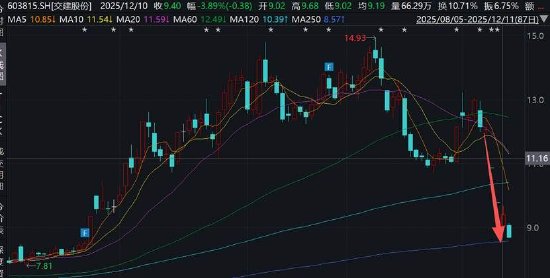
Core Viewpoint - The stock price of Jiaojian Co., a subsidiary of Xiangyuan Group, has been significantly impacted due to the financial troubles of its parent company, Xiangyuan Holdings, which has defaulted on financial products exceeding 10 billion yuan [1][2][9]. Group 1: Financial Impact and Stock Performance - Jiaojian Co. experienced a nearly 30% drop in stock price, while other subsidiaries like Haichang Ocean Park and Xiangyuan Cultural Tourism also saw declines of over 15% and 10% respectively [2][11]. - The market's negative reaction raises questions about whether the clarifications issued by the companies can effectively isolate the risks stemming from the parent company [2][4]. Group 2: Related Party Transactions and Asset Risks - Jiaojian Co. has significant related party transactions with its controlling shareholder, accumulating over 9 billion yuan in receivables from these transactions, which constitutes 13% of its total receivables and contract assets [6][7]. - The company’s receivables and contract assets have increased from 3.2 billion yuan in 2020 to 6.9 billion yuan, representing 68% of total assets as of the latest quarterly report [6][12]. Group 3: Bad Debt Provisions and Financial Health - Jiaojian Co. has a significantly lower bad debt provision for related party receivables (1.27%) compared to external receivables (6.83%), raising concerns about the adequacy of its provisions amid the parent company's financial crisis [13][17]. - The company reported a net profit of 137 million yuan for the first three quarters of the year, a 36.4% increase year-on-year, but faces potential risks of increased bad debt provisions in 2025 [13][15]. Group 4: Cash Flow and Debt Situation - Jiaojian Co. has been experiencing negative operating cash flow, with a trend of increasing cash outflows [15][17]. - The company’s total debt to total assets ratio is 22.43%, and interest expenses account for 41.35% of net profit, indicating a high burden of interest payments on its financial performance [17][18].