东亚竹木器假说

Search documents
勾勒古人类生活图景
Ren Min Ri Bao Hai Wai Ban· 2025-07-11 22:05
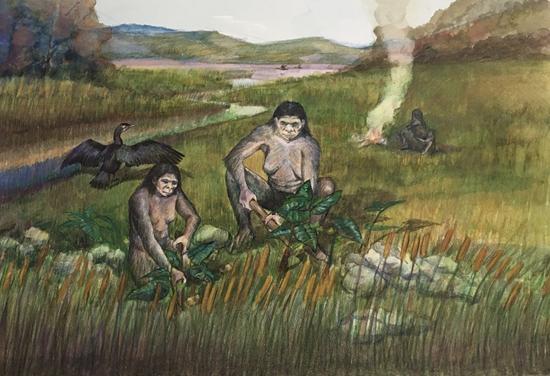
Core Insights - The Gantangqing site in Yunnan, dating back approximately 300,000 years, has yielded significant archaeological findings, including 35 well-preserved wooden tools, which are among the earliest known in East Asia and rare globally for the Paleolithic era [3][12][13] Group 1: Archaeological Findings - The site has produced nearly 1,000 wooden materials, with 35 identified as artificially processed wooden tools, primarily made from pine species, indicating a preference for coniferous materials by ancient humans [6][12] - The wooden tools exhibit diverse forms, with 32 showing clear signs of human modification, including pointed ends suitable for digging, and some designed for two-handed use [8][12] - Accompanying the wooden tools, a variety of stone artifacts, including small scrapers and pointed tools, were found, suggesting a resourceful adaptation to the local environment where stone materials were scarce [10][11] Group 2: Preservation Conditions - The preservation of organic materials at the Gantangqing site is attributed to its unique geological and environmental conditions, including a stable, water-saturated environment that facilitated rapid burial and anaerobic conditions [5][12] - The site’s sedimentary context, primarily river-lake deposits, played a crucial role in maintaining the integrity of the organic remains, which are typically prone to decay [4][5] Group 3: Cultural and Technological Implications - The findings challenge previous assumptions about East Asian Paleolithic cultures, particularly the "East Asian bamboo and wood tool hypothesis," by providing concrete evidence of wooden tool production and usage [13][14] - The research highlights the complexity and diversity of early human survival strategies, including the use of both wooden and stone tools for various functions, such as digging for edible plant roots [12][13] - The study contributes to a broader understanding of early human technological capabilities and cultural practices in East Asia, marking a significant advancement in the field of archaeology [12][13]

中国发现三十万年前“最早木器”究竟意味着什么
Zhong Guo Qing Nian Bao· 2025-07-07 01:45
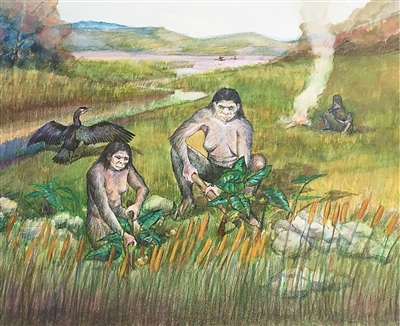
Core Findings - The research team at the Gantangqing site published a significant archaeological discovery in the journal "Science," revealing 35 well-preserved wooden artifacts dating back approximately 300,000 years, along with associated cultural relics including stone tools, bone and antler artifacts, animal fossils, plant remains, and evidence of fire [1][2]. Archaeological Significance - The wooden artifacts are the earliest known in East Asia, primarily used for digging edible plant roots, termed "digging sticks." The site also yielded small scrapers that reflect the distinctive characteristics of East Asian Paleolithic culture [1][2]. - The discovery fills a gap in the study of wooden artifacts from the Paleolithic era in China and has significant implications for understanding the origins, processing techniques, functions, and evolutionary development of wooden tools [2]. Cultural Insights - The findings challenge the long-held "East Asian bamboo and wood tool hypothesis," which suggested that ancient humans in East Asia primarily relied on bamboo and wood tools, with simple stone tools serving mainly to create these wooden implements. The evidence from Gantangqing supports the notion that early humans indeed manufactured and utilized wooden tools [2]. - The stone tools found at the site, while traditional in form, contain new information that can reshape the understanding of East Asian Paleolithic cultural traditions and the technological capabilities of ancient humans [3]. Technological Advancements - The stone tools, mostly small and simple in appearance, were previously thought to indicate a lack of technological sophistication. However, some specimens show fine repair marks, indicating a level of detailed craftsmanship. The discovery of soft hammer materials, the earliest known in East Asia, suggests that the region's early inhabitants were not technologically inferior to their Western counterparts [5]. - The characteristics of the stone tools reflect the constraints imposed by the availability of quality raw materials, leading to refined processing techniques and the development of wooden materials, indicating a different evolutionary path compared to Western prehistoric populations [5]. Dietary Insights - The Gantangqing site provides rare evidence of plant-based food resources utilized by early humans, including a variety of nuts and fruits, revealing a broad spectrum of plant materials in their diet. This highlights the unique resource utilization strategies of Southeast Asian ancient populations living in tropical and subtropical environments [6]. - The research underscores the diversity of survival strategies among Paleolithic humans, with East Asian populations relying significantly on plant resources, contrasting with the hunting of large mammals that dominated in temperate regions like Europe [6].