
两个融合

Search documents
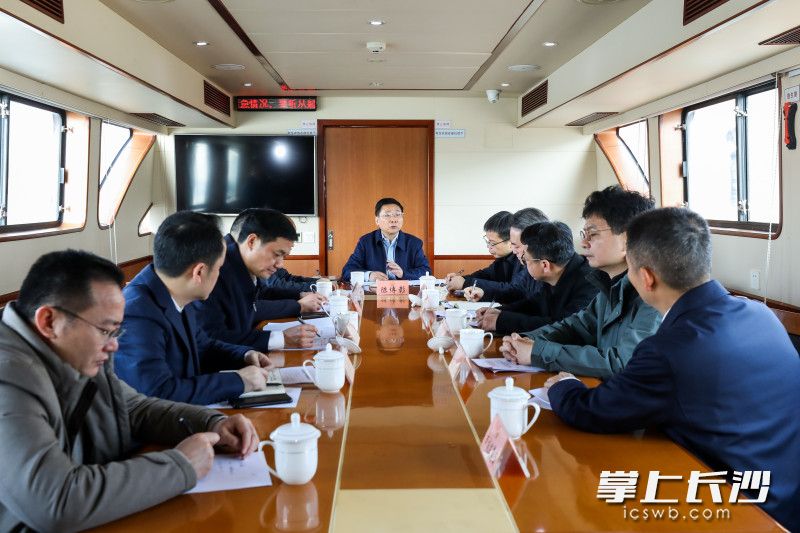
陈博彰调研浏阳河生态环境保护、文旅资源开发情况
Xin Lang Cai Jing· 2026-01-24 12:26
Core Viewpoint - The article emphasizes the importance of ecological protection and cultural tourism development along the Liuyang River, advocating for a balance between high-level protection and high-quality development [1][3]. Group 1: Ecological Protection - The government is committed to implementing Xi Jinping's ecological civilization thought, focusing on "guarding the clear waters" of the Liuyang River [1]. - There is a strong emphasis on ecological priority and green development, with a focus on maintaining the ecological foundation of the Liuyang River [3]. - The strategy includes precise implementation of "one river, one policy" to meet water quality targets and enhance technological supervision and comprehensive governance [3]. Group 2: Cultural Tourism Development - The article highlights the need to explore and enhance cultural tourism resources along the "Nine Bays" of the Liuyang River, integrating culture and technology [3]. - The development of a distinctive cultural tourism supply system in Changsha is crucial, with initiatives to promote intangible cultural heritage activities and sports events [4]. - The aim is to create new tourism experiences and models that convert short-term visitors into long-term residents, thereby stimulating the local economy [4].

以微专业建设助推江苏“两个融合”发展
Xin Hua Ri Bao· 2026-01-15 22:01
Core Viewpoint - Jiangsu's "14th Five-Year Plan" emphasizes the integration of technological innovation and industrial innovation, highlighting the need for cultivating interdisciplinary talents who can adapt to rapid technological changes [1] Group 1: Micro Majors Concept - Micro majors are not merely a reduction of existing majors but focus on specific, cutting-edge industrial technology fields, forming a cluster of core courses and practical projects through precise design [2] - The vitality of micro majors stems from three core characteristics: focus, cross-disciplinary and practical nature, and agility and openness [2] - Micro majors serve as a strategic interface and innovation incubator, connecting higher education's knowledge innovation with the application of technology in industries [2] Group 2: Value of Micro Majors - Micro majors act as a catalyst and bridge for accelerating the transformation of scientific achievements into productive forces [3] - They address the skills shortage in strategic emerging industries by quickly responding to the specific skill needs of leading enterprises [3] - Micro majors deepen the integration of industry and education, fostering a collaborative ecosystem that enhances the relationship between educational institutions and enterprises [3] Group 3: Development Path for Micro Majors - A forward-looking systemic planning and mechanism reform in the current educational management system is essential for micro majors to drive the integration of technology and industry [4] - The primary task is to strengthen top-level design and strategic guidance at the provincial level, embedding micro majors into regional innovation networks [4] - Establishing a mechanism that encourages collaboration between universities and enterprises is crucial for fostering innovation and avoiding homogenization in micro major offerings [4] Group 4: Institutional Arrangements - A system that encourages enterprises to invest in course resources and training equipment should be developed, linking their contributions to innovation and social impact [5] - Universities need to reform teacher evaluation and incentive mechanisms to elevate the importance of contributions to micro majors alongside traditional academic achievements [5] - Creating a regional micro major alliance among universities can enhance the recognition and transferability of micro major learning outcomes [5] Group 5: Strategic Importance - Micro majors, despite their "micro" label, can significantly contribute to macro strategic goals, particularly in Jiangsu, which has a robust manufacturing base and complete industrial chains [6] - Systematic cultivation of micro majors can address structural talent supply and demand issues while prompting profound changes in higher education organization and evaluation systems [6]