
生态文明思想

Search documents
徐曙海在研究太湖治理工作时强调 聚焦重点精准发力 狠抓突出问题整改 持续推动流域水环境质量稳定向好
Zhen Jiang Ri Bao· 2026-02-25 23:22
Core Viewpoint - The meeting led by Mayor Xu Shuhai emphasizes the importance of Taihu Lake governance as a national priority, urging relevant regions and departments to implement ecological civilization principles and address existing issues effectively [1]. Group 1: Governance and Responsibility - Mayor Xu Shuhai highlighted the need for a heightened sense of urgency and responsibility in addressing Taihu Lake governance, aligning with President Xi Jinping's ecological civilization thoughts [1]. - The focus is on recognizing the current situation, identifying shortcomings, and implementing targeted strategies to improve water quality in the Taihu Lake basin [1]. Group 2: Problem Rectification - There is a strong emphasis on rectifying issues identified by environmental inspections, with a commitment to strict and thorough remediation efforts [1]. - The approach includes ensuring that rectification results are verifiable and meet required standards [1]. Group 3: Pollution Control Measures - The meeting stresses the importance of tailored measures to address agricultural non-point source pollution and the management of key pollution sources such as livestock farming [1]. - The goal is to minimize pollutant emissions and strengthen the environmental safety of Taihu Lake [1]. Group 4: Infrastructure and Resource Management - There is a call to accelerate pollution control project construction and effectively integrate various resources to enhance project execution [1]. - The aim is to improve the water quality in the Taihu Lake basin and promote a harmonious coexistence between humans and water [1].
人鸥同乐庆新春
Xin Lang Cai Jing· 2026-02-21 22:20
Core Viewpoint - The article highlights the successful ecological and cultural integration of the red-billed gull in Kunming, showcasing a 40-year journey of environmental protection and community engagement that has transformed the species into a cultural symbol of the city [1][4][7]. Group 1: Ecological Development - The population of red-billed gulls in Kunming has grown from approximately 9,000 in 1985 to a stable count of around 40,000 in recent years, with projections of 42,000 by 2025, indicating a positive recognition of the city's ecological environment [2][6]. - Kunming's government has implemented various protective measures, including the establishment of local regulations and scientific feeding practices, ensuring the gulls receive balanced nutrition through over 30 tons of specialized gull food distributed at more than 60 feeding points [2][3]. Group 2: Cultural Integration - The relationship between the red-billed gulls and the citizens of Kunming has evolved from emotional to rational, with the gulls becoming a unique cultural symbol and a significant part of local festivities, particularly during the New Year [4][5]. - Various cultural and tourism activities have been developed around the gulls, such as themed events and artistic performances, enhancing the city's cultural landscape and promoting eco-tourism [4][5]. Group 3: Sustainable Development - Ongoing ecological restoration efforts around Dianchi Lake have led to the creation of a lakeside ecological belt of 62,900 acres and an increase in natural shoreline to 89%, contributing to the improved habitat for the gulls [6]. - The city aims to further enhance its ecological landscape by developing a green development corridor around Dianchi Lake, promoting biodiversity and sustainable urban growth [6]. Group 4: Future Generations - Educational initiatives are being introduced to engage children in ecological protection, fostering a sense of responsibility and connection to nature through activities related to the red-billed gulls [7]. - The emotional bond between the citizens and the gulls reflects a broader commitment to environmental stewardship, with the community actively participating in the conservation of local wildlife [7].
【情满中国年】美丽中国 幸福生活
Yang Shi Wang· 2026-02-21 11:43
Group 1 - The core message emphasizes the importance of ecological civilization and sustainable development in China, highlighting significant progress made since the 18th National Congress under Xi Jinping's guidance [1] - The construction of ecological protection zones, such as the 60,000 acres of lakeside ecological belt around Dianchi Lake, showcases the commitment to environmental restoration and tourism development [1] - The tourism sector in Kunming is projected to receive over 2.4 million visitors by 2025, with collective economic income surpassing 20 million yuan [1] Group 2 - The "Digital Li River" smart platform has been established for comprehensive water quality monitoring and enforcement, ensuring the Li River's water quality remains above Class II standards [2] - Guilin aims to attract 175 million tourists and generate over 210 billion yuan in tourism revenue by 2025, focusing on developing new tourism formats [2] - The forest coverage rate in Mohe has exceeded 92%, with local tourism and forest economy initiatives contributing to income growth for residents [3] Group 3 - During the 14th Five-Year Plan period, China has achieved a national land greening area of 54.9 million acres, with 18.5 million acres designated for afforestation [3] - The proportion of surface water quality meeting good standards has surpassed 90% for the first time, indicating significant improvements in environmental quality [3]
创新笔谈丨厚植小兴安岭绿色底色
Zhong Yang Ji Wei Guo Jia Jian Wei Wang Zhan· 2026-02-09 01:44
Group 1 - The core idea emphasizes the importance of ecological environment protection in Yichun City, Heilongjiang Province, as part of political supervision, aligning with Xi Jinping's ecological civilization thought [1][2] - The city’s disciplinary inspection and supervision commission focuses on implementing responsibilities for ecological protection, ensuring that party and government officials are held accountable [1] - A collaborative supervision mechanism is established to enhance coordination among various departments, promoting effective natural resource and ecological environment protection [1] Group 2 - The commission targets key areas and critical links in ecological protection, addressing issues that harm public interests and tackling negligence and corruption [2] - Digital tools are utilized to enhance supervision channels, allowing grassroots communities to report environmental issues effectively [2] - A rapid problem-solving mechanism is established to increase the efficiency of case handling, ensuring that the public experiences fairness and justice in ecological protection [2] Group 3 - The commission leads efforts to identify and rectify prominent issues in ecological protection, focusing on forestry management and establishing a clear problem list [2] - A closed-loop mechanism is created to ensure that problems are discovered, laws are enforced, corrections are made, and governance is deepened [2] - The goal is to translate supervision results into effective governance, ensuring accountability and problem resolution [2]
坚持实事求是同题共答远近结合在推动问题整改及海水养殖产业高质量发展中为全省作示范
Xin Lang Cai Jing· 2026-02-04 17:29
Core Viewpoint - The provincial government is actively addressing ecological environment issues related to seawater aquaculture through various measures, achieving preliminary results in the rectification efforts [1][2]. Group 1: Project Development - The provincial secretary conducted on-site inspections of the coastal forest restoration and seawater aquaculture wastewater treatment projects, emphasizing the importance of adhering to timelines and ensuring quality completion of the projects [1]. - Key areas of focus include the construction of centralized drainage projects and the planning of seawater aquaculture industrial parks [1]. Group 2: Ecological Protection and Industry Upgrading - The government stresses the importance of ecological environment protection, advocating for a steadfast commitment to ecological governance and the establishment of a collaborative mechanism to integrate resources across the province [2]. - Aiming for a transformation and upgrading of the seawater aquaculture industry, the government promotes a model of "leading enterprises + cooperatives" to enhance organizational structure and optimize breeding practices [2]. - The goal is to achieve a balance between economic, social, and ecological benefits, setting a benchmark for high-quality development in the seawater aquaculture sector [2].
2月2日外交部发言人答问汇总
Bei Jing Ri Bao Ke Hu Duan· 2026-02-02 13:35
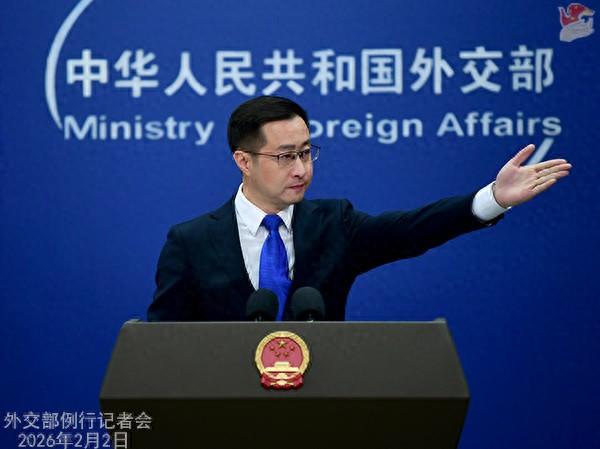
Group 1 - The Chinese government emphasizes the importance of enhancing personnel exchanges between China and South Korea, particularly during the Spring Festival, which is seen as beneficial for mutual understanding and communication [3][4] - China and Russia maintain close communication on significant issues affecting their bilateral relations, supporting each other's core interests, and advocating for a multipolar world and inclusive economic globalization [4][5] - The Chinese government expresses strong dissatisfaction with the U.S. for the arbitrary detention and return of Chinese enterprise personnel, highlighting the negative impact on normal business exchanges and cultural interactions [5][6] Group 2 - China is committed to wetland protection and restoration, achieving significant results under the guidance of ecological civilization principles, with its wetland area ranking first in Asia and fourth globally [6][7] - As a party to the Ramsar Convention, China plays a crucial role in global wetland conservation efforts, establishing international cooperation initiatives and receiving global recognition for its environmental achievements [6][7] - The Chinese government continues to collaborate with countries like Myanmar to combat cross-border telecom fraud and related crimes, aiming to enhance regional security and cooperation [7]


精准施策提升群众生态环境获得感 陈吉宁调研大气污染防治工作
Jie Fang Ri Bao· 2026-01-27 01:41
Core Viewpoint - The focus is on enhancing air pollution prevention efforts as a key strategy for promoting high-quality development, improving living standards, and achieving effective governance in Shanghai [1][2]. Group 1: Air Pollution Prevention Strategies - The city aims to implement effective control measures and governance methods to support the construction of a beautiful Shanghai [1]. - Continuous efforts are required to combat air pollution, which is crucial for high-quality development and urban governance modernization [2]. - The city is committed to achieving the "14th Five-Year Plan" goals by clarifying responsibilities and optimizing management methods in response to new challenges [2]. Group 2: Collaborative Efforts and Technological Advancements - Emphasis on strengthening regional cooperation in air pollution prevention, particularly within the Yangtze River Delta [2]. - The city is enhancing its environmental monitoring capabilities with advanced equipment for air quality assessment and prediction [1]. - A focus on establishing a unified mechanism for air quality monitoring, warning, and response to improve governance efficiency [2].
陈博彰调研浏阳河生态环境保护、文旅资源开发情况
Xin Lang Cai Jing· 2026-01-24 12:26
Core Viewpoint - The article emphasizes the importance of ecological protection and cultural tourism development along the Liuyang River, advocating for a balance between high-level protection and high-quality development [1][3]. Group 1: Ecological Protection - The government is committed to implementing Xi Jinping's ecological civilization thought, focusing on "guarding the clear waters" of the Liuyang River [1]. - There is a strong emphasis on ecological priority and green development, with a focus on maintaining the ecological foundation of the Liuyang River [3]. - The strategy includes precise implementation of "one river, one policy" to meet water quality targets and enhance technological supervision and comprehensive governance [3]. Group 2: Cultural Tourism Development - The article highlights the need to explore and enhance cultural tourism resources along the "Nine Bays" of the Liuyang River, integrating culture and technology [3]. - The development of a distinctive cultural tourism supply system in Changsha is crucial, with initiatives to promote intangible cultural heritage activities and sports events [4]. - The aim is to create new tourism experiences and models that convert short-term visitors into long-term residents, thereby stimulating the local economy [4].
标本兼治抓好问题整改 牢牢守住生态安全底线
Xin Lang Cai Jing· 2026-01-14 21:48
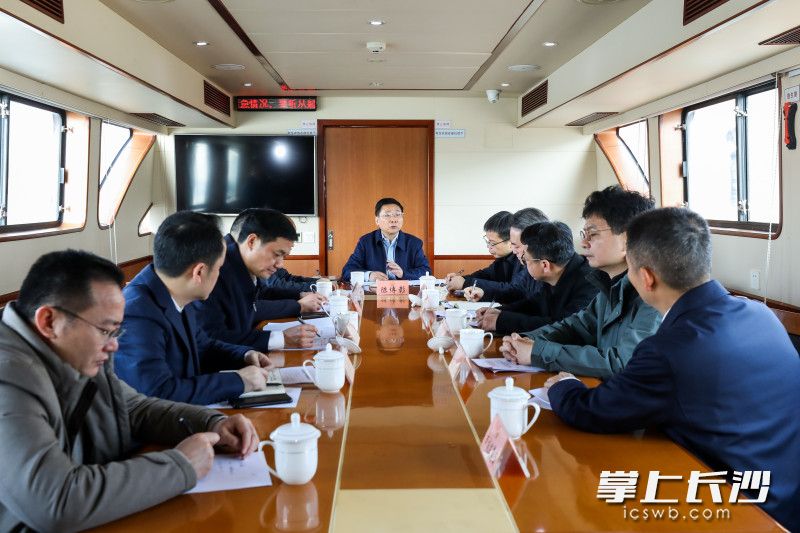
Group 1 - The core viewpoint emphasizes the importance of addressing ecological issues related to karst cave environments, highlighting the need for effective remediation and management strategies [1][2] - The local government is committed to enhancing regulatory oversight to prevent further pollution and to sustain the ecological restoration efforts in the karst cave areas [1][2] - The meeting included contributions from experts, enterprises, media, environmentalists, and grassroots representatives, indicating a collaborative approach to developing protective measures for the caves [2] Group 2 - The government aims to adopt a systematic approach to remediation, which includes investigation, classification, registration, and planning for the protection of the caves [2] - There is a focus on long-term effectiveness in remediation efforts, with an emphasis on establishing a robust working mechanism and ensuring accountability among all stakeholders [2] - The strategy includes seeking external support for cave protection and utilization, as well as enhancing public awareness to foster a cooperative environment for ecological conservation [2]
坚定不移走好生态优先绿色发展之路
Xin Lang Cai Jing· 2026-01-07 06:54
Core Viewpoint - The article emphasizes the importance of addressing ecological and environmental issues in Huairou District, highlighting the need for effective management and rectification of identified problems to support sustainable development and ecological protection [1][3]. Group 1: Ecological and Environmental Management - Huairou District has completed the rectification of issues related to the illegal occupation of river management areas and the inadequate restoration of forest land in Jiu Du River Town [2]. - The district is implementing a detailed management system for the problems identified during the central ecological environment protection inspection, ensuring accountability and clear objectives for rectification [2][3]. - The focus is on enhancing the urban and rural living environment, promoting beautiful countryside construction, and strengthening ecological protection to support high-quality regional development [2][3]. Group 2: Disaster Recovery and Infrastructure - The article outlines the need for high-quality and efficient disaster recovery efforts, with a focus on completing basic recovery projects before the flood season [3]. - Emphasis is placed on ensuring safety and scientific planning in the construction of new projects, including residential buildings, nursing homes, and schools [3]. - There is a call for improving disaster resilience in mountainous areas and enhancing emergency response capabilities [3]. Group 3: Governance and Accountability - The article stresses the importance of party leadership in driving the implementation of various tasks, with a focus on environmental protection responsibilities [4]. - It highlights the need for strict oversight and accountability measures for rectification and reconstruction tasks, ensuring dynamic management throughout the process [4]. - The article also mentions the importance of maintaining market stability and ensuring the supply of essential services as the Spring Festival approaches [4].