个人计算平台

Search documents
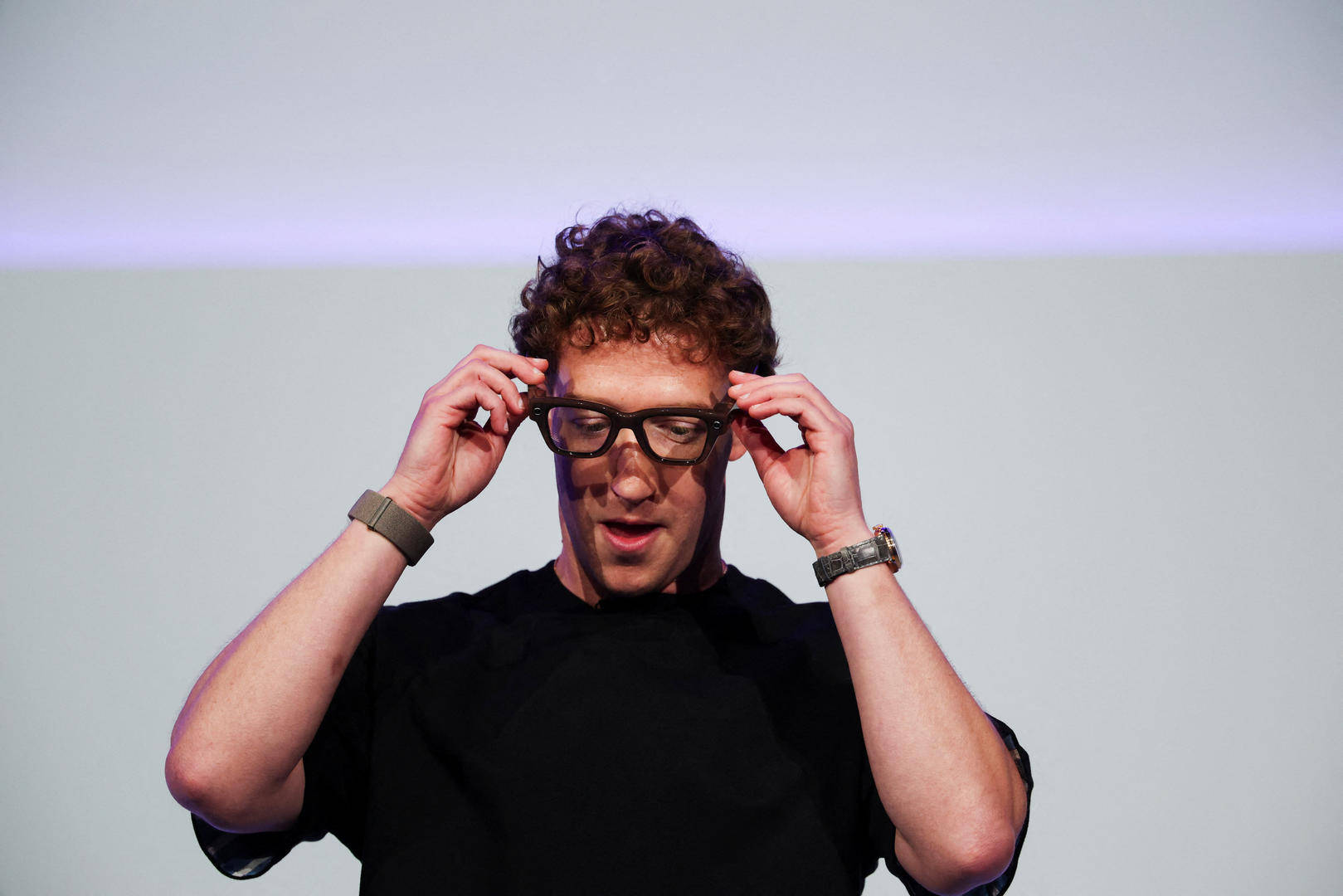
800美元智能眼镜首秀发布会“翻车”,扎克伯格甩锅“网太差”
Sou Hu Cai Jing· 2025-09-22 05:20
Core Viewpoint - Meta's recent launch of the Ray-Ban smart glasses faced significant technical difficulties during the demonstration, overshadowing the product's features and potential market impact [1][2][4]. Product Features - The new Ray-Ban smart glasses are priced at approximately $800 and are the flagship model in Meta's latest generation of smart glasses, featuring high-resolution display screens embedded in the lenses [2][4]. - The glasses support various functionalities including app operations, content sharing, music playback, real-time translation, and come equipped with a voice AI assistant and camera [2][4]. - Users can control the glasses through a neural wristband using finger gestures, with a battery life of about six hours and photochromic lenses suitable for indoor and outdoor use [2][4]. Market Performance and Sales - Despite the technical issues during the launch, early reviewers have praised the flagship smart glasses as the best-performing product in its category, with some describing it as "bringing a strong sense of the future" [5]. - Since the release of the $300 Ray-Ban smart glasses in 2023, only about 2 million units have been sold by February 2024, with a goal to reach annual sales of 10 million units by 2026, which remains a modest target for a company of Meta's size [5]. - Meta has invested over $100 billion in augmented reality and virtual reality over the past decade, but these segments have consistently reported losses, including a $4.5 billion loss in the last quarter [5]. Privacy and Trust Issues - The smart glasses, equipped with cameras, have raised significant privacy concerns, as the recording indicator is minimal, making it difficult for bystanders to notice when they are being recorded [7]. - There have been incidents where individuals used the glasses for illicit activities, leading to public backlash and distrust towards Meta [7]. - Analysts suggest that the high price point and uncertainty regarding user acceptance indicate that the flagship smart glasses may struggle to penetrate the mass market in the foreseeable future [7].