
中华文明起源研究

Search documents
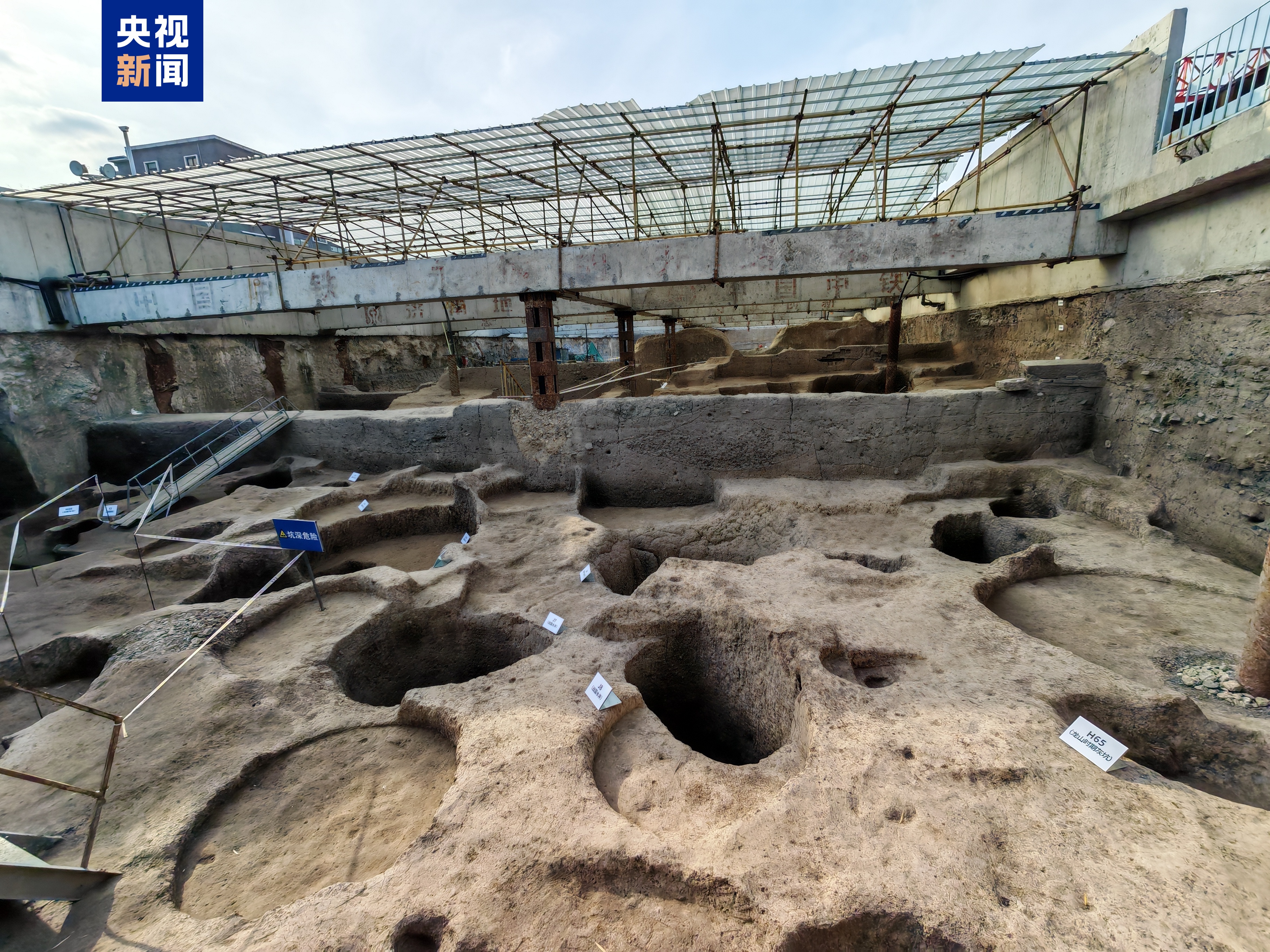
考古新发现将济南建城史提前约1500年
Xin Hua She· 2025-12-11 11:15
Core Viewpoint - The archaeological discovery at the southwest site of Daming Lake in Jinan has revealed the Longshan culture city wall, pushing back the history of city establishment in Jinan by approximately 1500 years, indicating a rich cultural heritage and continuity of Chinese civilization [1][2]. Group 1: Archaeological Findings - The excavation, initiated to support the construction of the Daming Lake station for Jinan Metro Line 6, has uncovered artifacts spanning from the late Dawenkou culture to modern times, including significant findings from the Longshan culture, Shang, Zhou, Han, Tang, Song, and Ming-Qing dynasties [1]. - The carbon-14 dating of samples collected from within the city wall indicates an age of around 4200 years, which is significantly older than the previously accepted city establishment date of approximately 2700 years [1]. Group 2: Cultural Significance - The discovery of the Longshan culture city wall is seen as a vital addition to the understanding of the origins of civilization in Shandong and China, filling a gap between other known Longshan culture sites [2]. - Jinan city plans to protect and display the Longshan culture city wall at its original site, with a special cultural heritage protection plan established in collaboration with the metro group to showcase the archaeological findings to the public [2].
大明湖畔考古新发现 济南建城史提前至约公元前2100年
Yang Shi Xin Wen· 2025-12-11 07:51
Core Insights - The archaeological excavation at the southwest site of Daming Lake in Jinan has yielded results that significantly exceed expectations, particularly with the discovery of the Longshan culture city wall, which is of great importance [1] Group 1: Archaeological Findings - The Daming Lake southwest site has a rich array of cultural relics with a long continuity, dating back over 5,000 years from the late period of the Dawenkou culture to modern times, showcasing the historical development of Jinan [4] - The excavation results have pushed back the history of Jinan's city establishment by approximately 1,500 years, revealing a continuous historical narrative over five millennia [4] - The most significant finding is the well-preserved city wall from the Longshan culture, dating back to around 4,200 years ago, indicating that the site was still in use during the Warring States period [4] Group 2: Cultural Significance - The discovery of the Longshan culture city site fills a gap between other known Longshan sites in Shandong, expanding the research scope of the origins of Chinese civilization [7] - The findings exemplify the deep cultural heritage of Jinan and serve as a typical example of the continuity of Chinese civilization [4]

【中国新闻网】最新考古科研证实石峁文化人群主体源于陕北仰韶晚期人群
Zhong Guo Xin Wen Wang· 2025-11-28 06:10
Core Insights - The research reveals the complex social organization structure of the Shijia site, the largest prehistoric city in China, through ancient DNA analysis, providing insights into the origins and societal structure of its inhabitants [1][2] Group 1: Research Findings - A 13-year study involving 169 ancient human bone samples from the Shijia site and surrounding areas confirmed that the main population of the Shijia culture originated from the late Yangshao period in northern Shaanxi, establishing continuity in cultural and population development [1] - The study identified close connections between the Shijia culture and other prehistoric agricultural groups, showcasing a history of extensive interaction among farming and pastoral communities [1] - The reconstruction of family lineages spanning four generations within the Shijia ancient city provides a clear view of a patrilineal social hierarchy, offering a model for understanding the formation and development of early states in China [1] Group 2: Future Directions - The National Cultural Heritage Administration plans to continue advancing the exploration of Chinese civilization origins and major archaeological projects, emphasizing interdisciplinary collaboration and the role of technological archaeology in deepening the understanding of Chinese civilization [2] - The research findings have been published in the journal Nature, titled "Ancient DNA from Shijia Ancient City Reveals Kinship Practices in Neolithic China" [2]