中华文明连续性

Search documents
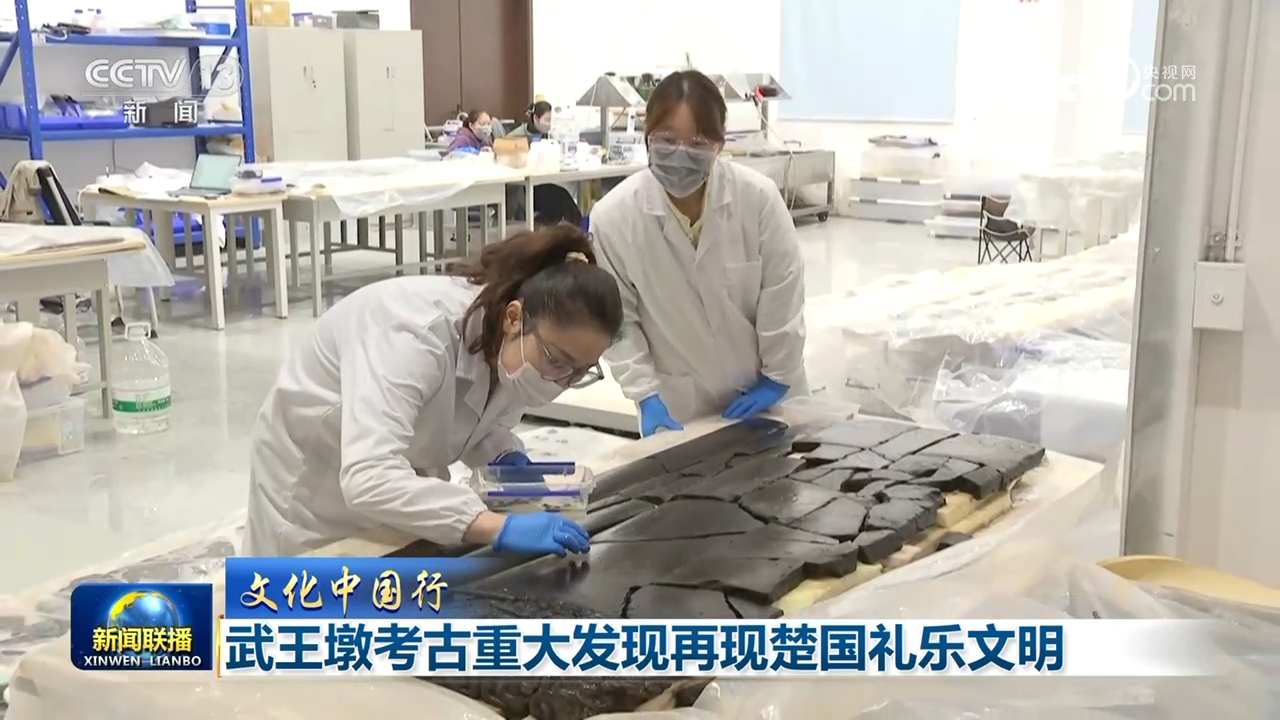
【文化中国行】武王墩考古重大发现再现楚国礼乐文明
Yang Shi Wang· 2025-12-21 12:26
Core Insights - The excavation of the Wuwangdun Tomb in Huainan, Anhui, is the only scientifically excavated Chu royal tomb in China, with significant findings that enhance the understanding of Chu culture and the historical context from the Zhou to Qin-Han periods, concluding in December 2024 [1] Group 1: Archaeological Findings - Over 10,000 artifacts have been unearthed, including a large number of musical instruments, with more than 50 zithers and over 20 sheng and yu, some zithers exceeding 2 meters in length, marking the largest of their kind discovered in China [3] - The discovery of a bamboo ruler measuring approximately 69.4 cm, with clear markings indicating that the Chu measurement of one foot was about 23.1 cm, shows a convergence in measurement standards among states before the Qin unification [3] - The archaeological team has assembled 55 complete divination tortoise shells from over a thousand fragments, marking a new discovery in burial archaeology, with some shells inscribed with the characters "长霝," representing the first physical evidence of "长霝" tortoise shells recorded in literature [5] Group 2: Cultural and Dietary Insights - Analysis of bronze vessels revealed plant remains including plums, gourd seeds, sweet melon seeds, ginger, and jujubes, alongside animal remains such as cattle, pigs, sheep, fish, and birds, indicating that the animal bones had undergone cooking, providing valuable data on the dietary practices of the Chu state [7] - The systematic archaeological findings from the Wuwangdun Tomb vividly illustrate the richness of Chu culture and the continuity of Chinese civilization, with the results set to be exhibited at the National Museum soon [8]

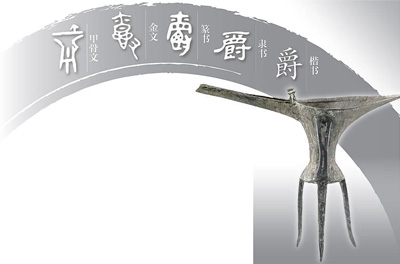
爵:从盛酒于皿到藏礼于器(文物有话说·文物里的汉字)
Ren Min Ri Bao· 2025-12-19 22:10
Group 1 - The character "爵" originally referred to an ancient drinking vessel, symbolizing status and identity in early Chinese civilization [2] - The Erlitou site in Henan has yielded over 10 bronze jugs, showcasing advanced bronze casting techniques of the time, with the most notable being a 26.5 cm tall and 31.5 cm long bronze jug with a unique design [2] - The complex composite mold technology used during the Erlitou period represents a significant advancement in early metal casting, differing from the simpler tools and weapons of the Longshan period [2] Group 2 - The formation and development of ritual systems in ancient China are reflected in the use of bronze jugs, which played a crucial role in early ceremonial practices [3] - The ancient system of ranks and titles was based on the use of jugs, establishing a foundation for the development of more comprehensive ritual systems in later periods [3]
济南|考古新发现将济南建城史提前约1500年
Da Zhong Ri Bao· 2025-12-12 01:35
Core Insights - The discovery of the Longshan culture city wall at the Daming Lake southwest site has pushed back the history of Jinan's city establishment by approximately 1500 years, now dating it to around 4200 years ago, showcasing the city's rich cultural heritage [1][2] Archaeological Findings - A total of 206 various relics have been discovered, including city walls, moats, and wells, along with over 460 artifacts made from materials such as pottery, porcelain, iron, copper, bone, stone, and wood, as well as more than 130 coins [1] - The archaeological work has revealed significant water-related structures, indicating the ancient population's effective use of water resources, which enhances the understanding of Jinan's spring culture [2] Cultural Significance - The findings are seen as a testament to the continuity of Chinese civilization and are expected to positively impact the cultural influence of Jinan, particularly in relation to the "Jinan Spring·City Cultural Landscape" heritage application [2] - Jinan city plans to protect and display the Longshan culture city wall in its original location, with a specialized protection plan established in collaboration with the Jinan Rail Transit Group [2]
考古新发现将济南建城史提前约1500年
Xin Hua She· 2025-12-11 11:15
Core Viewpoint - The archaeological discovery at the southwest site of Daming Lake in Jinan has revealed the Longshan culture city wall, pushing back the history of city establishment in Jinan by approximately 1500 years, indicating a rich cultural heritage and continuity of Chinese civilization [1][2]. Group 1: Archaeological Findings - The excavation, initiated to support the construction of the Daming Lake station for Jinan Metro Line 6, has uncovered artifacts spanning from the late Dawenkou culture to modern times, including significant findings from the Longshan culture, Shang, Zhou, Han, Tang, Song, and Ming-Qing dynasties [1]. - The carbon-14 dating of samples collected from within the city wall indicates an age of around 4200 years, which is significantly older than the previously accepted city establishment date of approximately 2700 years [1]. Group 2: Cultural Significance - The discovery of the Longshan culture city wall is seen as a vital addition to the understanding of the origins of civilization in Shandong and China, filling a gap between other known Longshan culture sites [2]. - Jinan city plans to protect and display the Longshan culture city wall at its original site, with a special cultural heritage protection plan established in collaboration with the metro group to showcase the archaeological findings to the public [2].
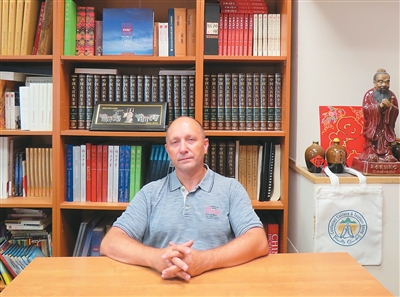
中文见证中华文明连续性(孔院之光)
Ren Min Ri Bao Hai Wai Ban· 2025-10-16 23:02
Core Viewpoint - Taras Ivchenko, also known as Yi Fucheng, is a prominent Russian sinologist and the director of the Oriental Studies Department at the Russian State University for the Humanities, who has significantly contributed to Chinese language education and cultural exchange between Russia and China [1]. Group 1: Academic Background and Achievements - Yi Fucheng has a strong academic background, having studied ancient Chinese at Peking University under renowned linguist Guo Xiliang, which has greatly influenced his research and teaching [3]. - He has received multiple awards for his contributions to Chinese language and culture, including the "China Language and Culture Popularization Award" in 2010 and the "Friendship Ambassador Award" in 2023 [1][2]. Group 2: Teaching and Curriculum Development - Yi Fucheng teaches various courses at the Confucius Institute, focusing on language theory, Chinese morphology, and rhetoric, and emphasizes the importance of ancient Chinese literature in understanding modern Chinese [5][6]. - He has led the development of localized Chinese teaching materials, which have been well-received by Russian educators and learners, reflecting a significant increase in student enrollment from 40 to 869 over the years [7][8]. Group 3: Cultural Exchange and Community Engagement - The Confucius Institute under Yi Fucheng's leadership not only offers language courses but also a wide range of Chinese cultural programs, including calligraphy, painting, and tea art, fostering a deeper understanding of Chinese culture among Russian students [7][9]. - Yi Fucheng promotes lifelong learning and cultural exploration by encouraging students to engage with both classical philosophical texts and contemporary Chinese political discourse, enhancing their understanding of Chinese cultural continuity [8][9]. Group 4: Future Vision and Impact - Yi Fucheng envisions the Confucius Institute evolving into a comprehensive research institution that not only teaches Chinese but also engages in curriculum development, academic research, and cultural seminars, thereby expanding its influence [9]. - Over 10,000 students have participated in programs at the Confucius Institute, with many pursuing further studies or careers related to China, demonstrating the institute's significant role in fostering Sino-Russian relations [9].