中原文明

Search documents
一支骨笛奏响中原文明初声
Xin Lang Cai Jing· 2026-02-24 06:58
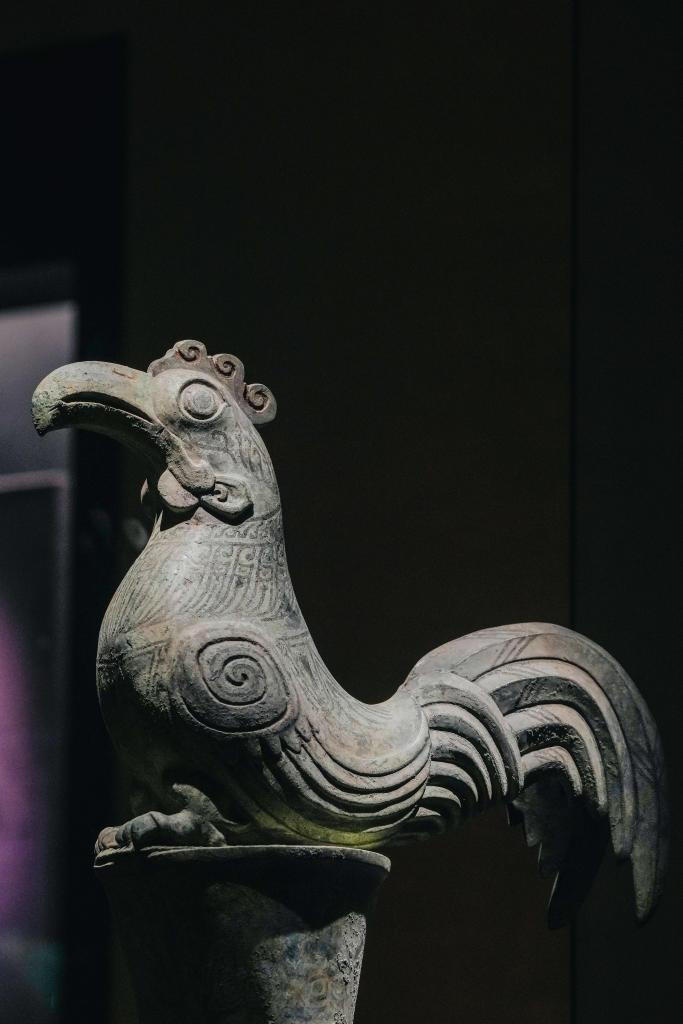
Core Viewpoint - The exhibition "China in the Middle: Essence of Ancient Central Plains Civilization" at Tsinghua University Art Museum showcases around 400 selected artifacts that highlight the achievements of Central Plains civilization from prehistoric times to the Song and Ming dynasties, focusing on political systems, cultural practices, philosophy, and artistic creation [1]. Group 1: Exhibition Highlights - The exhibition features significant artifacts from Henan Province, including the Jiahu bone flute, which is recognized as the earliest known wind instrument in China, capable of playing a seven-note scale [1][13]. - The "Simu Xin" four-footed bronze wine vessel, discovered in the tomb of Fu Hao at the Yin Ruins, exemplifies the peak of bronze casting techniques during the Shang and Zhou dynasties, showcasing a blend of animal and bird imagery [14]. - A five-layered painted pottery granary from the Han dynasty represents the architectural style of the time, reflecting the daily life and agricultural practices of the era [16]. Group 2: Historical Context - The exhibition traces the development of Central Plains civilization, starting from the Peiligang culture around 6700 to 4800 BC, indicating early settlement and economic activities in the region [1][13]. - The Erlitou culture, recognized as the earliest confirmed dynasty in China, is highlighted through artifacts such as the turquoise-inlaid bronze plaque, which serves as a significant example of early composite material ritual vessels [18][19]. - The exhibition also includes a rare Sui dynasty figurine that represents the everyday lives of ordinary people, emphasizing the human aspect often overshadowed by grand historical narratives [20].

中国彩绘青铜已三千年!最新研究实证多彩三星堆
Xin Hua Wang· 2025-09-27 20:37
Core Insights - The latest research from the Sichuan Provincial Institute of Cultural Relics and Archaeology reveals that the Sanxingdui site contains a significant number of painted bronze artifacts, pushing back the timeline for the emergence of painted bronze in China by nearly a thousand years [1][2] Group 1: Research Findings - The Sanxingdui bronze artifacts, created around three thousand years ago, were made from a copper, tin, and lead alloy, showcasing high creativity and imagination in their design [2] - The research indicates that the colors found on these artifacts include black and red, with black often used for facial features and symbols, while red appears on floral designs and intricate patterns on vessels and clothing [2][4] - The discovery of these painted bronze artifacts challenges the previous belief that painted bronze was primarily seen during the Warring States and Qin-Han periods, highlighting the advanced craftsmanship and natural materials used in Sanxingdui [2][4] Group 2: Cultural Significance - The colorful designs of Sanxingdui artifacts reflect the high level of artistic skill of ancient craftsmen, filling a gap in the understanding of painting art during the bronze age in China [4] - The combination of black and red colors in ancient China symbolized nobility and was seen as an auspicious sign for national peace and stability, further emphasizing the cultural richness of the Sanxingdui site [4]