中国高铁

Search documents
外媒报道称,中国下一代列车实验中创造896公里/小时新纪录
Huan Qiu Wang· 2026-01-06 01:17
Core Insights - The National Railway is projected to achieve a total transportation revenue of 1,020.4 billion yuan by 2025, marking a year-on-year growth of 3.1%, and the first time surpassing the trillion yuan mark, indicating a robust development trend in the railway transportation industry [1] - Passenger volume is expected to reach 4.255 billion trips, a year-on-year increase of 4.2%, with peak daily passenger dispatch reaching 23.132 million, setting a new historical record [1] - The freight sector is transitioning towards modern logistics, with a projected cargo volume of 4.066 billion tons, reflecting a year-on-year growth of 2.1%, achieving growth for nine consecutive years [1] Investment and Infrastructure - The National Railway plans to complete fixed asset investments of 901.5 billion yuan in 2025, representing a year-on-year increase of 6%, with the commissioning of 3,109 kilometers of new lines, including 2,862 kilometers of high-speed rail [1] - By 2026, the National Railway aims to achieve a passenger volume of 4.402 billion trips, a year-on-year growth of 3.5%, and a cargo volume of 4.13 billion tons, with a year-on-year increase of 1.5% [2] - The infrastructure investment target for 2026 is set at 520 billion yuan, with plans to commission over 2,000 kilometers of new lines [2] High-Speed Rail Expansion - China's high-speed rail network has expanded to over 50,000 kilometers, surpassing the total length of all other high-speed rail systems globally, attributed to central planning, standardization, and national investment [1] - The high-speed rail system is known for its rapid expansion and engineering achievements, covering over 90% of cities with populations exceeding 500,000 [1] - Next-generation trains, such as the CR450 model, are being tested, potentially reducing travel times between major cities, with a record speed of 896 kilometers per hour achieved during trials [2]


中国高铁看京沪!
Bei Jing Ri Bao Ke Hu Duan· 2025-12-15 08:49
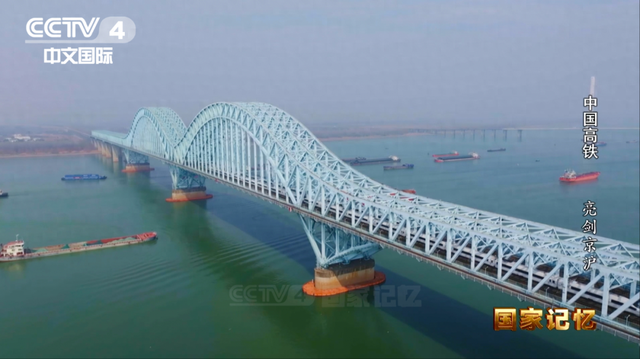
Core Viewpoint - The Beijing-Shanghai High-Speed Railway (HSR) is a crucial transportation link between two major Chinese cities, significantly reducing travel time and enhancing connectivity [1][3]. Group 1: Historical Development - The idea of constructing a high-speed railway between Beijing and Shanghai was proposed in 1990 due to the increasing passenger and freight demand on the existing railway [3]. - The construction of the Beijing-Shanghai HSR began in April 2008, with a total length of 1,318 kilometers and a design speed of 350 kilometers per hour, reducing travel time from over ten hours to just over four hours [3][5]. - The Nanjing Dashengguan Yangtze River Bridge, designed for speeds of 300 kilometers per hour, is a critical component of the railway, ensuring stability during high-speed travel [7]. Group 2: Environmental Considerations - The construction faced environmental challenges, particularly in the Suzhou area, where measures were taken to protect the water quality of the Yangcheng Lake, known for its crabs [11][12]. - Engineers implemented a construction method using cofferdams to isolate the work area from the lake, preventing pollution during the building process [11][14]. Group 3: Operational Efficiency - The Beijing-Shanghai HSR operates with a peak train frequency of every four minutes, necessitating advanced control systems for efficient and safe operations [18][22]. - The Chinese railway engineers have developed a comprehensive data-driven control system, accumulating over 50,000 test cases to enhance operational safety and efficiency [20][22]. Group 4: Maintenance and Safety - Maintenance crews utilize a self-developed rail inspection system to monitor and repair rail wear, ensuring the safety and smooth operation of the trains [24][27]. - Preventive grinding techniques are employed to maintain rail quality, akin to dental care, minimizing the risk of severe rail defects [27][29]. - The Beijing-Shanghai HSR has proven resilient against adverse weather and high passenger volumes, establishing itself as a model for high-speed rail construction and operation globally [29].