中非农业合作

Search documents
科技润土 浇灌希望
Xin Lang Cai Jing· 2026-02-08 17:27
Core Insights - The article highlights the transformation of the agricultural landscape in Zimbabwe's Tshinidi village through the implementation of a Chinese-supported agricultural cooperation project, which has significantly improved water access and agricultural productivity [3][4]. Group 1: Agricultural Infrastructure Improvement - The introduction of a solar-powered irrigation system with a daily supply capacity of 55,000 liters has resolved the critical water shortage issue in Tshinidi village, enabling the cultivation of crops like maize and sweet potatoes [3]. - The project has led to the establishment of a sustainable agricultural model, focusing on the integration of modern technology with traditional practices, thereby enhancing the village's resilience against agricultural risks [4]. Group 2: Capacity Building and Knowledge Transfer - Chinese agricultural experts have assisted local farmers in the scientific application of organic fertilizers and the conversion of degraded land into arable fields, fostering a more productive agricultural environment [4]. - The formation of management groups involving local villagers has improved the organization of farming, livestock management, and water supply maintenance, contributing to a more structured approach to agricultural development [4]. Group 3: Economic Impact and Community Development - The training provided by Chinese experts has enabled villagers to learn diverse crop cultivation techniques, leading to increased income from the sale of vegetables and poultry, which in turn supports educational expenses for children [4]. - The collaboration has not only improved infrastructure but also instilled confidence in the community regarding future development prospects, marking a significant step towards poverty alleviation in the region [4].

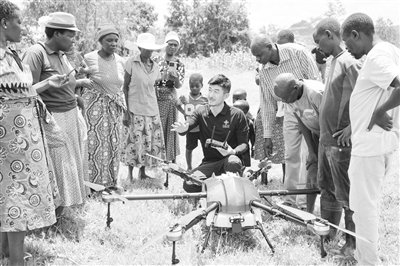
“等新合作项目落定,我想再去一次中国”
Xin Lang Cai Jing· 2025-12-27 17:39
Core Viewpoint - The article highlights the transformative impact of Chinese hybrid rice seeds on Gambian agriculture, showcasing a successful collaboration between China and Gambia that has significantly improved rice production and farming practices in the region [6][7][9]. Group 1: Agricultural Transformation - The agricultural technology assistance project between China and Gambia began in 2019, focusing on modernizing rice farming techniques in the Sapu region, which previously relied on traditional methods [7]. - The introduction of controlled irrigation systems and mechanization has allowed for a significant increase in rice yields, with hybrid rice achieving stable production of over 7 tons per hectare, 2-3 times the local average [9][10]. - By 2025, the hybrid rice varieties are expected to maintain an average yield of 8.5 tons per hectare during the dry season, with peak yields reaching 10.8 tons per hectare [9]. Group 2: Training and Capacity Building - The project has conducted over 50 training sessions, benefiting more than 2,700 local personnel and establishing 38 hybrid rice demonstration sites covering over 300 hectares [11]. - The focus on "teaching to fish" rather than one-time aid has been a core principle, ensuring that local farmers can sustain improvements independently after the project's completion [11][12]. Group 3: Future Plans and Challenges - The farmer Musa plans to establish a professional agricultural team by 2026, collaborating with local universities to train young people in agriculture, providing them with land, seeds, and technical support [18]. - Despite the successes, challenges remain, including insufficient production capacity, a lack of skilled machinery operators, and supply chain issues for parts [17]. - Musa's collaboration with the World Food Programme aims to provide rice for school feeding programs, highlighting the broader social impact of the agricultural improvements [17].


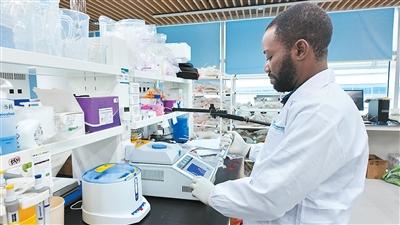
“希望这能促进西非与中国的深度交流”(我在中国·行耕记)
Ren Min Ri Bao Hai Wai Ban· 2025-12-05 00:39
Core Viewpoint - The article highlights the collaboration between African agricultural researchers and Chinese institutions to address food security challenges in Africa, particularly focusing on drought-resistant maize varieties and advanced agricultural technologies [3][9]. Group 1: Research Collaboration - Researchers from Benin and Burkina Faso are participating in a program in Sanya, China, to enhance their agricultural research capabilities and find solutions to local agricultural challenges [4][9]. - The collaboration aims to strengthen the agricultural research systems of their home countries through knowledge exchange and technology transfer [10]. Group 2: Technological Advancements - The researchers are exposed to cutting-edge agricultural technologies, such as high-throughput phenotyping platforms that can rapidly assess plant traits, significantly improving the efficiency of drought resistance screening [7][8]. - The shift from manual labor to technology-driven methods represents a revolutionary change in breeding practices, allowing for more precise and faster results [7]. Group 3: Personal Experiences and Challenges - The researchers face initial challenges, including language barriers and cultural adjustments, but express appreciation for the support and hospitality received from their Chinese counterparts [6][8]. - The personal stories of the researchers illustrate the emotional and professional growth experienced during their time in China, fostering a sense of community and collaboration [6][9]. Group 4: Future Aspirations - The researchers express hopes for future collaborations that include exchanging genetic resources and transferring technology to improve agricultural productivity in their home countries [9][10]. - There is a shared vision of combining modern agricultural techniques with traditional knowledge to create innovative solutions tailored to local conditions [9].
通讯丨全球妇女峰会上三张照片背后的“她”故事
Xin Hua Wang· 2025-10-15 12:27
Core Insights - The article highlights the empowerment of women through various initiatives in Africa and Southeast Asia, showcasing their stories and the positive impact of training and cooperation projects [1][2][4][6] Group 1: Agricultural Initiatives - The "New Farm for African Mothers" project, led by China's Hunan Women's Federation, aims to improve agricultural practices in Madagascar, focusing on agricultural technology, seed selection, and mechanization [2] - The project has provided employment opportunities for 1,150 African women, trained 1,862 individuals in skills, and improved living conditions for 950 families [2][3] Group 2: Sports and Community Empowerment - In Kakuma refugee camp, a women's football team is breaking gender stereotypes and fostering unity among female athletes, demonstrating resilience despite challenging living conditions [4] - The interaction between Olympic champion Yang Yang and the team members emphasizes the importance of female solidarity across borders [4] Group 3: Cultural Exchange and Skills Development - The "Genius Mom Friendship Workshop" in Vientiane, Laos, focuses on teaching traditional crafts like bamboo weaving to local women, promoting economic independence [5][6] - The initiative fosters cultural exchange between Chinese and Laotian women, creating a bridge for collaboration and skill sharing [6]
中国农业技术助建“非洲粮仓”推动非洲农业发展
Zhong Guo Xin Wen Wang· 2025-06-14 06:48
Group 1 - The article highlights the significant role of Chinese agricultural technology in enhancing food security in Africa, particularly through hybrid rice cultivation [1][2] - Over 20 African countries are now cultivating hybrid rice, demonstrating the impact of China's support in achieving food security by 2030 [1] - Madagascar has become the first African country to commercialize hybrid rice, with local varieties yielding 7.5 tons per hectare, two to three times more than conventional varieties [2] Group 2 - Yuan's Seed Industry has established a comprehensive local industry chain in Madagascar, covering hybrid rice breeding, production, planting, processing, and sales [2] - The Hunan Hybrid Rice Research Center is actively involved in training and technology transfer, contributing to the establishment of more "African granaries" through various cooperative projects [2][3] - New initiatives, such as the "China-Madagascar Hybrid Rice 'Belt and Road' Joint Laboratory," aim to foster technological innovation and international cooperation in hybrid rice [3]
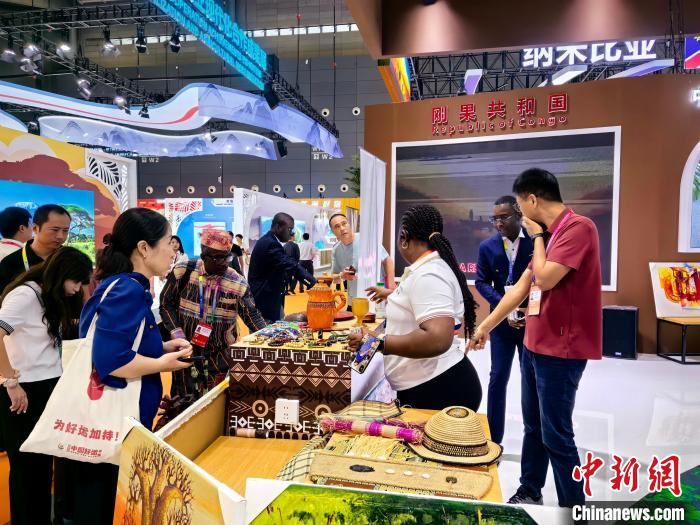
中非农业合作提质升级 从授人以鱼到授人以渔
Zhong Guo Xin Wen Wang· 2025-06-13 05:27
Core Insights - The article highlights the transformation of agricultural practices in Africa, particularly through Chinese support, shifting from traditional methods to modern, mechanized farming [1][3][4] - The Fourth China-Africa Economic and Trade Expo serves as a platform for showcasing the growing agricultural cooperation between China and African nations, emphasizing deeper industrial chain construction and technological collaboration [3][5] Group 1: Agricultural Transformation - Young people in Africa are increasingly interested in agriculture, viewing it as a modern and appealing career choice due to mechanization and technological advancements [1] - The Gambian farmer Musa Dabo's experience illustrates the successful transition from manual to mechanized rice farming, expanding his farm from 3 hectares to 100 hectares [1] Group 2: Trade and Market Access - African agricultural products, such as Kenyan flowers and Ethiopian coffee, are gaining popularity in China, indicating a shift from mere trade to comprehensive industrial cooperation [3] - China has implemented a 100% zero-tariff policy for 33 African countries starting December 1, 2024, aimed at increasing the import of high-quality African products [4] Group 3: Investment and Development - China has established 24 agricultural technology demonstration centers in Africa and has conducted over 100 agricultural aid projects, training over 50,000 agricultural technicians [4] - The introduction of zero-tariff policies has significantly boosted exports of Rwandan dried chili to China, with annual exports reaching 200 to 300 tons [4] Group 4: Future Cooperation - The Liberia Vice President emphasized the importance of China as a partner for Africa's modernization, highlighting opportunities in trade, investment, and various sectors including agriculture [5]