
九九消寒图

Search documents
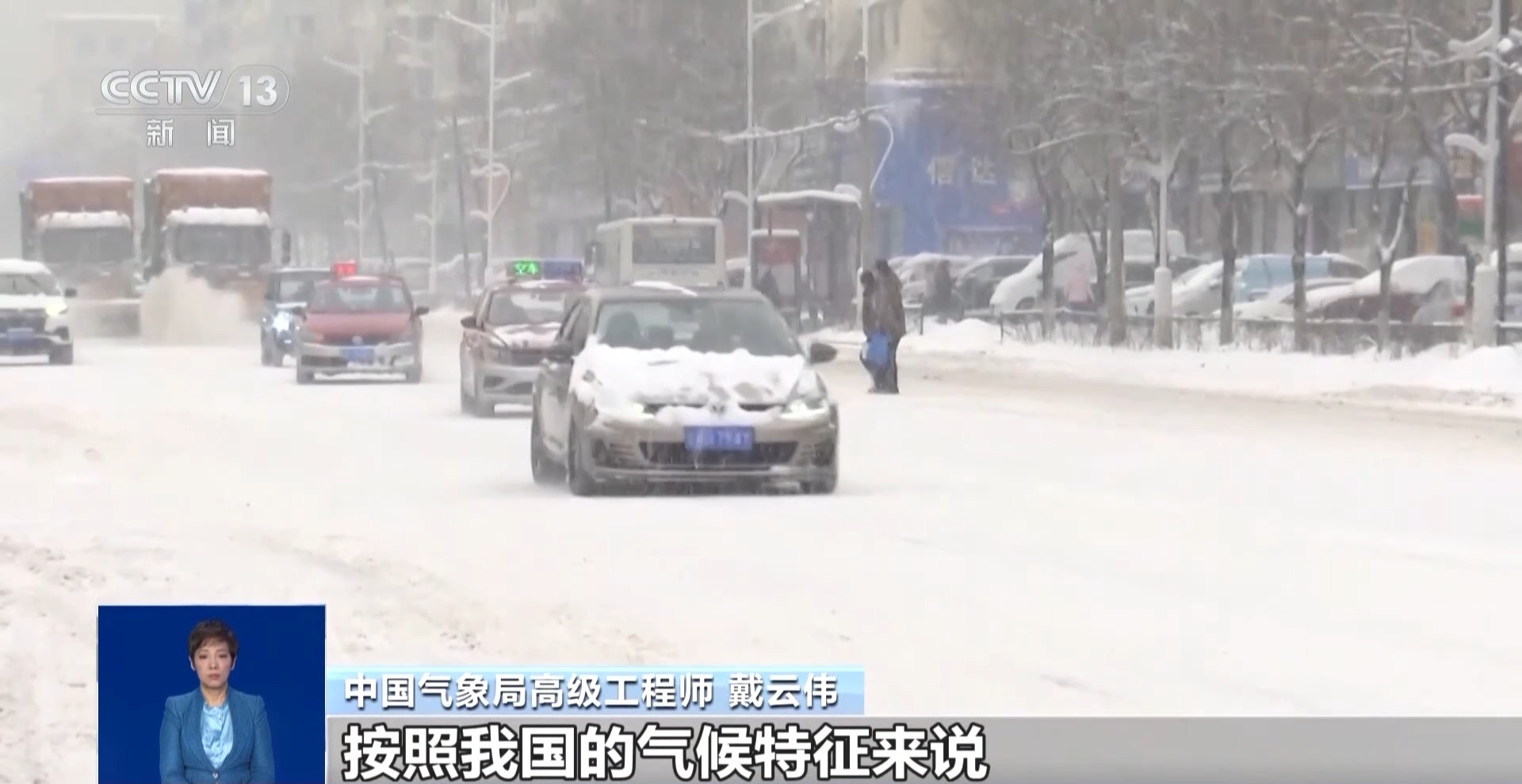
“四九”严寒开启 “数九”歌谣唱出气候密码
Yang Shi Xin Wen· 2026-01-17 17:55
Core Viewpoint - The "Nine Nines" tradition, starting from the winter solstice, reflects ancient wisdom regarding seasonal changes and weather patterns in China, marking the coldest period of winter and the transition towards spring [1][2][4]. Group 1: Significance of "Nine Nines" - The "Nine Nines" custom begins from the winter solstice, which is the shortest day of the year, leading to a gradual increase in cold as heat loss exceeds heat gain [2][4]. - The coldest periods in China typically occur during "Three Nines" and "Four Nines," with average temperatures reaching as low as -5.15°C during "Three Nines" [2][4]. Group 2: Regional Variations - In northern China, "Three Nines" is generally the coldest period, while in southern regions like Jiangnan and most of South China, "Four Nines" tends to be the coldest [5]. - The actual temperature variations can be influenced by climate change, El Niño, and cold air processes, leading to fluctuations from historical averages [5]. Group 3: Current Weather Patterns - This year, during "Three Nines," many regions experienced a temperature rise due to weak cold air, but "Four Nines" is expected to bring a significant drop in temperatures, potentially making it the coldest nine days of the winter [6][8]. - For instance, in Nanjing, temperatures are projected to drop from a high of 22°C to below freezing, illustrating the stark contrast in weather [6]. Group 4: Cultural Aspects - The "Nine Nines" tradition includes various folk songs that describe the weather changes and agricultural practices, reflecting local climate variations [9][10]. - The "Nine Nines" songs have evolved over time, with different regions having their unique versions that capture the essence of local weather patterns and farming cycles [9][10]. Group 5: Historical Context - The "Nine Nines" custom has been documented for over 1,400 years, with practices like "drawing nine" and "writing nine" serving as both a scientific record of weather changes and a cultural activity to welcome spring [13][15]. - These activities not only record weather but also express the anticipation of spring, embodying the philosophy of waiting for the seasonal transition [15].

“数九”到底该咋数?怎么画“九九消寒图”?来了解一下
Xin Lang Cai Jing· 2025-12-21 14:32
Group 1 - The article discusses the traditional Chinese custom of "Shu Jiu," which begins on the winter solstice and involves counting nine days as one "Jiu" [1] - It highlights the cultural significance of the "Jiu Jiu Song," which varies across different regions in China, particularly in the northern areas [3] - The "Jiu Jiu Song" reflects the changes in weather and seasonal transitions, emphasizing the anticipation of spring [3] Group 2 - The article explains the concept of "Jiu Jiu Xiao Han Tu," which is a traditional way to mark the days of winter, often involving artistic expressions like drawing and writing [10] - It mentions the educational aspect of this tradition, serving as a tool for teaching children literacy and natural knowledge [10] - The article also notes the emotional and recreational benefits of this practice, enhancing the enjoyment of winter while looking forward to spring [10]

“九九消寒图”是中国人独有的浪漫
Xin Lang Cai Jing· 2025-12-21 10:24
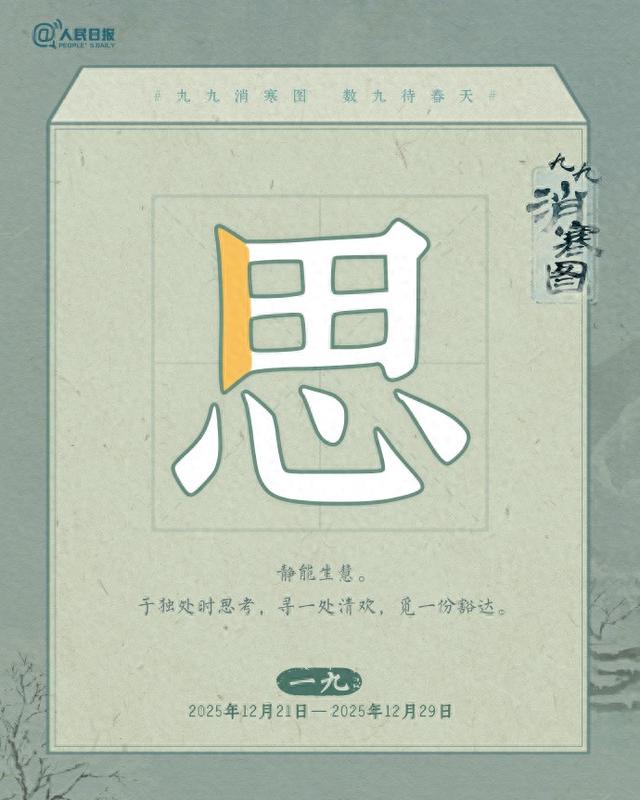
Group 1 - The article discusses the traditional Chinese custom of "九九消寒图" which marks the beginning of winter and the anticipation of spring [1] - The "九九消寒图" involves filling in strokes of nine characters daily while recording the weather, symbolizing the passage of time until spring arrives [1] - Each segment of the "九九消寒图" corresponds to specific dates, with the first segment starting from December 30, 2025, to January 7, 2026 [3] Group 2 - The subsequent segments continue through various dates, emphasizing themes of self-care, appreciation of time, and personal growth [4][5][6][7][8][9] - Each segment encourages positive reflections and aspirations for the new year, highlighting the importance of cherishing moments and striving for improvement [4][5][6][7][8][9]
今起开启消寒图 “九九”雅趣“翻花头”
Xin Lang Cai Jing· 2025-12-21 07:21
Core Viewpoint - The article discusses the traditional Chinese custom of "Jiujiao" (九九消寒图), which is a cultural practice to mark the winter solstice and count down the days until spring, highlighting its historical significance and modern adaptations in Shanghai. Group 1: Historical Significance - The earliest written record of the "Jiujiao" custom can be traced back to the Southern and Northern Dynasties in the text "Jingchu Suishiji" [2] - The practice serves not only as a way to pass the long winter but also reflects people's careful observation of weather and the passage of time [2] - The "Jiujiao" transforms the abstract concept of cold into a visual and tangible experience, providing a sense of anticipation for the arrival of spring [2] Group 2: Traditional Practices - The "Jiujiao" can be expressed through two main forms: "drawing nine" (画九) and "writing nine" (写九) [3] - "Drawing nine" often involves using plum blossom imagery, where each day a petal is added, symbolizing the transition from winter to spring [3] - "Writing nine" is a literary game favored by scholars, where characters are filled in according to their strokes, creating a colorful representation of winter weather [3] Group 3: Modern Adaptations - The tradition of creating "Jiujiao" has been integrated into modern educational settings, such as at Shanghai Hainan Middle School, where it combines art education with emotional expression [4] - Community and public art initiatives have also embraced the "Jiujiao," including multimedia light shows and digital engagement through online platforms [4] - These modern interpretations aim to provide psychological comfort and foster a connection to cultural heritage during the winter season [4]