云端营销

Search documents
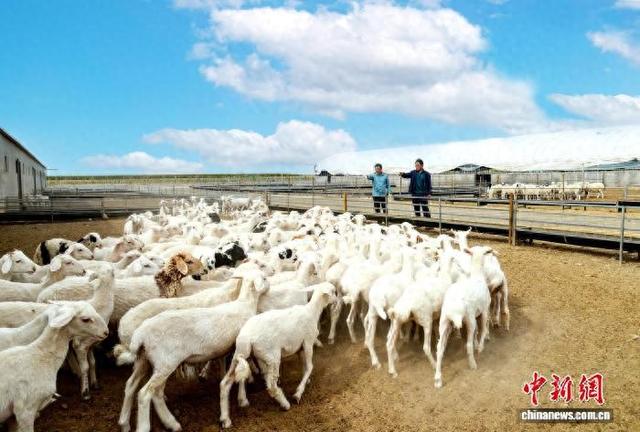
从节水养殖到“云上”销售,民勤戈壁滩上唱响“智慧牧歌”
Zhong Guo Xin Wen Wang· 2026-02-27 06:04
Core Insights - The article highlights the integration of technology and sustainable practices in the sheep farming industry in Minqin County, Gansu Province, focusing on water conservation and digital management systems [1][2][3] Group 1: Water Conservation and Technology Implementation - The sheep farm in Minqin County utilizes automated water feeding systems that significantly reduce water waste by ensuring precise water supply based on the sheep's presence [1] - The farm has adopted dry manure cleaning techniques, replacing traditional water-intensive methods, which not only conserves water but also enhances the nutrient retention in solid manure, improving organic fertilizer efficiency [1] - A digital management platform has been established, incorporating IoT technology to monitor environmental conditions and optimize feeding processes, thereby increasing efficiency and reducing feed waste [1][2] Group 2: Market Expansion and Sales Strategies - Minqin County is leveraging technology to enhance the entire meat sheep supply chain, utilizing "Internet of Things" to broaden sales channels and promote high-quality lamb products [2] - The "cloud grazing" live streaming model allows farmers to showcase their ecological farming practices, resulting in a 40% premium on products due to enhanced consumer engagement and transparency [2] - A traceable sourcing system enables consumers to track the origin of lamb products, breaking down information barriers between buyers and sellers, thus increasing market trust and sales [2] Group 3: Industry Development and Future Goals - Minqin County aims to reach a sheep population of 4.3 million by the end of 2025, with specific targets for breeding and market output [4] - The county is fostering various cooperative models between enterprises and farmers to enhance participation in the industry, ensuring that farmers benefit from the upgrades in the sheep farming sector [4] - The focus is on creating a complete sheep industry chain that includes breeding, standardization, processing, and marketing, ensuring a steady supply of high-quality lamb products [3][4]
从节水养殖到“云上”销售 民勤戈壁滩上唱响“智慧牧歌”
Xin Lang Cai Jing· 2026-02-26 06:17
Core Viewpoint - The article highlights the advancements in the sheep farming industry in Minqin County, Gansu Province, focusing on water-saving technologies, digital management, and the integration of IoT to enhance efficiency and sustainability in sheep farming [1][2][4]. Group 1: Water-Saving Technologies - The sheep farm has implemented fully automated water supply systems that significantly reduce water waste by ensuring precise water delivery based on the sheep's presence [1]. - The adoption of dry manure cleaning technology has drastically cut down water usage for waste management, preserving nutrients in solid manure and reducing wastewater generation [1][6]. Group 2: Digital Management and IoT Integration - A digital management platform utilizing IoT technology has been established, featuring sensors for temperature, humidity, and ammonia monitoring, which optimize the internal environment of sheep housing [2]. - An intelligent feeding system adjusts feed amounts and formulations based on the growth stage of each sheep, minimizing feed waste and improving fattening efficiency [2]. Group 3: Market Expansion and Sales Channels - The county is leveraging technology to expand sales channels for high-quality lamb products, with initiatives like "cloud grazing" live streaming to showcase the ecological environment and attract consumers [2][4]. - The transparent traceability system allows consumers to track the origin of lamb products, enhancing trust and enabling farmers to gain more bargaining power in the market [4]. Group 4: Industry Development and Future Goals - Minqin County aims to increase its sheep population to 4.3 million by the end of 2025, with specific targets for breeding and slaughtering [5]. - The county is focusing on building a complete sheep industry chain, from breeding to processing and marketing, to ensure the supply of green, safe, and high-quality lamb products [5].