
交通治理现代化

Search documents
《法治日报》关注 | 江苏公安交管聚焦“小切口”推动城市“大治理”
Xin Lang Cai Jing· 2026-01-19 13:16
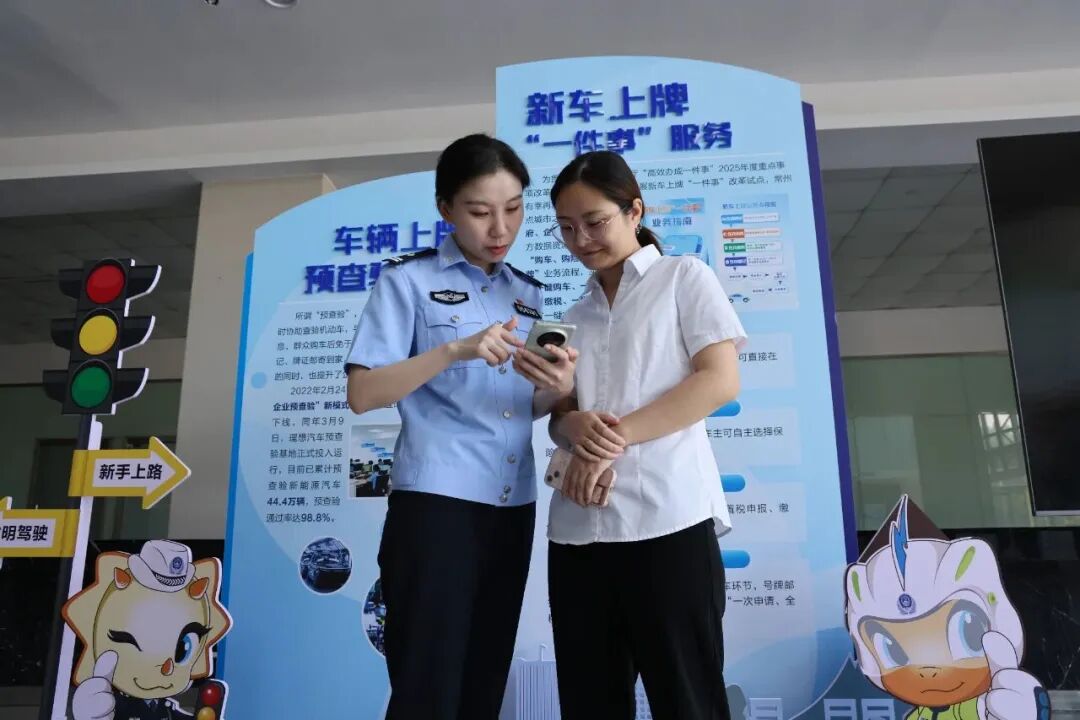
Core Viewpoint - The Jiangsu Public Security Traffic Management Department has implemented a series of convenient measures to enhance public satisfaction and streamline the vehicle registration process, significantly improving service efficiency and contributing to regional economic development [1][15]. Group 1: New Car Registration "One-Stop Service" - The "One-Stop Service" for new car registration allows users to complete the entire process via a mobile app, significantly reducing the time and paperwork involved [3][18]. - In the first five months of the pilot program, over 7,000 users benefited from the service, with average processing times greatly reduced [4][18]. - Starting November 1, 2025, this service will be rolled out nationwide, aiming to further enhance the efficiency of public security traffic services [6][20]. Group 2: Data Integration and Efficiency - The initiative integrates data from government, enterprises, society, and finance, creating a comprehensive data chain that facilitates real-time verification and sharing among over ten departments [6][20]. - The average time for new car registration is expected to be under 30 minutes, with a reduction of 10 minutes in business review time and 40 minutes in document organization time [6][20]. Group 3: Broader Traffic Management Innovations - The Jiangsu Public Security Traffic Management Department has adopted innovative methods to address specific traffic issues, leading to overall improvements in urban traffic governance [7][21]. - Measures such as optimizing parking order and implementing intelligent traffic signal timing have effectively alleviated local traffic congestion [7][21]. Group 4: Community and Healthcare Initiatives - Initiatives like the "Little Blue Whale" micro-bus service have been introduced to ensure seamless transportation for patients, significantly reducing congestion around hospitals [9][24]. - After implementing these measures, the congestion index around hospitals decreased by 37%, and emergency vehicle travel times improved by an average of 5 minutes [10][24]. Group 5: Digital Transformation and Accessibility - Since 2025, over 17 million electronic driving licenses and vehicle registration certificates have been issued, benefiting more than 4 million people [12][26]. - The establishment of over 4,000 social service points and the integration of traffic management services into government service halls have streamlined operations, with 70% of offline business being redirected to these points [14][28].

2026,我省交通运输做些啥?
Xin Lang Cai Jing· 2026-01-10 23:42
Group 1 - The core plan for the province during the "14th Five-Year Plan" period includes an investment of over 400 billion yuan in transportation, aiming for 95% completion of the provincial "211" transportation circle [1] - In 2026, the province will focus on four key directions: integrated development, safety enhancement, digital upgrade, and green transformation, with a target of 90 billion yuan in road and waterway investment, striving to reach 100 billion yuan [1] - Key projects include the expansion of the Beijing-Taipei and Quanzhou-Xiamen highways, construction of the Quanzhou section of the Quanzhou-Meizhou highway, and the completion of 100 kilometers of ordinary national and provincial highways [1] Group 2 - The province will implement a "people-oriented" transportation initiative, adding 400 charging facilities and 6 service area entrances, while enhancing safety and accessibility [2] - The "Hundred Towns, Thousand Villages, Ten Thousand Miles Road" project will improve 500 kilometers of substandard rural roads and implement safety projects over 600 kilometers [2] - The province aims for over 40% of rural passenger and freight routes to be integrated, with 150 new optimized bus routes to promote urban-rural transport integration [2] Group 3 - Digital transformation is highlighted as a key driver for high-quality transportation development, with plans to upgrade smart highway stations and service areas, and create a digital navigation channel of 1,140 kilometers [3] - The province will enhance institutional frameworks to improve governance capabilities, focusing on legislative processes for key transportation regulations [3] - Policies will be developed to promote high-quality development in highways, alongside the establishment of comprehensive pilot programs in critical areas [3]