产业化进程

Search documents
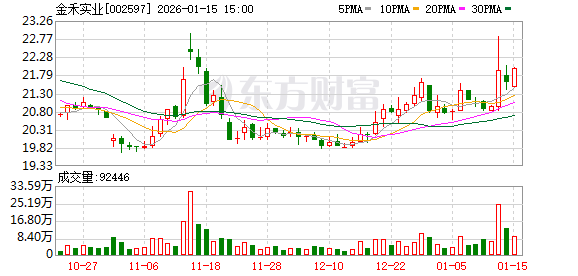
金禾实业:公司力争2026年完成公斤级样品制备与送样
Zheng Quan Ri Bao· 2026-01-15 12:12
Core Viewpoint - The company emphasizes that its industrialization process will strictly follow the rules of technological research and development, influenced by multiple factors such as technology maturity, customer validation, and market demand [2] Group 1: Industrialization Process - The company plans to complete the preparation and delivery of kilogram-level samples by 2026, contingent on stable technical indicators and clear downstream intentions [2] - A pilot production line for ton-level testing will be established to validate the process [2] - Decisions regarding the construction of large-scale production lines will be made cautiously based on pilot results, cost competitiveness, and clear market demand [2] Group 2: Project Monitoring and Disclosure - The company will continuously monitor project progress and disclose significant milestones in accordance with relevant regulations [2]


军工材料:陶瓷基复材的投资逻辑——国产替代与产业化进程
材料汇· 2025-07-09 12:34
Investment Logic - Ceramic Matrix Composites (CMC) are becoming a crucial strategic thermal structural material due to their high-temperature resistance and lightweight characteristics, leading to a rapid development phase in the industry [2][6] - CMC has significant advantages in high-temperature resistance and lightweight properties, with applications in aerospace, nuclear energy, and braking systems. While foreign research on CMC started early and is technologically mature, China has made key technological breakthroughs and is gradually catching up [2][6] - The strong support from national policies is providing a solid guarantee for the R&D and industrialization of CMC, indicating a bright future for the industry [2][6] CMC Classification and Applications - CMC can be classified based on the combination of reinforcement and matrix, such as Cf/SiC, SiCf/SiC, and oxide/oxide, each with unique performance advantages and applications in aerospace thermal protection, engine hot-end components, and high-temperature insulation [2][8] - SiCf/SiC CMC is centered around SiC fibers, with a complex preparation process involving multiple techniques, and environmental barrier coating (EBC) technology ensuring high-temperature applications [3][33] - Al2O3/Al2O3 CMC exhibits good oxidation resistance and water vapor performance, with preparation methods including slurry infiltration and sol-gel processes, showing promising application prospects as domestic supply of Al2O3 fibers accelerates [3][8] Demand Side - The demand for CMC in high-end fields such as aerospace and nuclear energy is rapidly increasing, with a projected global CMC market size expected to achieve a compound annual growth rate (CAGR) of over 10% from 2024 to 2031, entering a high-speed development phase [4][6] - In the aerospace sector, CMC is widely used in engine hot-end components, stealth design, and lightweight design, with the Chinese aerospace CMC market expected to reach a trillion yuan in the next decade [4][6] - The aerospace sector's demand for high-performance thermal protection and structural materials is increasing, making CMC indispensable in spacecraft and remote sensing cameras [4][6] - CMC's high-temperature and radiation-resistant properties are driving stable demand growth in the nuclear energy sector, especially with the construction of fourth-generation nuclear power plants and upgrades to existing plants [4][6] Supply Side - The global CMC market is led by Japanese companies such as Nippon Carbon and Ube Industries, with GE establishing an integrated supply chain from fiber to components [5][10] - China has built a relatively complete CMC industrial chain, with upstream raw material supply gradually achieving localization and midstream companies actively engaging in technological R&D and industrialization [5][10] - The production of SiC fibers in China has formed three industrial clusters centered around universities, with several companies achieving annual production capacities of 10 tons for second-generation SiC fibers, while third-generation fibers are still heavily reliant on imports, indicating significant domestic substitution potential [5][10] Investment Opportunities - The investment opportunities in the ceramic matrix composite industry chain are promising, with a focus on core enterprises in various segments [6][11] - In the upstream segment, attention should be given to manufacturers capable of large-scale production of ceramic fibers [6][11] - In the midstream segment, companies with CMC production capabilities should be prioritized for investment [6][11] Domestic Development and Policy Support - The domestic CMC development has made significant technological breakthroughs, with the localization of SiC fiber production accelerating and some products achieving performance levels comparable to foreign counterparts [6][25] - The Chinese government has introduced multiple policies to promote the R&D and industrialization of CMC, fostering collaboration between universities, research institutions, and enterprises to overcome technological barriers and stimulate industry growth [25][26]