人形机器人租赁市场发展

Search documents
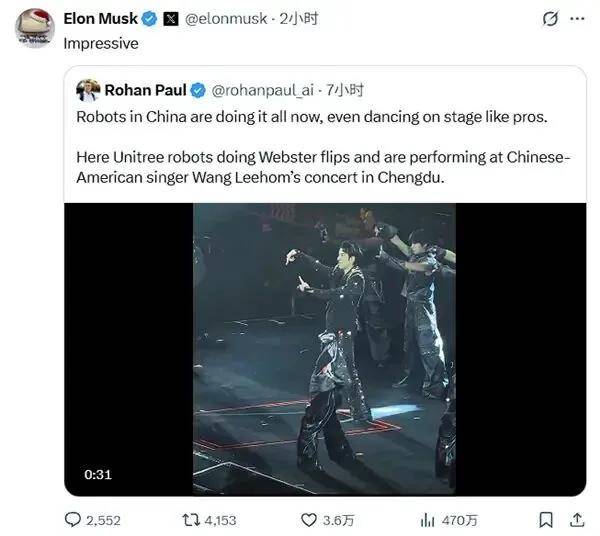
马斯克点赞!宇树机器人演唱会伴舞,引爆全球科技圈围观
Sou Hu Cai Jing· 2025-12-20 12:28
Core Insights - The emergence of humanoid robots in commercial performances marks a shift from novelty to regular use in various public scenarios, indicating a maturation of the technology and its applications [3][7][10] Market Dynamics - The humanoid robot rental market experienced significant fluctuations in 2025, with rental prices peaking at 20,000 yuan per day due to high demand, particularly following performances like the Spring Festival Gala [7][9] - At the height of demand, the rental of popular models saw substantial markups, with a robot priced at 99,000 yuan being rented out for as much as 350,000 yuan, leading to a rapid increase in the number of rental companies to around 500 [9][10] Price Trends - By December 2025, daily rental prices for humanoid robots had decreased to a range of 3,000 to 8,000 yuan, reflecting a drop of over 60% from peak prices [10][18] - The decline in prices is attributed to increased supply, as domestic production capabilities improved, reducing reliance on imported components and lowering overall costs [11][12] Technological Advancements - The reduction in technical barriers and the introduction of user-friendly platforms have facilitated the expansion of the humanoid robot rental market, allowing users to easily convert human performances into robotic actions [12][15] - The emergence of third-party service providers has enhanced the professionalism of the rental market, offering comprehensive support for programming and operation [15] Industry Outlook - The rental market's return to rational pricing is seen as a sign of industry maturity, with competition shifting towards service quality and practical application [17] - Projections indicate that the shipment of commercial humanoid robots in China will reach approximately 5,000 units by 2025, with expectations to grow to nearly 60,000 units by 2030, reflecting a compound annual growth rate of over 95% [17] - The industry is expected to evolve towards a dual structure of standardized low-end services and customized high-end offerings, expanding applications into functional areas such as food service and hotel delivery [17][18]