人类优先

Search documents
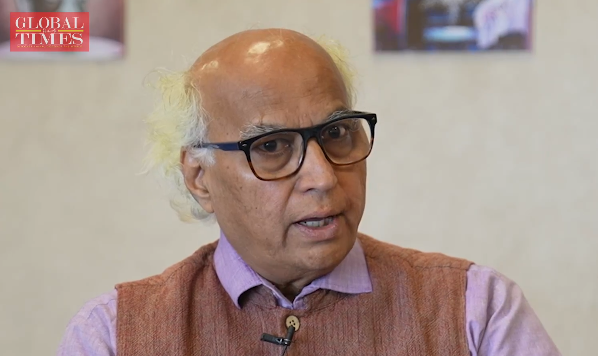
印度前总理顾问库尔卡尼接受《环球时报》专访:美国蔑视规则,会让更多国家质疑其理智
Huan Qiu Shi Bao· 2025-08-18 22:56
Core Viewpoint - The relationship between the United States and India has significantly deteriorated due to recent tariff disputes, raising concerns about the future of bilateral ties and the feasibility of U.S. strategies to leverage India against China [1][3]. Group 1: U.S.-India Relations - The U.S. imposed a total of 50% tariffs on Indian imports and threatened an additional 10% tariff due to India's membership in BRICS, marking a surprising reversal in relations that were previously characterized by mutual friendship and ambitious trade goals [1]. - Indian public sentiment towards the U.S. has turned increasingly negative, with feelings of disappointment and resentment emerging as a result of U.S. actions that contradict the principles of "U.S.-India friendship" [3]. - The current state of U.S.-India relations is considered to be at a historic low, with the blame not resting on India but rather on the actions of the U.S. government [3]. Group 2: Strategic Implications - The U.S. strategy to align India against China has been deemed ineffective even before the recent deterioration in relations, as trust in U.S. commitments has waned [5]. - India is expected to continue pursuing its own interests in its relationships with China and Russia, emphasizing the importance of bilateral dialogue without external interference [5]. - The "Quad" (Quadrilateral Security Dialogue) is viewed skeptically, with concerns that current trade tensions will hinder cooperation among member nations [6][7]. Group 3: Global Trade Dynamics - The U.S. approach of using tariffs as a tool for economic policy is criticized for undermining trust and violating the principles of a rules-based international order, which the U.S. has historically advocated [9]. - The notion of "America First" and "India First" is challenged, suggesting that a focus on collective human interests should take precedence over nationalistic agendas [9][10]. - The call for collaboration among nations to establish a fair and democratic global trade order is emphasized, highlighting the shared challenges posed by hegemonic powers [10].