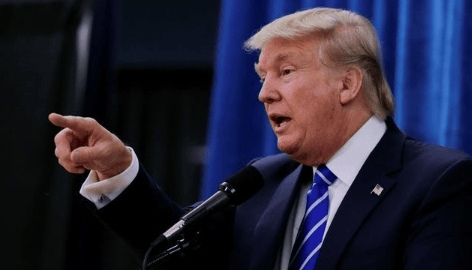
印度优先

Search documents
【环时深度】当“美国优先”撞上“印度优先”,美印结构性裂痕加深
Huan Qiu Shi Bao· 2025-09-28 22:45
Core Viewpoint - The relationship between the United States and India, once described as a "defining partnership of the 21st century," has deteriorated significantly due to issues such as tariffs and India's purchase of Russian oil, indicating structural fractures and competition between the two nations [1][4][6]. Group 1: Historical Context - The close relationship between Trump and Modi was marked by public displays of friendship, including large-scale events in both countries, aiming to boost bilateral trade to $500 billion by 2030 [2][4]. - Recent tensions have escalated with the U.S. imposing a 25% retaliatory tariff on Indian goods and designating India as a major drug transit country, which has strained diplomatic ties [4][5]. Group 2: Structural Issues - The U.S. and India are experiencing structural tensions, particularly regarding India's strategic independence and its relationships with countries like Russia, which the U.S. views as a challenge [6][7]. - The U.S. desires a strong India but is wary of its growing power, leading to conflicting interests in foreign policy and trade [7][8]. Group 3: Economic Implications - The U.S. has imposed tariffs as part of its "America First" policy, which conflicts with India's "Make in India" initiative aimed at boosting domestic manufacturing [9][10]. - The trade relationship is under pressure, with a projected trade deficit of $45.7 billion for 2024, prompting India to seek diversification in its trade partnerships [10][11]. Group 4: Future Outlook - Despite current tensions, there are indications that a trade agreement may be reached, although both sides may remain dissatisfied with the outcomes [11]. - India is actively pursuing a more diversified economic strategy to mitigate the impact of U.S. tariffs while maintaining its strategic partnership with Washington, particularly in defense and technology [11][12].

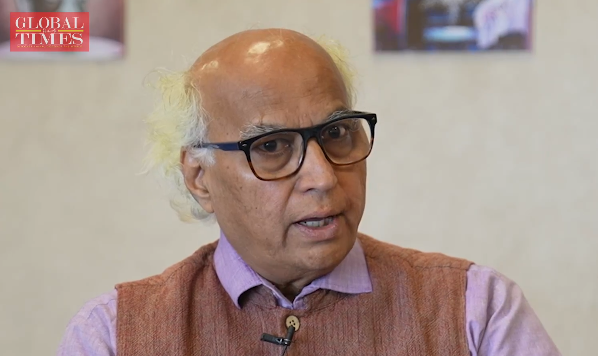
印度前总理顾问库尔卡尼接受《环球时报》专访:美国蔑视规则,会让更多国家质疑其理智
Huan Qiu Shi Bao· 2025-08-18 22:56
Core Viewpoint - The relationship between the United States and India has significantly deteriorated due to recent tariff disputes, raising concerns about the future of bilateral ties and the feasibility of U.S. strategies to leverage India against China [1][3]. Group 1: U.S.-India Relations - The U.S. imposed a total of 50% tariffs on Indian imports and threatened an additional 10% tariff due to India's membership in BRICS, marking a surprising reversal in relations that were previously characterized by mutual friendship and ambitious trade goals [1]. - Indian public sentiment towards the U.S. has turned increasingly negative, with feelings of disappointment and resentment emerging as a result of U.S. actions that contradict the principles of "U.S.-India friendship" [3]. - The current state of U.S.-India relations is considered to be at a historic low, with the blame not resting on India but rather on the actions of the U.S. government [3]. Group 2: Strategic Implications - The U.S. strategy to align India against China has been deemed ineffective even before the recent deterioration in relations, as trust in U.S. commitments has waned [5]. - India is expected to continue pursuing its own interests in its relationships with China and Russia, emphasizing the importance of bilateral dialogue without external interference [5]. - The "Quad" (Quadrilateral Security Dialogue) is viewed skeptically, with concerns that current trade tensions will hinder cooperation among member nations [6][7]. Group 3: Global Trade Dynamics - The U.S. approach of using tariffs as a tool for economic policy is criticized for undermining trust and violating the principles of a rules-based international order, which the U.S. has historically advocated [9]. - The notion of "America First" and "India First" is challenged, suggesting that a focus on collective human interests should take precedence over nationalistic agendas [9][10]. - The call for collaboration among nations to establish a fair and democratic global trade order is emphasized, highlighting the shared challenges posed by hegemonic powers [10].
美印贸易谈判恐陷入僵局
Jing Ji Ri Bao· 2025-08-12 22:15
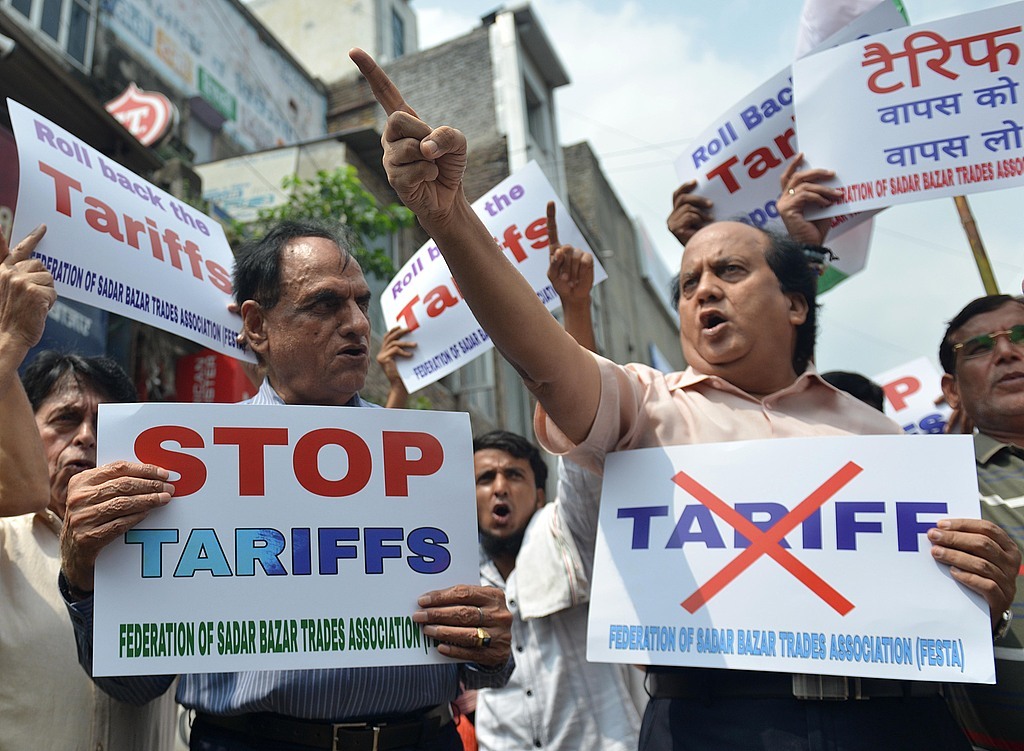
Core Viewpoint - The recent imposition of a 25% punitive tariff by the U.S. on Indian imports, cumulatively raising the total tariff rate to 50%, highlights the structural contradictions between U.S. trade policies and India's developmental ambitions, potentially forcing India to seek self-reliance and economic reform opportunities [1][3]. Trade Negotiations - The trade negotiations between the U.S. and India have stalled due to significant disagreements over tariffs and non-tariff barriers, with India refusing to grant tariff concessions on agriculture and dairy as demanded by the U.S. [1][2]. - India's weighted average tariff is reportedly 5 to 10 percentage points higher than other Asian economies, which could undermine its competitive advantage in labor-intensive exports [2]. Structural Contradictions - The failure of U.S.-India trade talks reveals a fundamental conflict between "America First" and "India First" policies, with the U.S. aiming to bring manufacturing back home, conflicting with India's "Make in India" initiative [3]. - Moody's has indicated that the high tariffs imposed by the U.S. could severely impact India's manufacturing ambitions and slow down its economic growth [3]. Economic Policy Shifts - In response to the high tariffs, the Indian government is encouraging domestic production and considering policy support for exporters, aiming to strengthen local brands and expand international market reach [4]. - India's Prime Minister Modi has expressed a desire for Indian brands to be present on dining tables worldwide, reflecting a shift in strategy towards self-reliance in the face of U.S. tariff pressures [4]. Trade Diversification - The U.S. tariffs are prompting India to seek trade diversification, potentially expanding its trade networks with Asia, ASEAN, and Europe to mitigate the impact of U.S. trade policies [4].
美国才是共同敌人!莫迪政府幡然醒悟,总理放下身段登门求和
Sou Hu Cai Jing· 2025-08-11 04:02
Core Viewpoint - The relationship between India and the United States has soured dramatically, with the U.S. imposing a 50% tariff on Indian goods due to India's dealings with Russia, particularly in oil, which has led India to seek closer ties with China as a counterbalance [1][3]. Group 1: U.S.-India Relations - The U.S. President Trump previously praised Indian Prime Minister Modi, but has now criticized India for its economic actions, labeling it an "economically dying country" [1][3]. - India signed a ten-year oil contract with Russia, purchasing 500,000 barrels daily, which could yield $13 billion annually, causing tension with the U.S. [3]. - Trump presented India with an ultimatum: align with the U.S. or face consequences, not anticipating Modi's pivot towards China [3]. Group 2: India-China Relations - Modi's upcoming attendance at the Shanghai Cooperation Organization summit in China marks his first visit to China in nearly a decade, indicating a strategic shift [1][5]. - Indian media speculate that Modi's visit could normalize relations with China, potentially reopening border trade and restoring flight routes between Beijing and New Delhi [5]. - Modi's statements about India and China cooperating against unfair practices suggest a desire for a more balanced relationship, although the sincerity of these intentions remains uncertain [5][8]. Group 3: Strategic Implications - Modi's actions reflect a careful balancing act between the U.S. and China, as he seeks to avoid alienating either side while securing India's interests [5][7]. - The U.S. has shown a more aggressive stance towards India compared to China, indicating a perception of India's lesser strategic importance [7]. - India's recent moves to restore travel visas for Chinese citizens and encourage Chinese investment are seen as attempts to strengthen economic ties with China, which could provide much-needed investment and technology [7][8]. Group 4: Future Outlook - The potential for India and China to collaborate against U.S. tariffs suggests a shift in global economic dynamics, with both nations possibly forming a united front [8]. - The evolving relationship between India and China could challenge U.S. dominance in global trade, as both countries recognize the need for partnership to counteract unilateral U.S. actions [8].