人车家天地芯生态

Search documents
追觅一口气要造五颗芯片,直接对标高通、星链、英伟达
3 6 Ke· 2026-03-12 09:01
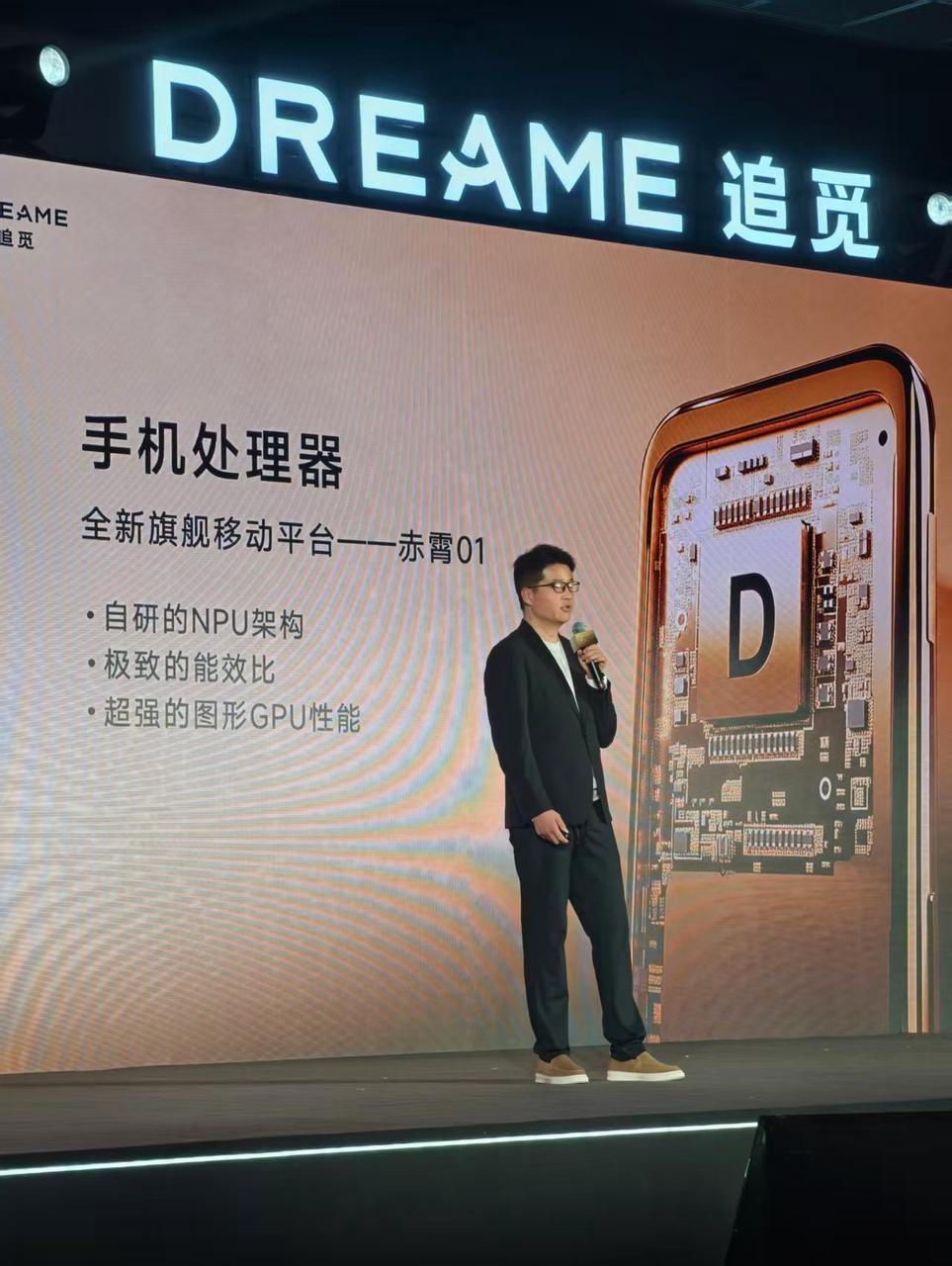
Core Insights - The core focus of the article is on the announcement by "芯际穿越," a chip company incubated by追觅科技, which aims to develop chips across five major areas: mobile phones, autonomous driving, space computing, computers, and general robotics [1][6]. Chip Development - "芯际穿越" is developing a mobile core processor named "赤霄01," which emphasizes enhanced graphics performance, supporting 1.5K resolution at 120 frames per second with full-scene ray tracing [2]. - The "赤霄01" will feature a self-developed NPU architecture, achieving AI equivalent computing power of 200 TOPS, significantly surpassing Qualcomm's latest flagship chip, which has an AI computing power of only 80 TOPS [2]. - In the autonomous driving sector, "芯际穿越" is advancing an L4-level integrated cockpit chip, targeting a computing power of 2000 TOPS, which is three times the current mainstream autonomous driving chip capabilities and directly competes with NVIDIA's DRIVE Thor series [3]. - The chip will integrate追觅's technologies in vision and LiDAR, and will be produced using a 2nm process [4]. - Additionally, the company is developing a chip for personal computers with a computing power of 1.5 PFLOPS, designed on a unified memory architecture to support multi-device networking [4]. Robotics and Space Computing - "芯际穿越" is also working on the "天穹" series main control chip for robotic vacuum cleaners, which will feature a highly integrated SOC with multi-core CPU, dedicated NPU, and independent MCU, aimed at enhancing navigation and obstacle avoidance in complex environments [4]. - The company is venturing into space with the "瑶台" series space computing boxes, aiming to achieve industry-leading reliability, lifespan, performance, and stability for satellite computing, with plans for a supercomputing network of 200 million satellites, double the scale of SpaceX's Starlink project [4]. Strategic Goals and Challenges - The leadership of "芯际穿越" expressed ambitions to "surpass global leading technology companies," indicating a shift in industry dynamics and a focus on innovation for the next decade [5]. - Despite the ambitious plans, currently, only the general robotics chip has entered the tape-out and mass production stage, highlighting the challenges of chip development, which is characterized as a long-cycle, capital-intensive, and highly competitive business [6]. - The company benefits from having a mature downstream ecosystem in general robotics, which provides some stable cash flow to support its chip development efforts [7]. - However, the challenge remains significant as the company aims to compete across five distinct chip sectors simultaneously, a task that may be beyond the capabilities of a single entity [8].