以压促变

Search documents
伊拉克战争后美军最大规模部署将到位 特朗普要对伊朗下手了?
Xin Lang Cai Jing· 2026-02-25 22:06
Group 1 - The U.S. military is preparing for a significant deployment in the Middle East, with the "Ford" aircraft carrier arriving in Greece and the "Lincoln" carrier in the Arabian Sea, marking the largest military presence since the 2003 Iraq War [1] - President Trump is facing low approval ratings at 36%, with 68% of Americans believing he is not focused on the country's most important issues, which may influence his decision to take military action against Iran to boost public confidence [1] - Analysts suggest that Trump's delay in military action against Iran is due to the need for complete military readiness, as one aircraft carrier is insufficient for a war [1] Group 2 - Iran's Foreign Minister Zarif expresses a commitment to reach a fair agreement in negotiations with the U.S., while emphasizing Iran's right to peaceful nuclear technology [2] - The U.S. is employing a dual strategy of military pressure and negotiation, aiming to compel Iran to abandon key demands, including the production of enriched uranium and missile capabilities [2] - The upcoming U.S. midterm elections in November 2026 are influencing Trump's approach to Iran, as he seeks to achieve results without incurring significant military costs [3] Group 3 - Despite recent protests and unrest in Iran, the government retains strong political mobilization capabilities, particularly through the Islamic Revolutionary Guard Corps [5] - The internal situation in Iran is complex, with both opposition and support for the government coexisting, indicating a divided public sentiment rather than a straightforward crisis [5] - Should conflict arise, Iran may resort to asymmetric warfare tactics against U.S. and Israeli forces, potentially targeting naval vessels and military bases in the region [5]
特朗普要对伊朗下手了?
Xin Lang Cai Jing· 2026-02-25 21:01
Group 1 - The U.S. military is deploying a significant force in the Middle East, with the "Ford" aircraft carrier arriving in Greece and the "Lincoln" carrier in the Arabian Sea, marking the largest military presence since the 2003 Iraq War, totaling 200 aircraft including F-22, F-35, and F-16 fighters [1] - President Trump is under pressure domestically, with a low approval rating of 36% and a majority of Americans believing he is not addressing key national issues, which may influence his decision to take military action against Iran [1] - Analysts suggest that Trump's delay in military action is due to the need for complete military readiness, as one aircraft carrier is insufficient for a war, and he may seek to boost his approval ratings through military engagement [1][3] Group 2 - Iran's Foreign Minister has expressed a commitment to reach a fair agreement in negotiations with the U.S., while emphasizing Iran's right to peaceful nuclear technology and rejecting the development of nuclear weapons [2] - The U.S. is employing a dual strategy of military pressure and negotiation, aiming to compel Iran to abandon key demands, including restrictions on uranium enrichment and missile development [2] - The upcoming U.S. midterm elections in November 2026 are influencing Trump's approach to Iran, as he seeks to achieve results that could improve his party's standing [3] Group 3 - Despite internal protests and unrest in Iran, the regime retains significant political mobilization and resistance capabilities, particularly through the Islamic Revolutionary Guard Corps [5] - The internal situation in Iran is complex, with both opposition and support for the government coexisting, indicating a divided public sentiment rather than a straightforward crisis [5] - Should conflict arise, Iran may resort to asymmetric warfare tactics against U.S. and Israeli forces, potentially targeting naval vessels and military bases, and could attempt to block the Strait of Hormuz [5]
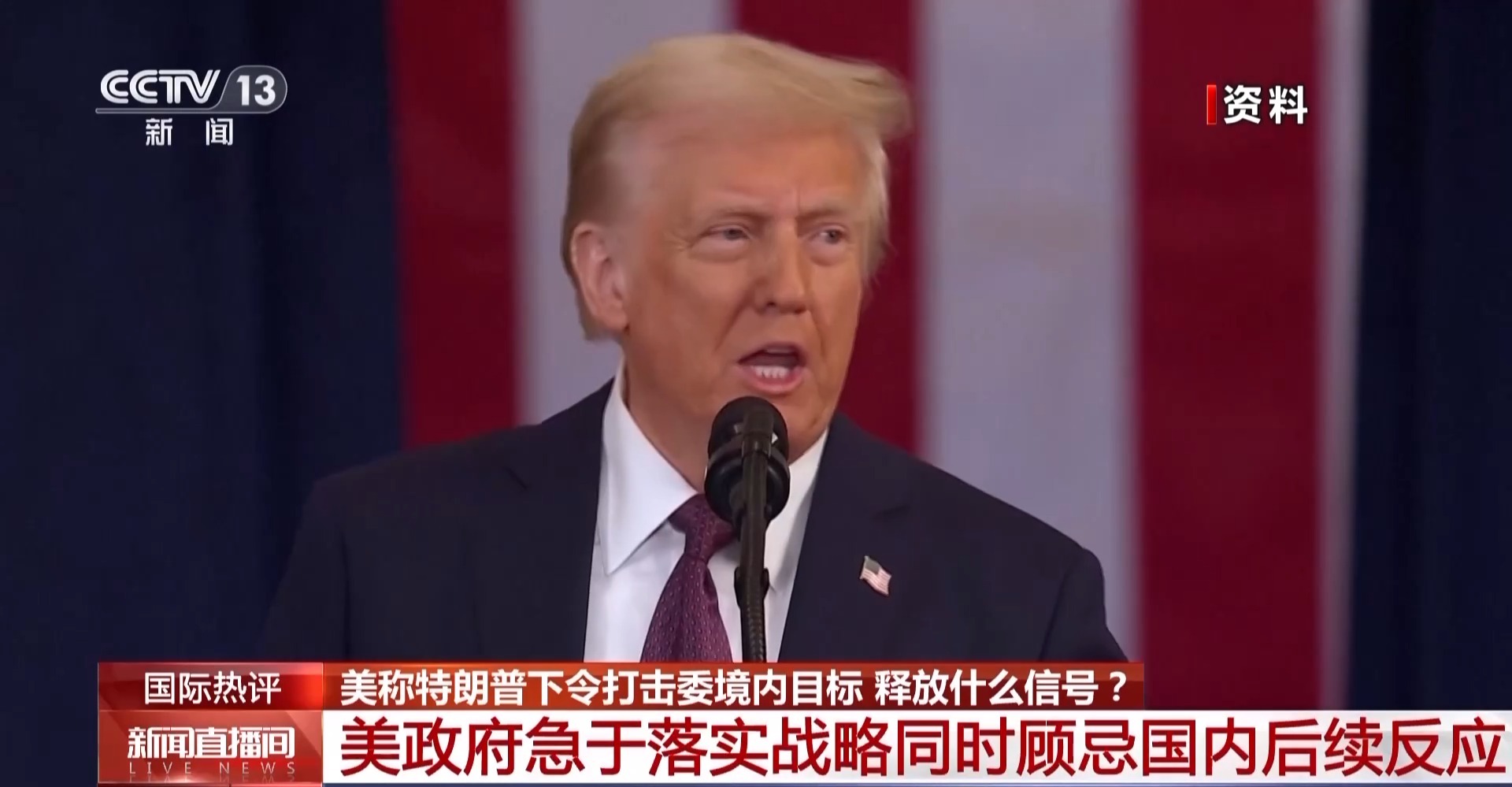
央视:美国打击行动是试探委内瑞拉反应美国顾忌国内民众对海外军事反应
Xin Lang Cai Jing· 2026-01-03 12:01
Core Viewpoint - The article discusses the recent military actions taken by the United States against Venezuela, highlighting the implications of these actions and the underlying motivations of the U.S. government [1] Group 1: U.S. Military Actions - On January 3, explosions were reported in Caracas, Venezuela, with U.S. officials confirming that President Trump ordered airstrikes against targets within Venezuela [1] - The Venezuelan government condemned these actions as "military aggression," indicating a significant escalation in U.S. pressure tactics [1] Group 2: U.S. Strategic Objectives - The U.S. has shifted from extreme pressure tactics to more aggressive military actions due to the lack of compliance from Venezuela, as President Maduro has refused to step down [1] - The U.S. aims to respond to domestic political agendas, particularly in relation to drug control, and to align with the Republican Party's objectives ahead of the midterm elections [1] Group 3: Domestic Implications - The U.S. government is closely monitoring public reaction to its military interventions abroad, as these actions may influence future policy decisions and strategic adjustments [1] - There appears to be a lack of significant opposition within the Republican Party regarding these military actions, suggesting a favorable environment for the administration to pursue its objectives [1]
特朗普下令打击委境内目标 系极限施压未果转用极端手段试探
Xin Lang Cai Jing· 2026-01-03 10:58
Group 1 - The article discusses the recent military actions taken by the United States against Venezuela, indicating a shift from previous pressure tactics to more extreme measures, such as airstrikes ordered by President Trump [1][2] - Venezuela's government has condemned these actions as "military aggression," highlighting the ongoing tensions between the two nations and Venezuela's refusal to comply with U.S. demands [1][2] - The U.S. has been increasing its military presence around Venezuela since August of the previous year, indicating a strategy of economic strangulation through naval blockades, which has not led to the desired outcomes [1] Group 2 - President Maduro of Venezuela has rejected U.S. demands for his resignation and has signaled a willingness to negotiate on drug control issues, emphasizing the need for serious discussions rather than unilateral pressure from the U.S. [2] - The U.S. government's recent military actions are seen as a test of Venezuela's response, reflecting a strategy to push for change through pressure while also addressing domestic political agendas [2][4] - The U.S. is eager to implement its new national security strategy, which emphasizes the geopolitical importance of the Western Hemisphere, while also considering the potential domestic political repercussions of military interventions abroad [4]