价值共建

Search documents
合众远景成立客户代表团——以共识为导向,夯实长期价值基础
Jiang Nan Shi Bao· 2026-01-12 08:36
Core Viewpoint - The establishment of the Customer Representative Council by the company marks a significant step towards enhancing customer relationship governance, ecosystem co-creation, and long-term development in the context of a rapidly evolving digital economy and globalization [1] Group 1: Upgrade from "Users" to "Co-builders" - The company believes that sustainable platform development is driven not just by technology but by a community of individuals who resonate with the platform's philosophy and are willing to grow alongside it [2] - The Customer Representative Council transforms "important customers" and "core participants" from traditional service recipients into active participants, communicators, and co-builders of the platform ecosystem [2] - The council aims to create a more efficient, transparent, and empathetic communication mechanism to ensure real needs are heard, rational suggestions are absorbed, and trust is built through long-term interactions [2] Group 2: Authorization Mechanism - The Customer Representative Council is an official collaborative mechanism established within clear legal boundaries and compliance frameworks, rather than a mere honorary title [3] - Each representative is formally authorized to engage in customer communication, feedback, service experience optimization, community engagement, and market information transmission [3] - This mechanism ensures the authority and professionalism of representatives while maintaining the platform's overall operational stability and compliance [3] Group 3: Building a Trust-based Ecosystem - The company adheres to a core principle of countering short-term fluctuations with long-term value in a market filled with short-term emotions and rapid changes [4] - The establishment of the Customer Representative Council embodies a practice of long-termism, involving individuals who truly understand and are committed to the platform's ecosystem [5] - This trust-based collaboration mechanism is expected to enhance information transmission efficiency, reduce misunderstandings, and promote rational and stable development in complex environments [5] Group 4: Future Growth Driven by Consensus - The company plans to continuously improve the Customer Representative Council mechanism, gradually forming a multi-tiered, multi-regional, and sustainable customer collaboration system [6] - The council serves not only as a communication bridge but also as an amplifier of consensus and a connector of value within the company's ecosystem [7] - The company believes that a truly vibrant platform is one that collaboratively forms clear value consensus with users over a longer time horizon, moving towards a certain future together [7] Group 5: Trust and Consensus - Trust is viewed as a structural element rather than just a slogan [8] - Consensus is seen as a long-term choice rather than a short-term trend [9] - The establishment of the Customer Representative Council is a serious response to the concept of "long-term companionship" and a prudent bet on the future [9]
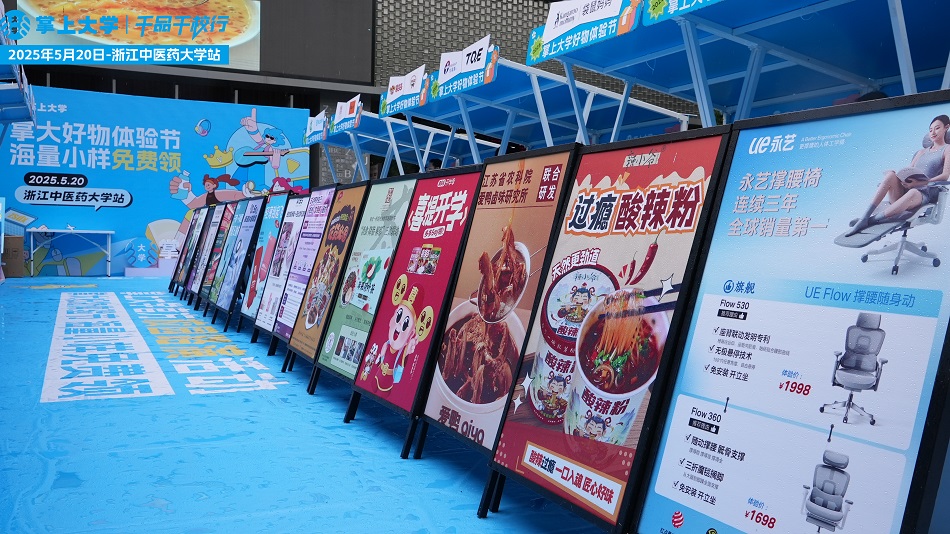
掌上大学:路演升级与私域经济双轮驱动,重构校园商业生态新格局
Sou Hu Wang· 2025-06-27 07:55
Core Insights - The article discusses the evolution of the campus marketing model by掌上大学, highlighting its transition from simple product displays to a comprehensive private domain economic ecosystem [1][3][12] - The company has successfully integrated online and offline strategies to enhance brand engagement and customer acquisition in the university market [5][10] Group 1: Evolution of Campus Marketing - The journey began in 2022 with a 10 square meter tent, attracting only one brand and fewer than 50 participants, marking the start of the 1.0 era [3] - By early 2023, the introduction of a 20 square meter tent and sample experience mechanisms increased daily reach to 100-200 people, but challenges like "traffic scarcity" remained [3] - The 3.0 era commenced in September 2023 with a 50 square meter exhibition space, allowing 15 brands to participate and replacing part-time staff with full-time employees, transforming the perception from a "general store" to a "brand collection store" [3][5] Group 2: Private Domain Economic Model - The company has established a "precise reach-scenario penetration-long-term sedimentation" private domain economic loop, leveraging 80,000 student agents to enhance traditional marketing conversion rates by three times [6] - Collaborations with universities, such as the establishment of smart training bases, have provided long-term support for brand loyalty, with 60% of participating students receiving internship opportunities [6][12] Group 3: Business Value Reconstruction - The synergy between the upgraded roadshow and private domain economy has created significant commercial value, exceeding traditional models [8][10] - For instance, Costa Coffee discovered that cookies were more popular than their planned cold brew coffee during a tasting event, leading to cookies accounting for 43% of campus sales [8] - The return on investment (ROI) for campus marketing has increased to 3.2 times that of traditional methods, with over 200 roadshows planned for 2024 [10] Group 4: Industry Implications - The founder of掌上大学 emphasized that true business innovation involves a holistic leap in the ecosystem rather than isolated breakthroughs [12] - The model is redefining campus economics from mere commercial transactions to value co-creation between brands and the youth demographic [12][13] - The campus private domain ecosystem is positioned as a strategic advantage for brands aiming to capture future consumer markets, covering 40 million university students and representing a significant portion of the 960 billion youth consumption market [12][13]