
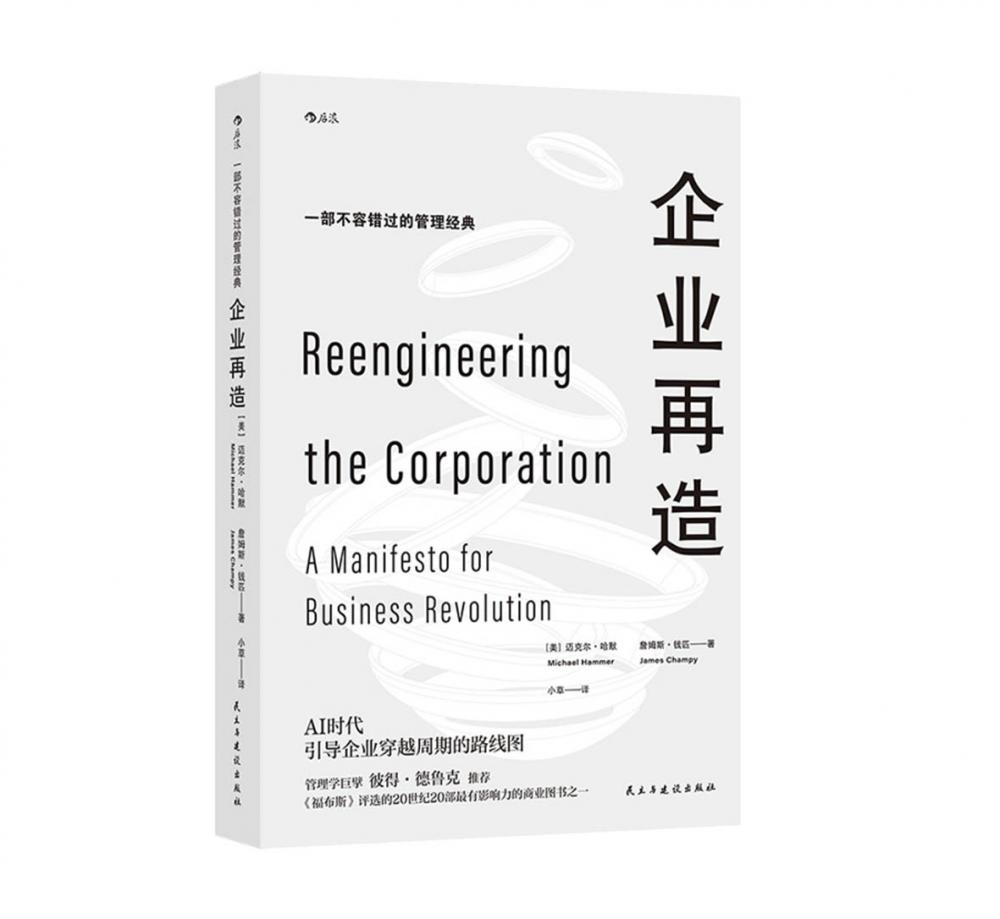
企业再造

Search documents
AI时代的企业再造
Xin Lang Cai Jing· 2026-01-09 22:53
Core Insights - The book "Reengineering the Corporation" by Michael Hammer and James Champy is highly regarded, recommended by management giant Peter Drucker, and recognized as one of the most influential business books of the 20th century [1] - Despite being published in the 1990s, the book remains relevant today, addressing how companies can adapt through reengineering in a complex environment, particularly in the AI era [3] Group 1: Business Process Reengineering (BPR) - BPR is not just about technical "business process reengineering" but involves a fundamental change in management logic, challenging traditional organizational structures and management practices established since the industrial era [4] - The book critiques the mainstream division of labor theory from the industrial age, highlighting that while efficiency was gained through task fragmentation, it led to organizational fragmentation and a lack of responsiveness to customer needs [5] - The authors argue that many corporate failures stem from flawed workflows rather than strategy or technology, advocating for a fundamental restructuring of business processes to enhance cost, quality, service, and responsiveness [5][6] Group 2: Customer-Centric Approach - The emphasis of the book is on building a customer-oriented approach, where reengineering is not merely about patching old processes but returning to the core of customer value and needs [6] - In the context of big data and AI, companies must continuously reengineer to adapt to rapidly changing market conditions, with the book providing a framework for management to enhance agility and responsiveness [6][7] Group 3: Practical Implications - The book encourages managers to think critically about process reconstruction, focusing on customer value and maintaining quick decision-making capabilities in the market [7] - Some contemporary practices, such as centralized management strategies in internet companies, reflect the principles of digital reengineering to address increasing organizational complexity [6][7]

华纺股份: 华纺股份:2024年度股东大会材料
Zheng Quan Zhi Xing· 2025-06-20 10:22
Group 1 - The company will hold its 2024 annual general meeting on June 27, 2025, with both on-site and online voting options available [1][2] - The meeting will be presided over by Chairman Sheng Shouxiang, and will include shareholders, directors, supervisors, and legal representatives [1][2] Group 2 - The company reported a total revenue of 293,438.66 million yuan for the reporting period, representing a year-on-year increase of 4.89% [3] - The company experienced a net loss attributable to shareholders of 5,551.55 million yuan, marking a shift from profit to loss compared to the previous year [3][19] Group 3 - The board of directors emphasized a strategic focus on "enterprise reconstruction" to enhance operational efficiency and competitiveness in a challenging market environment [3][4] - The company aims to optimize its organizational structure and clarify departmental responsibilities to improve collaboration and reduce operational costs [4][5] Group 4 - The company has introduced a new "three-level nine-grade" salary performance evaluation system to align employee compensation with their contributions [7] - The establishment of Huafang Business School aims to cultivate talent and enhance the company's innovation capabilities [7] Group 5 - The company faces significant challenges due to rising trade barriers and geopolitical tensions, which are impacting its export markets [12][13] - The introduction of a global equivalent tariff policy by the U.S. government is expected to increase the tax burden on Chinese textile exports, leading to reduced orders and profit margins [12][13] Group 6 - The company plans to focus on enhancing product quality, expanding market reach, and fostering technological innovation to adapt to changing market conditions [13] - The company aims to transform from a cost-dependent model to one focused on value creation, supported by government policies and industry self-initiatives [13] Group 7 - The company has proposed not to distribute profits for the 2024 fiscal year due to accumulated losses exceeding the total paid-in capital [19][20] - The company is committed to improving its financial performance and addressing its losses through strategic management and operational efficiency [20][21] Group 8 - The company has approved mutual guarantees with Binhai Printing Group for a total amount of 100 million yuan, which can be adjusted between the two entities [25][28] - The company is also providing guarantees for its subsidiaries totaling 130 million yuan to support their financing needs [28][29]
