传统延续

Search documents
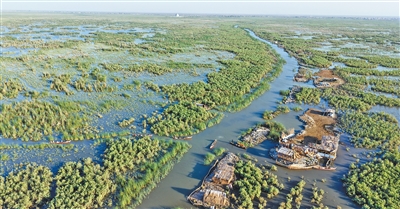
湿地恢复 传统延续
Ren Min Ri Bao· 2025-06-11 22:11
Core Viewpoint - The Mesopotamian Marshes, located at the confluence of the Euphrates and Tigris rivers in southern Iraq, are experiencing a revival due to government efforts to protect the wetlands and promote tourism, following decades of decline caused by climate change and other factors [4]. Group 1: Environmental and Ecological Aspects - The Mesopotamian Marshes are one of the largest inland delta systems in the world, showcasing a unique ecological landscape with winding rivers and lush vegetation [2]. - The area was designated as a UNESCO World Heritage site in 2016, highlighting its global ecological significance [4]. Group 2: Socioeconomic Impact - Local fishermen, such as Khalid Jassim, have shifted from traditional fishing to providing tour guide services for visitors, indicating a transition towards tourism as a primary source of income [4]. - The shrinking of wetland areas over the past decades has led to significant outmigration of local populations, but recent protective measures have encouraged some residents to return and engage in traditional industries like tourism [4].