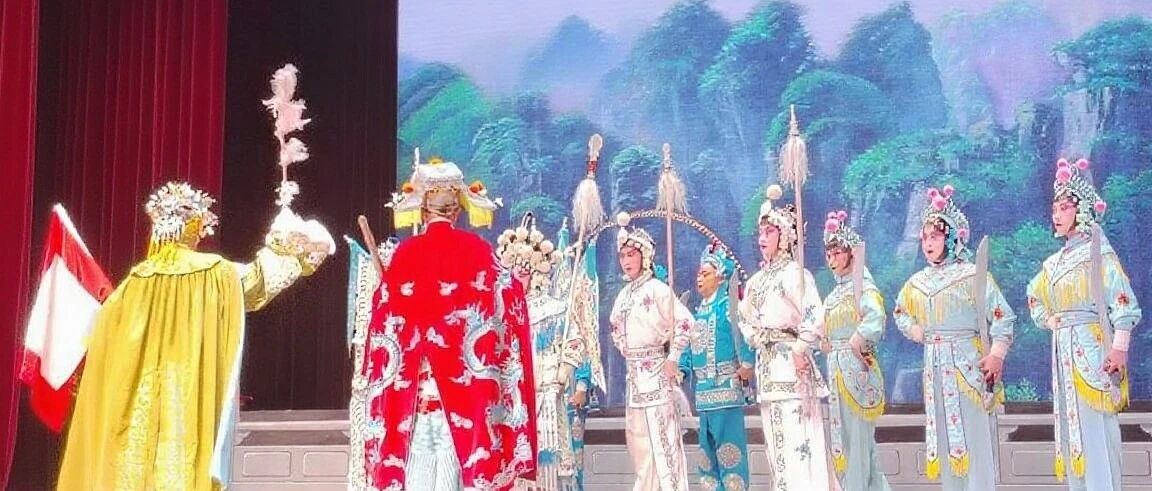
传统戏曲传承与创新

Search documents
“一元剧场”叫好又叫座(热议)
Ren Min Ri Bao· 2025-11-20 22:21
Core Insights - The "One Yuan Theater" model has gained popularity in various regions, allowing audiences to enjoy traditional performances at a minimal cost, thus addressing the issues of accessibility and affordability in cultural services [1][2][3] Group 1: Cultural Impact - The "One Yuan Theater" initiative is designed to bridge the gap between traditional arts and the community, making cultural experiences more accessible to the public [1][2] - This model has revitalized traditional opera by attracting a large audience, providing new opportunities for the preservation and promotion of these art forms [2][3] - Young actors are gaining valuable experience through increased performance opportunities, helping to mitigate issues of talent loss and industry gaps [2][3] Group 2: Public Cultural Services - The initiative exemplifies a combination of government support, market operations, and social participation, which is becoming a mainstream model for public cultural service provision [3] - Various regions are mobilizing social organizations and businesses to support cultural activities, ensuring sustainability through community involvement and funding [3] - The "One Yuan Theater" not only delivers cultural experiences but also fosters community engagement, allowing local residents to participate actively in performances and cultural discussions [3][4] Group 3: Community Engagement - The success of the "One Yuan Theater" relies on active community participation, where audiences are not just passive viewers but also contributors to the cultural landscape [3][4] - The initiative emphasizes the importance of cultural practices being centered around people, ensuring that cultural development resonates with the community [4]
星辰夜读丨梆声不息
中国能源报· 2025-10-03 13:04
Core Viewpoint - The article discusses the evolution and significance of Baoding Laodiao, a traditional opera form in Baoding, Hebei, highlighting its deep connection with the lives of local laborers and its adaptation to modern times through innovation and new media [2][4][5]. Group 1: Historical Context and Development - Baoding Laodiao, also known as Laodiao Bangzi, is a traditional opera that primarily features Sheng and Jing roles, characterized by a robust and natural performance style [2]. - Initially, Baoding Laodiao served as a form of entertainment in bustling markets, gradually evolving into a vital expression of the local people's resilience and spirit [2]. - The art form reflects the harsh realities faced by fishermen and laborers, with its high-pitched singing style symbolizing their struggles against natural disasters [2]. Group 2: Artistic Fusion - During the Guangxu period, Baoding Laodiao merged with Silk String performances, creating a unique artistic form known as "Laodiao Silk String," which combines the raw power of Laodiao with the delicate melodies of Silk String [3]. - This fusion allowed for a richer emotional expression, as the two styles complemented each other, enhancing the overall artistic experience for audiences [3]. Group 3: Modern Adaptation and Innovation - Baoding Laodiao has successfully integrated traditional elements with modern innovations, revitalizing the art form through various channels such as university clubs, cultural training courses, and online platforms [4]. - Younger generations are actively learning and promoting this traditional art, infusing it with contemporary elements while respecting its roots [4][5]. - The art form is now being reimagined in urban settings and new media, potentially transforming into modern historical dramas or incorporating popular music elements, thus ensuring its relevance and appeal in today's cultural landscape [5].