
体内CAR-T疗法

Search documents
细胞与基因治疗“变天了”
Ge Long Hui· 2025-11-06 12:03
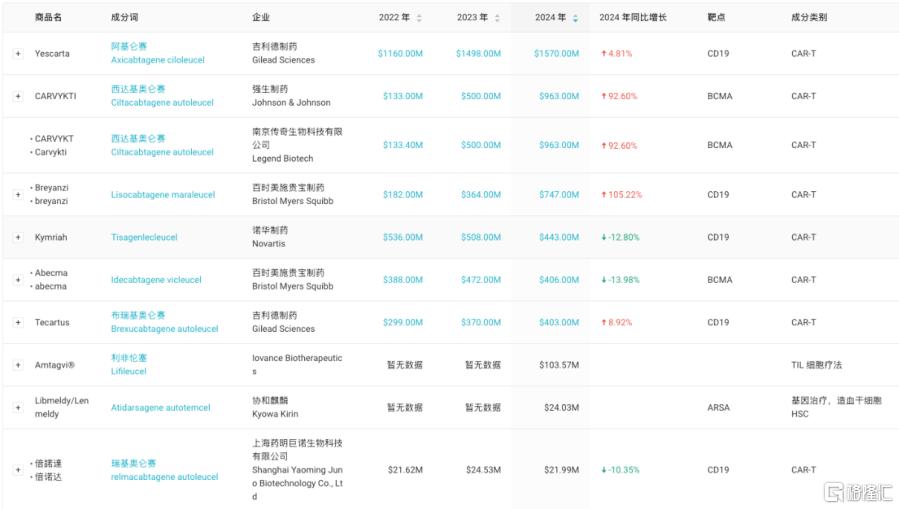
Core Insights - The cell and gene therapy (CGT) sector is experiencing a dichotomy, with major pharmaceutical companies entering the CAR-T therapy space while others are exiting, indicating a complex market landscape [1][2][10]. Group 1: Market Dynamics - The CGT market has seen rapid growth, with 46 CGT products approved by the FDA and approximately 3,600 active INDs [2]. - Despite the approval of over 10 CAR-T therapies globally, only a few have achieved blockbuster status, with Gilead's Yescarta showing a sales growth of only 4.81% in 2024 [3][4]. - The commercial performance of most CAR-T therapies has been disappointing, with high costs and market access issues limiting their success [6][9]. Group 2: Economic Challenges - The CGT sector faces significant economic challenges, including high R&D costs (estimated at $1.7 to $2.3 billion for CGT drugs compared to $1.25 to $1.48 billion for traditional drugs) and high production costs due to the personalized nature of treatments [11][12]. - The pricing of CAR-T therapies is exorbitant, with Carvykti priced over $500,000 in the U.S. and similar high costs in China, which restricts market accessibility [8][13]. Group 3: Industry Exits - Major multinational corporations (MNCs) like Takeda and Novo Nordisk have announced exits from the CGT space, indicating a shift in focus from technology-driven enthusiasm to financial viability [10][11]. - The industry's narrative has shifted from a focus on unique treatment mechanisms to a more pragmatic assessment of economic returns, highlighting the unsustainable nature of current CGT investments [11]. Group 4: Path to Recovery - The CGT industry is exploring various strategies to overcome its challenges, including the development of off-the-shelf CAR-T therapies to reduce costs and improve accessibility [14]. - Expanding the indications for CGT drugs to target larger patient populations is seen as a potential avenue for growth, similar to how Novartis expanded the application of siRNA therapies [17]. - The shift towards in vivo CAR-T therapies aims to simplify processes and reduce costs significantly, with predictions suggesting treatment costs could drop by an order of magnitude [18]. Group 5: Future Directions - The future of the CGT sector hinges on technological advancements that enhance accessibility, with a focus on universal CAR-T, in vivo therapies, and next-generation delivery technologies [19]. - The strategic movements of MNCs signal a paradigm shift in the industry, emphasizing the need to convert cutting-edge technology into sustainable business models for long-term success [19].




原启生物与Umoja Biopharma达成战略合作 携手开发下一代细胞疗法
Sou Hu Wang· 2025-05-08 08:35
Group 1 - Oricell Therapeutics and Umoja Biopharma announced a strategic collaboration to develop innovative in vivo CAR-T therapies for various indications, aiming to provide efficient and accessible treatment options for patients globally [1][2] - Umoja's VivoVec™ platform enables the direct generation of CAR-T cells within patients, enhancing the convenience and effectiveness of treatment [1][2] - Oricell contributes its expertise in antibody discovery and CAR structure design, which has demonstrated best-in-class efficacy and safety in clinical data for products Ori-C101 and OriCAR-017 [1][3] Group 2 - Umoja Biopharma focuses on developing innovative in vivo cell therapies to improve the accessibility and effectiveness of CAR-T therapies in oncology and autoimmune diseases [2] - The company operates an advanced lentiviral vector development and production facility in Colorado, ensuring high-quality and safe products through GMP-compliant manufacturing processes [2] - Oricell is dedicated to becoming a leading innovator in tumor immunotherapy, addressing unmet clinical needs in oncology and immunology through its proprietary platforms and product pipelines [3]