俄乌冲突和平解决

Search documents
俄乌冲突爆发四周年之际,泽连斯基喊话特朗普
Xin Lang Cai Jing· 2026-02-24 06:58
Core Viewpoint - Ukrainian President Zelensky calls for support from U.S. President Trump amid the ongoing Russia-Ukraine conflict, emphasizing the need for stronger U.S. backing to deter Russia [1][3]. Group 1: Zelensky's Statements - Zelensky asserts that the U.S. has sufficient power to stop Russia, indicating a need for more assertive action from the U.S. government [3]. - He expresses that yielding to Russia is not an option, highlighting the ongoing fatigue among the Ukrainian people regarding the conflict [3]. - The issue of security guarantees remains a critical concern, particularly regarding how allies would respond to potential future Russian attacks [3]. Group 2: Peace Negotiations - There are differing views on the steps needed to achieve peace, with Trump suggesting a peace agreement between Ukraine and Russia, along with a comprehensive security deal involving the U.S. and European nations [3]. - Zelensky insists that any security guarantees must first receive approval from the U.S. Congress to restore confidence among the Ukrainian populace, who feel let down by past experiences [3]. Group 3: Political Future - Zelensky discusses the upcoming elections and his uncertain future, stating he is unaware of Trump's preferences regarding who should lead Ukraine [3].

俄乌冲突爆发四周年之际,泽连斯基喊话特朗普:站在我们这边
Huan Qiu Wang· 2026-02-24 03:55
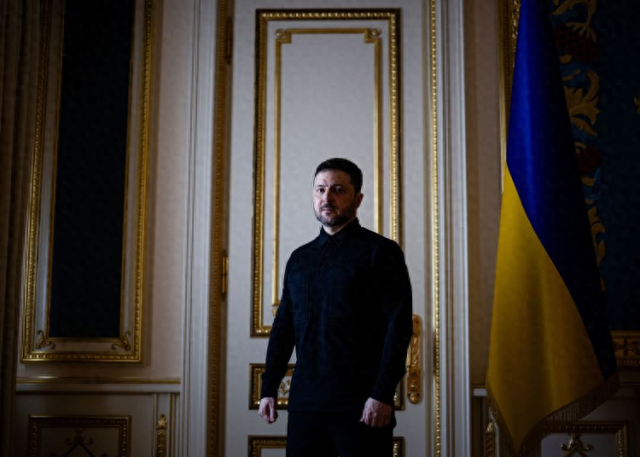
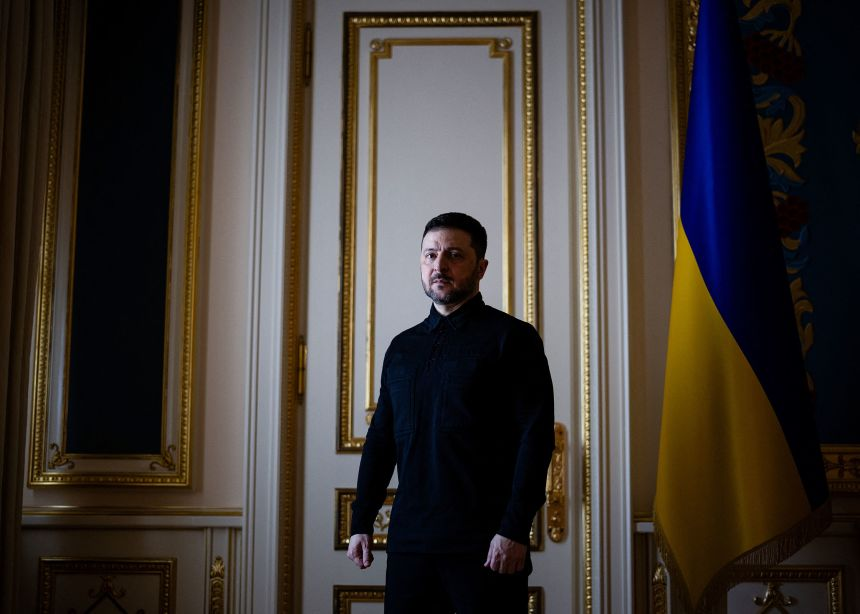
Core Viewpoint - Ukrainian President Zelensky calls for support from U.S. President Trump amid ongoing conflict with Russia, emphasizing the need for stronger U.S. pressure on Russia [1][3] Group 1: Zelensky's Statements - Zelensky asserts that the U.S. has sufficient power to stop Russia, indicating a need for more decisive action from the U.S. [3] - He acknowledges the fatigue among the Ukrainian people regarding the conflict but insists that surrendering to Russia is not an option [3] - The issue of security guarantees remains a critical concern, particularly regarding how allies would respond to potential future Russian attacks [3] Group 2: Peace Negotiations - There are differing views on the steps needed to achieve peace, with Trump suggesting a peace agreement between Ukraine and Russia, along with security guarantees from the U.S. and European nations [3] - Zelensky maintains that any security guarantees must first be approved by the U.S. Congress to restore confidence among the Ukrainian populace [3] Group 3: Political Future - Zelensky expresses uncertainty about Trump's intentions regarding the future leadership of Ukraine, stating that Trump has not communicated any desire for a change in Ukrainian presidency [3]
王毅说欧洲不应是俄乌冲突旁观者
Xin Lang Cai Jing· 2026-02-14 15:34
Core Viewpoint - The article emphasizes China's stance on the Ukraine conflict, advocating for dialogue and negotiation as the means to achieve political resolution, while asserting that China is not a direct party to the conflict [1] Group 1: China's Role in Conflict Resolution - China promotes dialogue and negotiation to resolve regional conflicts, including the Ukraine issue, and emphasizes its role in encouraging peace talks [1] - The Chinese government has dispatched special envoys to mediate and has been communicating with various parties to advocate for a ceasefire and a return to negotiations [1] - Recent developments indicate that dialogue has resumed, focusing on substantive issues related to the Ukraine crisis, which China welcomes [1] Group 2: Europe's Involvement - The article argues that Europe should not be a bystander in the Ukraine conflict and has the right to participate in the negotiation process [1] - It highlights that the conflict is occurring on European soil, suggesting that Europe should actively engage in discussions rather than being sidelined [1] - China supports European dialogue with Russia and encourages Europe to present its own proposals and solutions during negotiations [1] Group 3: Long-term Security Framework - The article calls for addressing the root causes of the conflict to establish a more balanced, effective, and sustainable European security architecture [1] - The goal is to prevent similar conflicts in the future and ensure long-term peace and stability in Europe [1]
俄美乌二轮会谈各方表态积极 难解核心分歧
Xin Lang Cai Jing· 2026-02-06 10:41
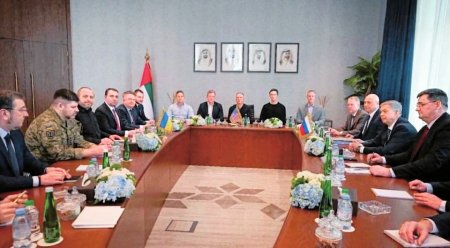
Core Points - The recent talks involving representatives from Russia, Ukraine, and the United States ended with a relatively positive tone, but key issues such as territorial division and Ukraine's security guarantees remain unresolved, indicating that negotiations are unlikely to break the deadlock in the short term [1][10] - This marks the second round of talks in 2023, with the first held on January 23-24, where discussions focused on ending hostilities and necessary security conditions, but no concrete consensus was reached [3][10] - The talks were closed-door, with discussions centering on the possibility of military disengagement, ceasefire monitoring mechanisms, and the establishment of a coordination center, yet the critical territorial issues were not addressed [3][10] Positive Signals - All parties released positive signals during the talks, with Ukrainian representative Oleksiy Danilov describing the negotiations as "productive" and focusing on actionable solutions [6] - The most significant outcome was a new round of prisoner exchanges, with both sides transferring 157 captured personnel, totaling 314 individuals, marking the first large-scale exchange in five months [6] - Future talks are anticipated, with Ukrainian President Zelensky indicating that the next round may take place in the United States [6] Ongoing Conflict - Despite the negotiations, the battlefield situation remains intense, with both sides engaging in hostilities while talks are ongoing [6][9] - Following a temporary ceasefire initiated by former President Trump, mutual attacks on energy infrastructure resumed, highlighting the ongoing conflict's severity [7][9] Core Disagreements - Analysts identify two main areas of disagreement: territorial issues and security guarantees [10][11] - Russia insists on full control of the Donbas region, while Ukraine demands negotiations based on the current contact line and refuses to withdraw from areas still under its control [11] - Security guarantees involving Western participation are a condition for Ukraine's ceasefire, while Russia opposes the deployment of Western military personnel and facilities in Ukraine [11][13]
美俄时隔四年重启高层军事对话!但俄乌核心分歧难解
Jin Shi Shu Ju· 2026-02-06 02:43
Core Viewpoint - The restoration of high-level military talks between the U.S. and Russia marks a potential step towards normalizing relations between Washington and Moscow, following a four-year hiatus due to heightened tensions from the Ukraine conflict [1][2]. Group 1: Military Dialogue - The U.S. and Russian military dialogue will resume in Abu Dhabi, coinciding with the conclusion of the second round of Ukraine peace talks [1]. - This communication channel was suspended in 2021 during the Biden administration due to Russia's military buildup prior to the full-scale invasion of Ukraine in February 2022 [1]. - The U.S. European Command (Eucom) stated that this channel will facilitate ongoing military contact as parties strive for lasting peace [1]. Group 2: Ongoing Negotiations - Despite the suspension of high-level talks, negotiations between U.S. and Russian armed forces continued through phone calls between defense ministers [2]. - The recent military dialogue is seen as beneficial, even amidst ongoing political tensions, according to former U.S. Deputy Assistant Secretary of Defense Jim Townsend [2]. Group 3: Peace Talks Outcomes - A recent agreement in Abu Dhabi resulted in the exchange of 314 prisoners of war, although significant political resolutions remain elusive [3]. - The U.S. envoy described the discussions as "detailed and productive," indicating that substantial work is still required to reach a political solution [3]. - Ukrainian officials expressed concerns over the condition of exchanged soldiers and highlighted the distance remaining on key issues such as the Donbas region and post-war security guarantees [3]. Group 4: Future Steps - A Ukrainian official warned that announcing a political agreement prematurely could complicate the execution of ceasefire and monitoring arrangements, which are crucial for maintaining peace [4]. - The U.S. is expected to provide resources for monitoring ceasefires and adjudicating violations, emphasizing the importance of agreed-upon monitoring mechanisms [4]. - A "homework list" was prepared for the next round of negotiations, with expectations for further progress in the coming weeks [4].
乌谈判代表团团长发表乌美俄会谈成果公报:俄乌达成换俘协议
Yang Shi Xin Wen· 2026-02-05 18:22
Core Points - The core message of the article is the announcement of the outcomes from the recent trilateral negotiations between the United States, Ukraine, and Russia aimed at resolving the ongoing conflict in Ukraine [1] Group 1: Negotiation Outcomes - The second round of trilateral negotiations took place in Abu Dhabi, UAE, on February 4-5, focusing on creating conditions for lasting peace [1] - An agreement was reached for the exchange of 157 captured personnel between Russia and Ukraine, marking the first exchange in five months [1] - The delegations engaged in extensive discussions on other unresolved issues, including methods for implementing a ceasefire and monitoring ceasefire actions [1] Group 2: Future Actions - The delegations agreed to report back to their respective capitals and continue trilateral negotiations in the coming weeks [1]
美俄乌首次会谈,谈拢了吗?
Feng Huang Wang Cai Jing· 2026-01-26 14:47
Core Viewpoint - The recent trilateral talks between the US, Russia, and Ukraine in the UAE mark a significant step towards a potential political resolution of the Ukraine crisis, although key issues such as territorial disputes and security remain unresolved [1][2]. Group 1: Meeting Overview - The two-day closed-door talks in Abu Dhabi on January 24, 2026, were the first direct negotiations among the three countries since the escalation of the Ukraine crisis in February 2022 [1]. - The discussions were divided into two phases, with the first day focusing on preliminary discussions and the second day splitting into political and military subgroups [1][2]. - Ukrainian delegation leader Oleksandr Umerov emphasized the focus on key parameters for ending the conflict and advancing towards a sustainable peace process [1]. Group 2: Key Issues Discussed - In the military subgroup, progress was made on issues such as troop disengagement, ceasefire, and the establishment of a ceasefire monitoring coordination center [2]. - The political subgroup revealed significant divisions, with Ukraine insisting on discussions based on the current contact line, while Russia demanded the withdrawal of Ukrainian troops from unoccupied areas of Donetsk [1][2]. Group 3: Participants and Their Roles - The Ukrainian delegation included high-ranking officials from security, administration, legislation, and military sectors, indicating the importance and sensitivity of the talks [4]. - The US delegation featured long-time Trump envoys, while the Russian side was led by the head of the military intelligence, highlighting a focus on both security and post-war reconstruction interests [4]. Group 4: Territorial Disputes - The primary obstacle to a peace agreement remains the territorial issue concerning Donbas, with both sides holding firm on their positions [8][10]. - Ukraine's President Zelensky has made territorial integrity a key topic, while Russia insists on maintaining control over the entire Donbas region as per a previous agreement reached in August 2025 [8][10]. Group 5: European Involvement - The absence of European representatives in the talks has raised concerns about their marginalization in the peace process, despite their significant support for Ukraine [13][15]. - European leaders have expressed frustration over the lack of a unified approach and decision-making power in the ongoing conflict [13][15]. Group 6: Future Prospects - The talks have been described as a constructive step, with plans for further discussions scheduled for February 1, indicating a potential for continued dialogue [15]. - However, the complexity of the situation, including ongoing military actions and unresolved core demands, suggests that achieving a lasting ceasefire will depend on future political decisions by all parties involved [15][16].

领土问题最为棘手
Xin Lang Cai Jing· 2026-01-25 20:19
Core Viewpoint - The first trilateral talks involving representatives from Russia, the United States, and Ukraine took place in Abu Dhabi, marking the first direct contact since the escalation of the Russia-Ukraine conflict in February 2022. The discussions touched on several substantive issues, although no joint statement or concrete consensus was reached, indicating ongoing differences, particularly regarding territorial disputes [1][2][5]. Group 1: Meeting Details - The trilateral talks were divided into two phases, with preliminary discussions on January 23 and negotiations on January 24 focusing on political and military issues [2]. - Progress was reported in military discussions, with U.S. proposals for potential security conditions to end the war being acknowledged by Ukrainian President Zelensky [2]. - Political discussions included key topics such as territorial issues, specifically concerning the Donbas region and the Zaporizhzhia nuclear power plant [2]. Group 2: Territorial Disputes - The primary contentious issue remains the territorial disputes, particularly highlighted by U.S. Special Envoy Witkoff's statement that only one issue remains unresolved [3]. - Both Russian and Ukrainian officials have emphasized the significance of the Donbas region, with Russia insisting on the withdrawal of Ukrainian forces as a condition for mediation [3]. - Experts suggest that both sides are not prepared to compromise on territorial issues, indicating a stalemate in negotiations [3][5]. Group 3: Future Negotiations - The trilateral talks are expected to continue in Abu Dhabi next week, potentially leading to a complex and prolonged negotiation process [4]. - Analysts view this meeting as a positive start for addressing the Russia-Ukraine conflict, although the unclear prospects due to ongoing territorial disputes and battlefield dynamics remain a concern [4][5]. - The continuation of military actions during the talks underscores the challenges in achieving a peaceful resolution [4].
破冰开局 分歧仍在
Xin Lang Cai Jing· 2026-01-25 18:15
Core Viewpoint - The first trilateral talks between Russia, the U.S., and Ukraine have concluded, marking a significant moment since the escalation of the Russia-Ukraine conflict in February 2022, although substantial disagreements remain, particularly regarding territorial issues [3][4][9]. Military Issues - The talks included discussions on military topics, with some progress reported, such as the inclusion of buffer zones and monitoring mechanisms in the agenda [5][6]. - Ukrainian President Zelensky mentioned that the U.S. proposed "possible solutions" regarding the conditions necessary to end the war [5]. Political Issues - The discussions also covered political matters, particularly territorial disputes, including the situation in the Donbas region and arrangements concerning the Zaporizhzhia nuclear power plant [4][5]. - Both sides expressed clear divisions on territorial issues, with Russian officials stating that the withdrawal of Ukrainian forces from Donbas is a crucial condition for mediation [4][7]. Key Issues and Disagreements - The territorial question remains a significant sticking point, with both sides failing to reach a consensus. Russian officials emphasized the need for Ukrainian military withdrawal from Donbas, while Ukrainian officials reiterated the importance of this issue [7][8]. - Experts suggest that the lack of clarity in the negotiations indicates that substantive issues are being addressed, but the path to resolution remains complex and lengthy [6][9]. Future Negotiations - The trilateral talks are expected to continue next week in Abu Dhabi, with analysts predicting a "complex and lengthy negotiation process" ahead [8]. - Despite the potential for ongoing discussions, the current military actions between Russia and Ukraine indicate that significant challenges remain in achieving a peaceful resolution [8][9].
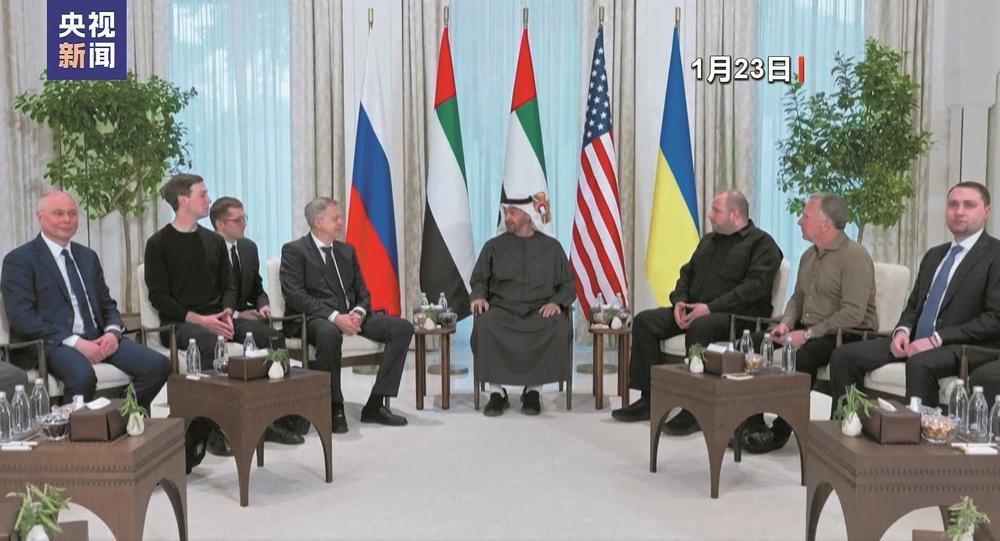
俄乌“只剩”哪个问题?
Xin Lang Cai Jing· 2026-01-25 18:14
Core Viewpoint - The first trilateral talks involving Russia, the United States, and Ukraine took place on January 24 in Abu Dhabi, marking the first direct contact since the escalation of the Russia-Ukraine conflict in February 2022. The discussions touched on several substantive issues, although no joint statement or specific consensus was reached, indicating ongoing differences, particularly regarding territorial matters [3][4][8]. Group 1: Meeting Details - The trilateral meeting was divided into two phases, with preliminary discussions on January 23 and negotiations on January 24, focusing on political and military issues [4]. - Military representatives from both Russia and Ukraine participated, with discussions potentially leading to a list of topics for future meetings, including ceasefire conditions related to energy facilities [4][5]. - The meeting addressed key technical issues, differing from previous negotiations that primarily focused on prisoner exchanges [5]. Group 2: Territorial Disputes - Territorial issues, particularly concerning the Donbas region, remain a significant point of contention, with both sides showing clear divisions on this topic [6][7]. - Russian officials emphasized the withdrawal of Ukrainian forces from the Donbas as a crucial condition for mediation, while Ukrainian representatives identified the Donbas issue as critical [7]. - Experts suggest that both parties are not yet prepared to compromise on territorial matters, indicating a continued exchange of positions rather than a resolution [7][8]. Group 3: Future Negotiations - The trilateral talks are expected to continue in Abu Dhabi, with analysts predicting a complex and lengthy negotiation process ahead [8]. - Despite the potential for these discussions to serve as a starting point for resolving the conflict, significant disagreements on key issues like territory and security are likely to hinder the achievement of a peace agreement [8].