信用量化评估模型

Search documents
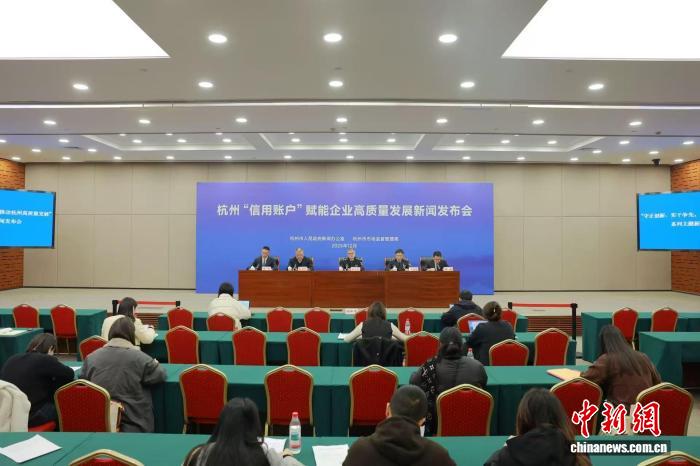
杭州创新打造“信用账户” 赋能百万企业高质量发展
Zhong Guo Xin Wen Wang· 2025-12-08 13:46
Core Insights - Hangzhou has launched a "credit account" initiative aimed at empowering over 1 million enterprises for high-quality development, transforming abstract credit concepts into tangible assets for businesses [1][4] Group 1: Credit Account Implementation - The "credit account" system establishes a data-sharing mechanism among government, enterprises, and third-party platforms, creating a comprehensive credit profile for each registered enterprise in Hangzhou [2] - A total of 10.4 billion data entries from government operations and 12.5 billion entries from voluntary disclosures by enterprises have been collected to support this initiative [2] - The credit evaluation model includes 37 indicators across 6 dimensions, allowing for daily dynamic assessments of credit status and the generation of various types of credit reports [2] Group 2: AI and Expert Support - An "AI Credit Steward" service has been introduced to provide businesses with credit health assessments and tailored improvement suggestions, promoting the accumulation of positive credit assets [2] - A team of credit experts offers hands-on guidance through online consultations, site visits, and training sessions to assist enterprises in enhancing their credit compliance [3] Group 3: Financial and Business Applications - The initiative has led to the development of financial products that utilize credit account information for lending decisions, resulting in the issuance of loans totaling 1.04 billion yuan [5] - The "credit account" system is integrated into third-party platforms to enhance the credit evaluation of businesses, facilitating better opportunities for trustworthy enterprises [5] - Various pilot projects have been launched, such as "credit + transportation" and "credit + park development," to provide exclusive benefits and support for high-credit enterprises [5] Group 4: Future Developments - Future efforts will focus on expanding data collection, enhancing public access to credit information, establishing credit accounts for individual businesses, and deepening applications across multiple sectors [5]