
信用画像

Search documents
县区动态 | 安康高新区“线上+线下”模式破解中小微企业融资难题
Sou Hu Cai Jing· 2026-01-13 10:26
Group 1 - The core idea of the news is the establishment of a county-level financing credit service platform in Ankang High-tech Zone, aimed at addressing the financing difficulties faced by small and micro enterprises through innovative mechanisms and technology empowerment [1][2] - The platform has registered over 7,000 operating entities, with 11 financial institutions participating and 55 financial products available, successfully facilitating financing of 188 million yuan out of a total demand of 299 million yuan [1] - The platform integrates over 120 million data points, covering more than 18,000 operating entities, to create a comprehensive "credit profile" for enterprises, thus transforming "credit assets" into new collateral for financial institutions [1][2] Group 2 - The platform enhances financing efficiency by introducing banks and guarantee institutions, allowing enterprises to publish financing needs online and enabling financial institutions to respond based on credit reports [2] - A "Four Loan Promotion" financial service area has been established in the government service hall, providing differentiated services and support for enterprise credit business, significantly improving the response speed and effectiveness of financing services [2][3] - The high-tech zone has implemented a management plan for the "Four Loan Promotion" financial service station, incorporating a dual leadership system and performance assessment linked to financial support policies to ensure service quality and risk monitoring [3]


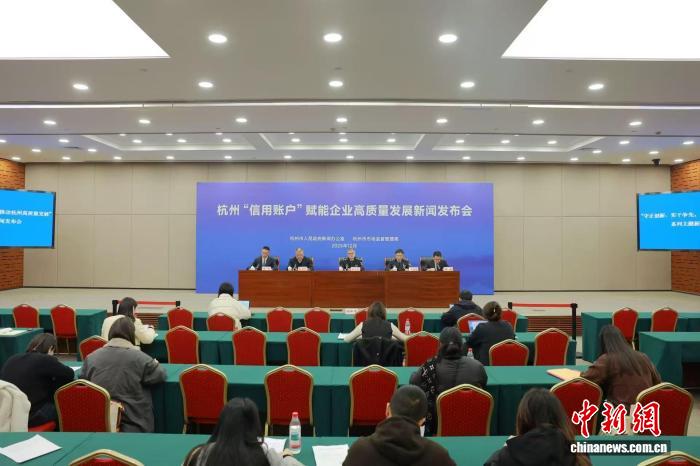
杭州创新打造“信用账户” 赋能百万企业高质量发展
Zhong Guo Xin Wen Wang· 2025-12-08 13:46
Core Insights - Hangzhou has launched a "credit account" initiative aimed at empowering over 1 million enterprises for high-quality development, transforming abstract credit concepts into tangible assets for businesses [1][4] Group 1: Credit Account Implementation - The "credit account" system establishes a data-sharing mechanism among government, enterprises, and third-party platforms, creating a comprehensive credit profile for each registered enterprise in Hangzhou [2] - A total of 10.4 billion data entries from government operations and 12.5 billion entries from voluntary disclosures by enterprises have been collected to support this initiative [2] - The credit evaluation model includes 37 indicators across 6 dimensions, allowing for daily dynamic assessments of credit status and the generation of various types of credit reports [2] Group 2: AI and Expert Support - An "AI Credit Steward" service has been introduced to provide businesses with credit health assessments and tailored improvement suggestions, promoting the accumulation of positive credit assets [2] - A team of credit experts offers hands-on guidance through online consultations, site visits, and training sessions to assist enterprises in enhancing their credit compliance [3] Group 3: Financial and Business Applications - The initiative has led to the development of financial products that utilize credit account information for lending decisions, resulting in the issuance of loans totaling 1.04 billion yuan [5] - The "credit account" system is integrated into third-party platforms to enhance the credit evaluation of businesses, facilitating better opportunities for trustworthy enterprises [5] - Various pilot projects have been launched, such as "credit + transportation" and "credit + park development," to provide exclusive benefits and support for high-credit enterprises [5] Group 4: Future Developments - Future efforts will focus on expanding data collection, enhancing public access to credit information, establishing credit accounts for individual businesses, and deepening applications across multiple sectors [5]
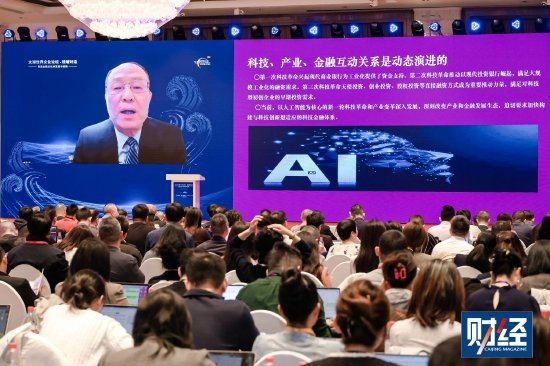
金融如何助力新质生产力发展?王一鸣:利用人工智能加强科技赋能
Zheng Quan Shi Bao Wang· 2025-11-13 13:38
Core Viewpoint - The forum discussed how finance can support the development of new productive forces, emphasizing the need for collaboration between commercial banks and innovative enterprises [1] Group 1: Financial System and Innovation - The current banking-dominated financial system must expand its support for technological innovation, with banks establishing specialized departments to provide tailored financial services for high-tech and specialized small and medium enterprises [3] - Long-term exploration of the investment-loan linkage model encourages banks to collaborate with external investment institutions to share risks while gaining better insights into the operational conditions of loan enterprises [3] - Development of intellectual property pledge financing is facilitated by advancements in AI and digital banking, which improve the assessment of intellectual property market value [3] Group 2: Bond Market and Venture Capital - Establishment of a technology board in the bond market is supported by the central bank, which promotes the issuance of innovation bonds for tech enterprises and provides risk compensation through structural tools [4] - The central government is advancing the establishment of a national venture capital guidance fund to address fundraising, investment, management, and exit issues, particularly focusing on improving exit channels beyond IPOs [4] - The equity market is encouraged to support innovation enterprises, enhancing the service levels of the Sci-Tech Innovation Board and the Growth Enterprise Market [4] Group 3: Technology Empowering Financial Services - The use of AI and machine learning to create intelligent risk control models can lower decision-making costs and risks for financial institutions, optimizing the efficiency of fund utilization [5] - Dynamic credit profiles can enhance risk identification capabilities, while effective risk-sharing and compensation mechanisms, such as insurance, are necessary for financing technology enterprises [5] - The integration of smart technology in financial services is expected to create effective channels for supporting the development of new productive forces [5]
数据赋能 企业“画像”
Jin Rong Shi Bao· 2025-08-19 02:36
Group 1 - The core idea of the articles revolves around the implementation of a credit evaluation model in Guizhou, which enables financial institutions to provide credit loans to small and micro enterprises that lack collateral, thereby supporting local economic growth [1][2][3][4][6] - The Guizhou provincial government has established a comprehensive financial service platform that integrates credit empowerment, bank credit, and fiscal interest subsidies, launching various digital inclusive financial products such as "Bihui Loan," "Miaoling Inclusive Loan," and "Copper Tax Loan" [1][4] - The credit evaluation model collects multi-dimensional credit information from various sectors, allowing financial institutions to implement precise credit granting strategies tailored to individual enterprises, thus addressing the information asymmetry between banks and businesses [2][3] Group 2 - The introduction of an online financing demand release function allows enterprises to submit financing needs, enabling financial institutions to quickly assess credit scores and provide pre-approval within minutes, significantly reducing the loan approval time from 15 days to 3 days [3] - The Guizhou government categorizes enterprises into three types: development-oriented (A), growth-oriented (B), and survival-oriented (C), with corresponding fiscal policies to support them, including interest subsidies for A-type enterprises [4] - As of now, the "Bihui Loan," "Miaoling Inclusive Loan," and "Copper Tax Loan" have collectively assisted 5,961 private small and micro enterprises in obtaining 2.22 billion yuan in funding support, with interest subsidies amounting to 19.08 million yuan [4]
建专班摸排资金需求,无还本续贷政策扩围,强化信用信息共享 三个镜头,看化解小微企业融资难(经济新方位)
Ren Min Ri Bao· 2025-08-09 21:41
Core Viewpoint - The Chinese government is implementing structural monetary policies to support technological innovation, boost consumption, assist small and micro enterprises, and stabilize foreign trade, with a focus on resolving financing difficulties for small and micro enterprises [1][2]. Group 1: Financing Support Mechanisms - A coordination mechanism has been established to facilitate quick connections between small enterprises and financial institutions, exemplified by the case of Zhejiang Mailong Electric Co., which received a loan of 9.9 million yuan within three days through a dedicated service team [2][3]. - As of June 2023, 960,000 small enterprises in Zhejiang have received credit support through this mechanism, demonstrating its effectiveness in addressing financing needs [3][4]. Group 2: Policy Measures and Cost Reduction - The "no repayment renewal loan" policy has been expanded to all small enterprises, allowing them to apply for loan renewals if they have genuine financing needs, significantly alleviating their financial pressure [5][6]. - The average interest rate for newly issued inclusive loans to small enterprises was 3.89% in the first half of the year, a decrease of 1.98 percentage points compared to 2020, indicating a concerted effort to lower financing costs [7]. Group 3: Credit Platforms and Efficiency - The establishment of credit platforms, such as the "Tianfu Credit Pass," has improved financing efficiency by providing data-driven credit assessments for enterprises lacking collateral, as seen in the case of Tianyun Biotechnology [8][9]. - Various regions are enhancing data resource integration and credit information sharing to address the financing challenges faced by small enterprises, thereby improving the overall lending process [9].
人民银行东营市分行:用好资金流信息平台 让企业“信用画像”更清晰
Qi Lu Wan Bao· 2025-08-08 09:07
Core Insights - The People's Bank of China Dongying Branch is promoting a national fund flow credit information sharing platform to enhance financing access for small and micro enterprises, particularly those lacking credit history [1][2] Group 1: Promotion and Training - During the "6.14 Credit Record Care Day," the Dongying Branch organized a seminar to educate small and micro enterprises about financing enhancement platforms, involving 28 financial institutions and over 80 enterprises [2] - The Dongying Branch appointed six financial institutions as "fund flow information platform ambassadors" to encourage their role in guiding small and micro enterprises in financing [2] - A promotional plan was developed to enhance the understanding and usage of the fund flow information platform among small and micro enterprises, including training sessions for all 21 connected institutions [2][3] Group 2: Data Utilization - The fund flow information platform allows financial institutions to efficiently access clients' fund flow credit information, enabling comprehensive tracking of their operational status and creditworthiness [3] - In 2023, 21 financial institutions in Dongying utilized the platform to issue 281 loans to small and micro enterprises, totaling 4.7 billion yuan, thereby enhancing their development potential [3] Group 3: Innovative Application Scenarios - The Dongying Branch is leveraging the fund flow information platform to optimize credit resource allocation and support the real economy, focusing on key industries and sectors [4][5] - Financial institutions are developing tailored financial products based on industry characteristics, such as repayment plans aligned with agricultural cycles, to better serve small and micro enterprises [5] - The shift from asset-based collateral to credit data reliance is being promoted to address financing challenges faced by technology-driven enterprises [5]

数据要素驱动金融业深度重构
Zheng Quan Ri Bao· 2025-07-18 16:08
Core Viewpoint - The successful issuance of the "Tianfeng Zhongtou Asset-Backed Special Plan for Financing Support for Small and Micro Enterprises" marks a significant innovation in asset securitization by integrating core data assets from the China Investment Guarantee Corporation, addressing the financing challenges faced by small and micro enterprises through enhanced asset pricing and risk monitoring [1][2]. Group 1: Data Asset Integration - The "Zhongtou Bao Xinyu Supply Chain Financial Platform Business Data" transforms intangible factors such as business capability and asset value into assessable metrics by integrating supply chain transaction information and performance records, which is crucial for accurate asset pricing [2]. - Data elements assist in constructing credit profiles, breaking down financing barriers for small and micro enterprises by aggregating fragmented credit information from various departments, thus enabling financial institutions to form a comprehensive view of these enterprises [2]. Group 2: Risk Management and Service Enhancement - Data elements provide scenario-based services that facilitate a dynamic balance between risk and service, allowing financial institutions to offer tailored financing solutions like "order loans" based on real-time operational data from e-commerce platforms [2]. - The integration of data allows for real-time risk monitoring, enabling financial institutions to adjust credit limits or follow up promptly in response to changes in business performance, thereby ensuring both financing needs and risk control are met [2]. Group 3: Future of Data in Finance - The fusion of data elements with the financial industry is a necessary evolution in the digital economy, enabling the quantification of intangible value, the construction of credit profiles, and the balancing of risk and efficiency, which enhances the flow of financial resources to the real economy [3]. - As the marketization of data elements deepens, the financial sector is expected to unlock greater potential, illuminating previously unseen values and activating overlooked credits, while transitioning from passive responses to proactive empowerment in financial services [3].