
信用合规

Search documents
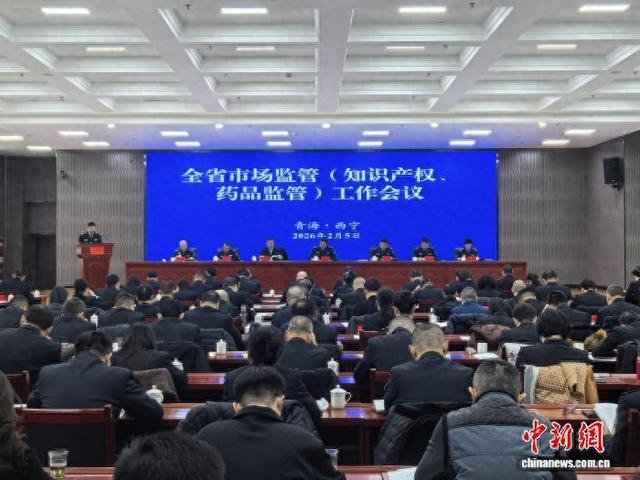
青海:五年销毁侵权假冒商品货值2.9亿元
Xin Lang Cai Jing· 2026-02-05 14:04
Core Insights - Qinghai Province has made significant progress in market regulation and intellectual property protection over the past five years, with a focus on enhancing the business environment and supporting innovation-driven development [2] Group 1: Regulatory Achievements - The Qinghai Provincial Market Supervision Administration has reviewed 3,160 policy measures and handled 19,500 cases, resulting in the destruction of counterfeit goods valued at 290 million yuan [1] - The province has processed 265,700 complaints and recovered economic losses amounting to 86.78 million yuan [1] Group 2: Business Environment and Growth - The number of business entities in Qinghai reached 621,500, representing a 24.8% increase compared to the end of the 13th Five-Year Plan, with the province ranking fifth nationally in business activity and profitability [2] - Qinghai's foreign trade competitiveness is ranked fourth in the country [2] Group 3: Innovation and Intellectual Property - The province has achieved dual breakthroughs in building a quality-strong province and a strong intellectual property province, establishing high-end platforms such as the National Carpet Quality Inspection Center [2] - Patent authorizations and trademark registrations have increased by 227% and 186%, respectively, with 28 key industry patent navigation projects implemented [2] Group 4: Regulatory Framework and Capacity Building - Qinghai has enhanced regulatory efficiency and institutional development by introducing guidelines in credit, pricing, and online transactions, promoting a combination of inclusive and prudent regulation [5] - The province has established a long-term mechanism for enterprise-related fee governance and integrated AI technology into law enforcement processes [5] Group 5: Quality Management and Certification - The implementation of quality management system certification has led to a 28% increase in certified organizations and a 17.4% increase in testing institutions [5] - The annual report completion rate for testing institutions in Qinghai is 96.4%, the highest in the country, with 27 agricultural and livestock product testing institutions achieving dual certification [5]

“现代工匠”掂出一诺千金新分量
Xin Lang Cai Jing· 2026-01-11 00:41
Core Insights - The article discusses the implementation of a "Credit Steward" system in Huzhou, aimed at enhancing the green home furnishing industry through proactive risk management and credit compliance [1][2] Group 1: Credit Steward System - The "Credit Steward" platform provides timely alerts on contract performance and quality control, significantly reducing operational concerns for businesses [1] - The platform integrates multi-dimensional data from administration, finance, and industry chains to create a "credit profile" for enterprises, enabling intelligent risk warnings [1] - Since its pilot launch, the platform has issued over 300 risk alerts, helping businesses avoid more than 60 potential credit risks [1] Group 2: Industry Standards and Guidelines - A collective standard, the "Yangtze River Delta Green Home Furnishing Industry Credit Compliance Guide," has been established to outline 182 credit risk points across the entire supply chain [1] - This guide aims to provide clear operational instructions for industry chain enterprises, fostering a new credit compliance framework characterized by collaboration between leading and chain enterprises [1] Group 3: Economic Impact and Future Plans - The green home furnishing industry in Deqing County achieved a revenue of over 45 billion yuan, reflecting a 6% year-on-year growth [2] - The industry has seen an increase in certified enterprises, including several receiving the "AAA-level Contract Compliance and Credit" designation [2] - Future plans include optimizing the credit evaluation standard system and expanding the application of "credit+" in financing and procurement, aiming to attract more resources to trustworthy enterprises [2]
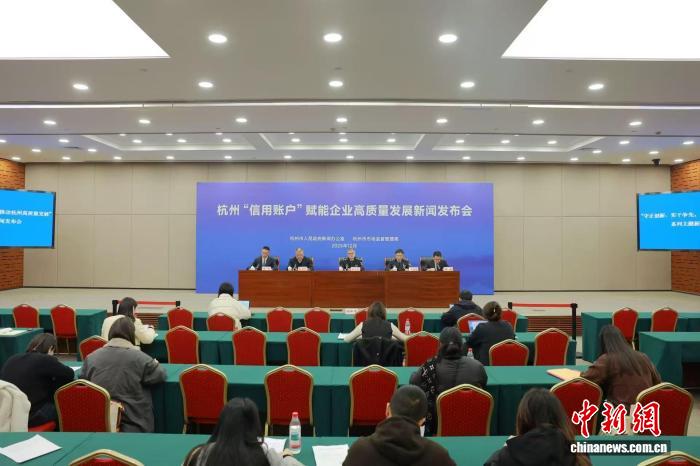
杭州创新打造“信用账户” 赋能百万企业高质量发展
Zhong Guo Xin Wen Wang· 2025-12-08 13:46
Core Insights - Hangzhou has launched a "credit account" initiative aimed at empowering over 1 million enterprises for high-quality development, transforming abstract credit concepts into tangible assets for businesses [1][4] Group 1: Credit Account Implementation - The "credit account" system establishes a data-sharing mechanism among government, enterprises, and third-party platforms, creating a comprehensive credit profile for each registered enterprise in Hangzhou [2] - A total of 10.4 billion data entries from government operations and 12.5 billion entries from voluntary disclosures by enterprises have been collected to support this initiative [2] - The credit evaluation model includes 37 indicators across 6 dimensions, allowing for daily dynamic assessments of credit status and the generation of various types of credit reports [2] Group 2: AI and Expert Support - An "AI Credit Steward" service has been introduced to provide businesses with credit health assessments and tailored improvement suggestions, promoting the accumulation of positive credit assets [2] - A team of credit experts offers hands-on guidance through online consultations, site visits, and training sessions to assist enterprises in enhancing their credit compliance [3] Group 3: Financial and Business Applications - The initiative has led to the development of financial products that utilize credit account information for lending decisions, resulting in the issuance of loans totaling 1.04 billion yuan [5] - The "credit account" system is integrated into third-party platforms to enhance the credit evaluation of businesses, facilitating better opportunities for trustworthy enterprises [5] - Various pilot projects have been launched, such as "credit + transportation" and "credit + park development," to provide exclusive benefits and support for high-credit enterprises [5] Group 4: Future Developments - Future efforts will focus on expanding data collection, enhancing public access to credit information, establishing credit accounts for individual businesses, and deepening applications across multiple sectors [5]
武汉绘制信用风险图谱
Chang Jiang Ri Bao· 2025-04-23 00:13
Core Points - The articles highlight the importance of credit in the market economy and the risks of losing credit for businesses and individual operators [1][2] - Two lists have been released by the municipal market supervision bureau to help business entities avoid pitfalls and correct mistakes, thereby maintaining good credit [1][2] Group 1: Compliance Guidelines - The "Business Entity Credit Compliance Guidelines List" identifies 8 high-frequency risk points related to credit violations and provides compliance pathways [1] - Key risk points include annual report public disclosure, enterprise information disclosure, proper use of business licenses, compliance exit, short-term business suspension, and consistency between actual and registered addresses [1] - For instance, businesses are required to submit their annual reports between January 1 and June 30 each year and disclose them to the public [1] Group 2: Credit Repair Guidelines - The "Business Entity Credit Repair Guidelines List" facilitates credit repair channels for entities that have already exhibited credit violations [2] - It outlines specific conditions and processes for credit repair, encouraging businesses to proactively correct their mistakes and rebuild their credit [2] - For example, businesses can apply to be removed from the operating abnormal list after submitting overdue annual reports, following the guidelines provided [2] Group 3: Overall Impact - The municipal market supervision bureau is conducting a three-year action plan to enhance credit and support high-quality development for business entities [2] - Promotional activities for the two lists will take place in various regions, guiding businesses to focus on credit building and achieve honest operations [2] - The two lists aim to establish a comprehensive credit service system for businesses, fostering a prudent and inclusive business environment [2]