
修宪扩军

Search documents
日本执政党在众议院选举中获胜,对东亚安全局势意味着什么?
Huan Qiu Shi Bao· 2026-02-09 21:38
Core Viewpoint - The recent election results in Japan have led to a significant concentration of power within the ruling Liberal Democratic Party (LDP), raising concerns about the potential for extreme domestic and foreign policy shifts under Prime Minister Sanna Takashi's leadership [1][3][11]. Election Results and Political Landscape - The LDP increased its seats from 198 to 316, surpassing the two-thirds majority threshold in the House of Representatives [1]. - The LDP's coalition partner, the Japan Innovation Party, gained 36 seats, bringing the total for the ruling coalition to 352 [1]. - This election marks an unprecedented concentration of power for a single party in Japan's political history, allowing the LDP to push legislation with minimal opposition [2][3]. Implications for Governance - The LDP's dominance may lead to a significant weakening of the opposition's ability to challenge government policies, effectively rendering the legislative oversight function of the Diet nearly obsolete [2][3]. - Analysts express concerns that this lack of checks and balances could result in a more aggressive and potentially militarized foreign policy, as well as controversial domestic policies such as fiscal expansion and constitutional amendments [3][6][11]. Policy Challenges for the New Cabinet - The new cabinet's immediate priority will be to expedite the approval of the delayed budget for the upcoming fiscal year, amidst calls for responsible fiscal policies [4][5]. - There is a pressing need for the government to clarify its policy details and engage with the public to maintain support, as current approval ratings show a disparity between cabinet and party support [4][5]. Economic and Fiscal Risks - The proposed "responsible active fiscal policy" is viewed as a high-risk economic gamble, with concerns about increasing defense spending while attempting to reduce consumption taxes [6]. - Japan's already high debt-to-GDP ratio raises alarms about the sustainability of such fiscal strategies, with potential repercussions for market confidence and economic stability [6]. Foreign Policy and Regional Security - The new administration is expected to pursue a more assertive security policy, including constitutional revisions and increased military spending, which could exacerbate tensions with neighboring countries, particularly China [7][9][11]. - Analysts warn that Japan's shift towards a more militarized stance could trigger an arms race in East Asia, undermining regional stability and cooperation [10][11]. Public Sentiment and Political Accountability - There is growing public concern regarding Japan's trajectory towards militarization and the potential erosion of its post-war peace-oriented identity [8][11]. - The new government faces the challenge of addressing domestic and international issues while ensuring that its policies resonate with the electorate to avoid political disillusionment [5][10].
日本民众再集会高呼反对修宪扩军 要求日政府正视历史
Yang Shi Xin Wen Ke Hu Duan· 2025-12-19 03:03
Core Viewpoint - The Japanese government's push for constitutional revision and increased defense spending has sparked significant public concern, with citizens organizing protests against these moves and calling for a reevaluation of historical perspectives [1][3][5] Group 1: Public Sentiment - Citizens express strong opposition to the government's constitutional changes and military expansion, fearing a return to militarism [1] - Protesters demand that the government acknowledge historical realities and retract controversial statements made by Prime Minister Fumio Kishida [1][3] - There is a growing sentiment that the current political direction is dangerous and not reflective of the public's expectations [3] Group 2: Historical Awareness - Participants in the protests highlight the deterioration of political discourse and education, claiming that historical facts are being distorted [5] - There is a call for a deeper understanding of history to prevent repeating past mistakes, emphasizing the need for reflection and accountability in Japan's international relations [5]

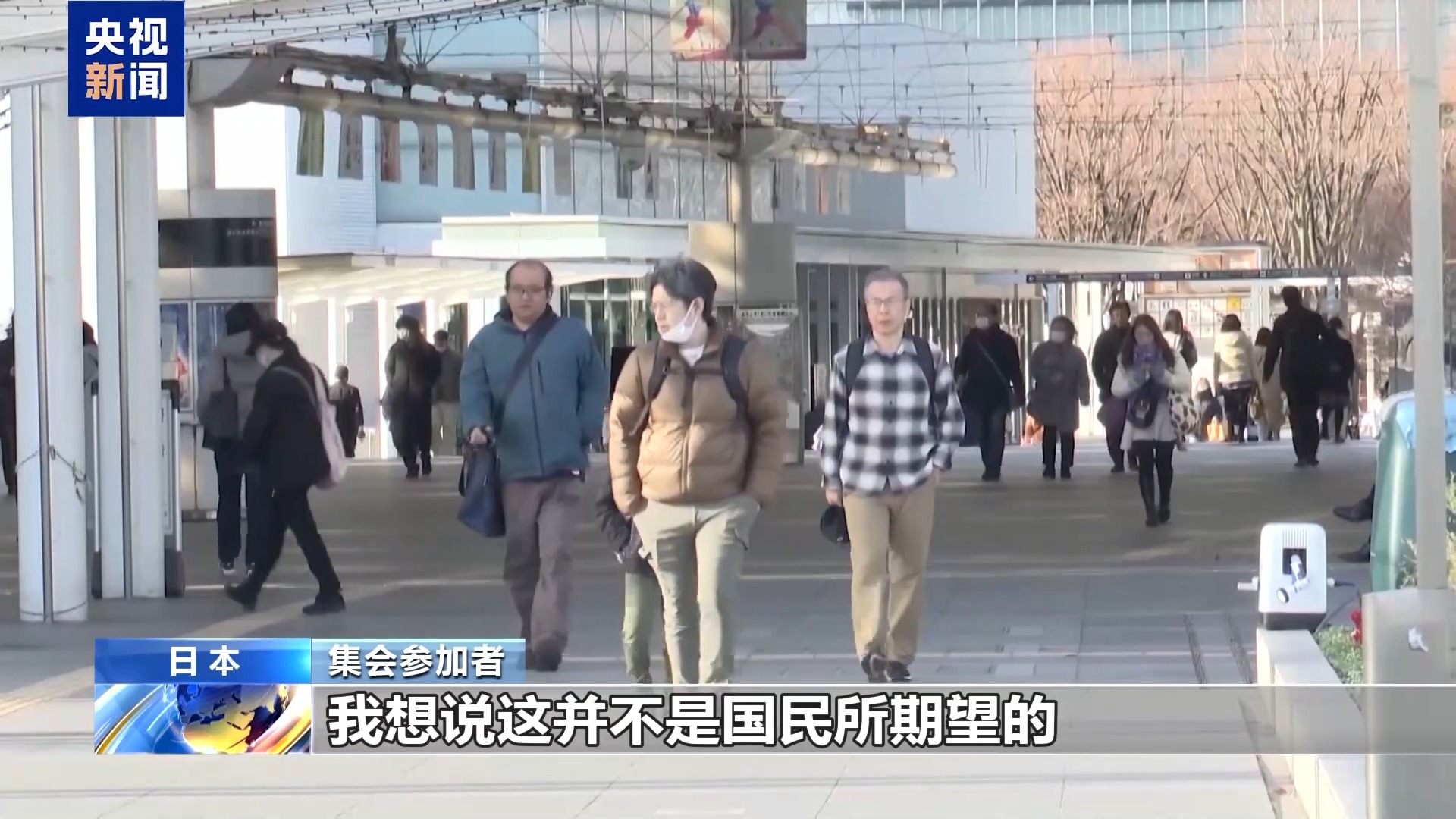
视频丨日本民众再集会高呼反对修宪扩军 要求日政府正视历史
Yang Shi Xin Wen Ke Hu Duan· 2025-12-19 02:13
Group 1 - The Japanese government is advancing constitutional amendments, significantly increasing defense budget, and making concerning statements regarding Taiwan, leading to strong public concern [1] - Citizens organized protests against constitutional amendments and military expansion, demanding the government acknowledge historical issues and retract controversial statements made by Prime Minister Suga Yoshihide [1] - Participants in the protests expressed fears that Japan is reverting to militarism, opposing the government's push for constitutional changes and the relaxation of the "three non-nuclear principles" [3] Group 2 - Protesters highlighted the dangers of misguiding the Japanese public and emphasized that this direction is not what the citizens desire [5] - Concerns were raised about the deterioration of political discourse and the distortion of historical education in schools, which is linked to the government's regression in historical awareness [7] - There is a call for a serious reflection on history to face the international community appropriately, as failure to do so could jeopardize Japan's future [7]
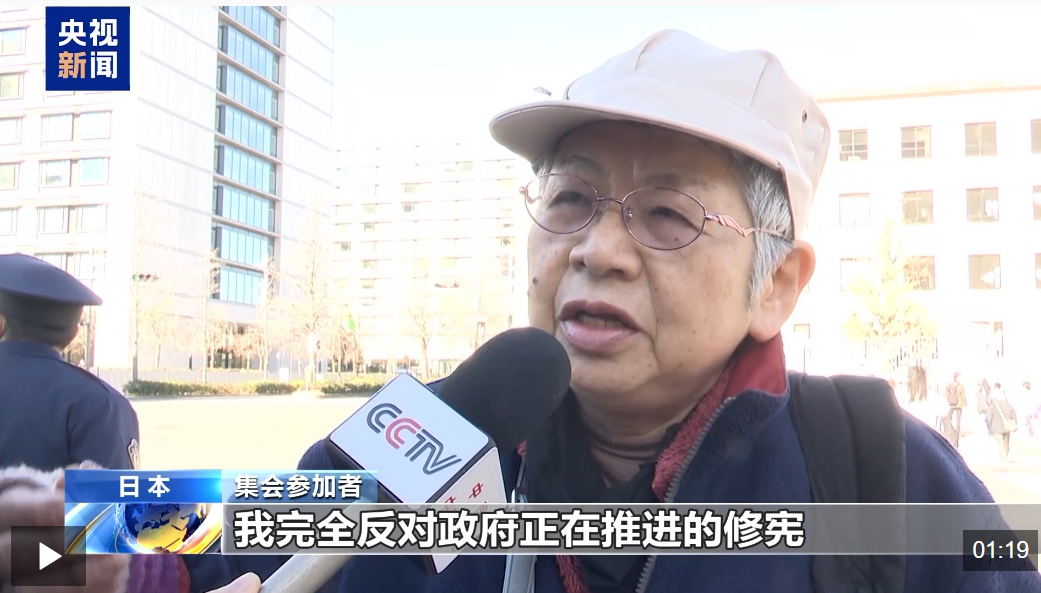
日本民众再次集会反对修宪扩军 要求日本政府正视历史
Yang Guang Wang· 2025-12-19 02:13
Core Viewpoint - The Japanese government is advancing constitutional amendments and significantly increasing defense spending, which has raised concerns among the public regarding a potential return to militarism [1] Group 1: Public Response - Citizens organized a rally in front of the Prime Minister's residence, opposing constitutional amendments and military expansion, demanding the government acknowledge historical issues [1] - Participants expressed fears that the current political direction is reminiscent of Japan's militaristic past, with calls for the Prime Minister to retract controversial statements [1] - Concerns were raised about the distortion of historical education in schools, linking it to the government's regression in historical awareness, which contributes to a cycle of political deterioration [1]