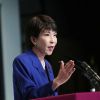
修改战后和平宪法

Search documents
高市内阁集体辞职,日本国会将举行首相指名选举,高市连任无悬念!
Jin Shi Shu Ju· 2026-02-18 01:48
据央视新闻,当地时间2月18日上午,日本政府召开内阁会议,高市早苗内阁集体辞职。日本国会众议 院及参议院将于当天举行首相指名选举。 日本宪法规定,众议院选举结束后30天内须召集特别国会,进行首相指名选举。在本届特别国会召开当 日,现任内阁集体辞职,由新当选议员组成的众议院与现有参议院阵容分别进行投票,选出新一任首 相,并据此重新组阁。 上周,日本首相高市早苗(Sanae Takaichi)在大选中以压倒性优势获胜,她希望借此推动日本政策全 面向右转。周三,她将在国会被再次任命为首相,并组建第二届内阁。 这虽是形式流程,但高市早苗将借当天的象征意义进一步巩固自民党地位,该党正利用众议院三分之二 的绝对多数席位扩大影响力——众议院是日本国会两院中权力更大的一院。 她的政策目标包括:增强军事力量、扩大政府支出、强化保守社会政策。 由于在拥有465个席位的下议院中占据三分之二的席位优势,高市早苗领导的自民党得以主导众议院各 委员会的高层职位,并强行通过参议院否决的法案;而在参议院,自民党领导的执政联盟并未占据多 数。 高市早苗计划强化日本军事能力与武器出口、收紧移民政策、推动男性专属的皇室继承规则,并保留备 受批评、 ...
随意吞吐危险言论,当心自“食”其果|新漫评
Zhong Guo Xin Wen Wang· 2025-12-03 08:13
Core Viewpoint - Japanese Prime Minister Sanae Takaichi made controversial remarks regarding Taiwan in the Japanese Diet, refusing to retract them by claiming they align with the positions of previous governments [1] Group 1 - Takaichi's statements are seen as a challenge to Japan's post-war pacifist constitution, indicating a push towards the normalization of Japan's military [1] - The rhetoric of "external threats" is being used as a justification for these military ambitions, which raises concerns about the implications for Japanese citizens [1] - The potential normalization of military discourse could lead to dangerous ideologies being more readily accepted within Japanese society [1]
高市早苗当选,成日本首位女首相
券商中国· 2025-10-21 06:41
Group 1 - The core viewpoint of the article is the election of Sanna Takichi as Japan's new Prime Minister, highlighting her political background and the implications of her leadership on Japan's governance and economy [1][2][3] - Sanna Takichi, a prominent figure in the Liberal Democratic Party (LDP), has a strong conservative stance and has previously held significant government positions, including Minister of Internal Affairs and Communications [2] - The resignation of the previous cabinet led by Shigeru Ishiba and the subsequent formation of Takichi's government indicate a shift in Japan's political landscape, with potential challenges due to the loss of coalition support from the Komeito party [2][3] Group 2 - Takichi's administration is expected to focus on economic revitalization, opposing interest rate hikes by the Bank of Japan, and advocating for increased fiscal spending [2] - The alliance with the Japan Innovation Party, which will support her government without joining the cabinet, is crucial for securing a majority in the Diet, as the LDP alone does not hold a majority [3] - The agreement with the Japan Innovation Party includes commitments to implement economic measures and structural reforms, as well as addressing political funding issues [3]