债务与GDP比例

Search documents
日本债市恐慌情绪重燃!高市早苗财政冒险遭遇投资者冷眼,市场担忧再度重演一月抛售潮
智通财经网· 2026-02-12 03:21
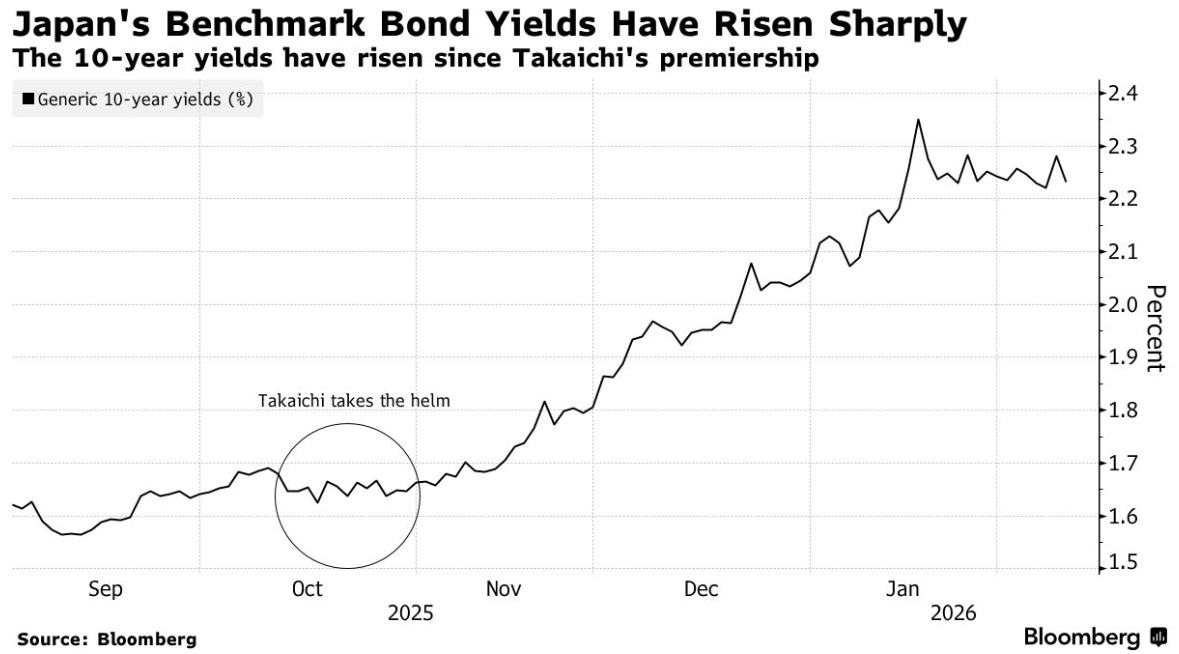
Core Viewpoint - Japanese Prime Minister Sanna Takashi's overwhelming election victory initially garnered positive investor reactions, but concerns remain regarding her expansionary spending plans potentially leading to market instability [1] Group 1: Economic Policies and Market Reactions - Takashi acknowledged market concerns about her plans to increase defense and strategic industry spending while also proposing a two-year suspension of the food sales tax [1][3] - Investors are wary of the potential for increased public debt, which previously caused bond yields to spike to multi-decade highs [1][2] - Ebury's market strategist Matthew Ryan noted that further spending and debt issuance could increase risk premiums and trigger a new round of bond sell-offs [2] Group 2: Funding Sources and Fiscal Responsibility - Takashi stated that her government would not fill spending gaps by issuing new bonds but would instead review subsidies and non-tax revenue sources for sustainable funding [3][6] - The Finance Minister pointed out that new bond issuance has been controlled below 30 trillion yen (approximately 195 billion USD) for the second consecutive year [6] - The estimated surplus from non-tax revenue for the current fiscal year is about 4.5 trillion yen, with 70% available for budget financing [6] Group 3: Debt and Economic Growth - Japan's debt exceeds twice its economic output, with debt servicing costs rising significantly, now accounting for a quarter of the annual budget [9] - The current debt-to-GDP ratio is approximately 230%, with the IMF predicting a budget deficit of 0.9% for last year, the lowest since 1992 [10] - The recent increase in tax revenue has more than doubled since the late 2000s, indicating a shift in fiscal health [15] Group 4: Market Dynamics and Central Bank Policies - The yield on Japan's benchmark 10-year government bonds has nearly doubled compared to the previous year, raising concerns about the government's cost burden due to higher interest rates [7][10] - The Bank of Japan's normalization of policies is increasing the vulnerability of long-term bonds, with global investors now accounting for 65% of monthly cash transactions in the Japanese bond market [16] - Takashi's government may face challenges in negotiating tax policies with opposition parties, potentially leaving room for alternative solutions to temporary tax cuts [16][17]