健康主义

Search documents
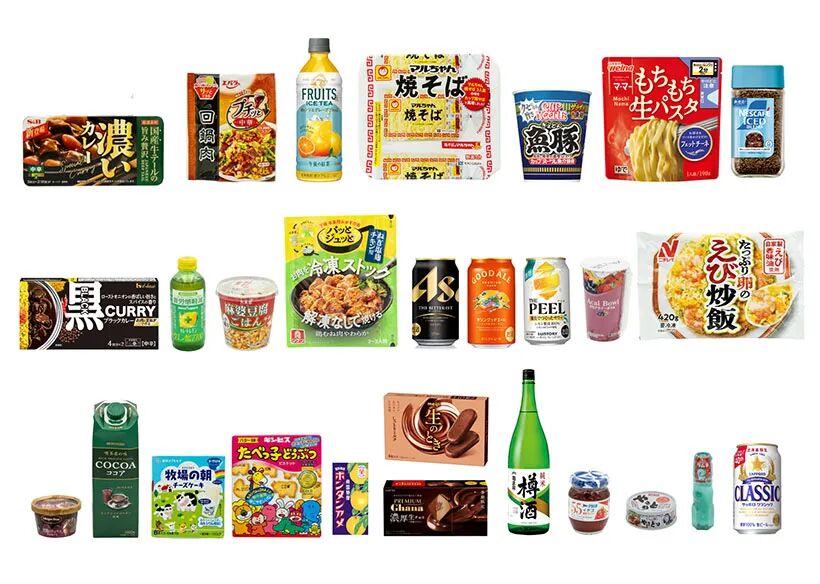
2025日本食品HIT大赏揭晓:物价再涨,也想为这份“情绪价值”买单
Xin Lang Cai Jing· 2026-01-15 00:54
Core Insights - The 44th Food HIT Awards in Japan highlighted the resilience of the food market despite challenges such as high prices and an aging population, showcasing products that meet consumer needs for convenience, health, and enjoyment [3][8][76] - This year's awards saw 23 products receiving the Excellent HIT Award and 5 classic products winning the Long-Seller Award, although the top honor was left vacant [3][4] Market Trends - **Consumer Behavior Shift**: Consumers are increasingly cautious, prioritizing low-risk and high-value products over mere price considerations, reflecting a deeper change in lifestyle and values [8][76] - **Brand Trust**: Established brands are becoming essential as consumers seek reliable options in uncertain times, with brand reputation serving as a foundation for trial and acceptance of new products [9][76] - **Convenience as a Necessity**: Products that simplify cooking processes, such as "one-pot" meals and microwave-ready options, have become essential for busy households and the elderly [10][76] - **Health Integration**: Health considerations are now embedded in daily eating habits, with functional foods that promote balanced nutrition gaining popularity among a broader audience [10][76] - **Emotional Value**: Even during economic constraints, consumers desire satisfying meals that enhance their dining experience, indicating a blend of practical and emotional value in food choices [12][76] Awarded Products Overview - **Excellent HIT Award**: Notable products include S&B's rich curry, Ebara's convenient Chinese sauce, and Kirin's afternoon tea fruit iced tea, all reflecting consumer preferences for quality and ease of preparation [13][15][17][19][21] - **Long-Seller Award**: Products like Aohata 55 fruit jam and Kikkoman's grilled chicken can demonstrate longevity in the market due to their consistent quality and adaptation to consumer tastes [66][68] Conclusion - The Food HIT Awards reveal a significant shift in the Japanese food market towards products that address real consumer pain points, emphasizing quality, convenience, and health, which may serve as a reference for similar trends in other markets [76]

小红书运营:新与心,2025大食饮行业消费者心智及决策链路研究白皮书
Sou Hu Cai Jing· 2025-07-30 03:19
Core Insights - The report titled "2025 Consumer Mindset and Decision-Making Pathway Research White Paper" focuses on the food and beverage industry, analyzing consumer psychology and decision-making processes [1][3] - Current trends indicate a shift from impulsive to "confirmation-based consumption," with consumers increasingly prioritizing health, emotional connections, and personalized choices [1][10] - The dual engines of "new" and "heart" drive brand growth, where "new" satisfies the desire for novelty and emotional projection, while "heart" relates to value and identity recognition [1][10] Industry Overview - The "big food and beverage" category includes five major sectors: food, beverages, dairy products, alcoholic drinks, and local dining [6][7] - The report highlights the evolving landscape of consumer preferences, emphasizing the importance of understanding underlying motivations behind food choices [10][20] Consumer Behavior Trends - Health consciousness is becoming a fundamental aspect of consumer choices, with 71% of consumers researching product ingredients and nutritional benefits before purchasing [32] - Emotional value plays a significant role in purchasing decisions, with 42% of consumers driven by the desire for relaxation and enjoyment [38][40] - Packaging is increasingly viewed as a form of social currency, influencing consumer choices and brand perception [47][54] Motivational Drivers - Five key motivational drivers for consumer choices in the food and beverage sector are identified: self-control/safety, cultural belonging, emotional value, social expression, and participation/ritual [78][80] - Each driver manifests differently across various product categories, reflecting the nuanced needs of consumers [81] Role of Social Media - Social media platforms, particularly Xiaohongshu, are becoming critical in shaping consumer decisions, facilitating brand connections and user engagement [1][10] - Over 65% of consumers express willingness to engage with food and beverage brands on social platforms, indicating a shift towards collaborative consumption experiences [58] Market Dynamics - The fast-moving consumer goods (FMCG) market is showing signs of recovery, with growth rates of 4.8% across various categories, including beverages and snacks [22][24] - The report suggests that brands must adapt to the changing landscape by recognizing and activating hidden consumer demands [29][30]