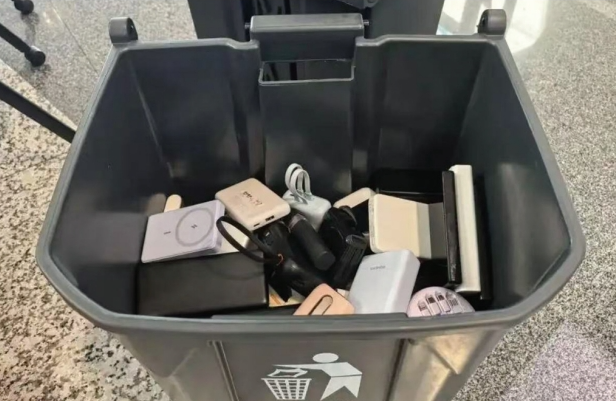
充电宝安全标准

Search documents
“史上最严”标准将至 已获3C认证充电宝仍能继续使用
Ke Ji Ri Bao· 2025-11-28 05:33
Core Viewpoint - The newly proposed national standard for mobile power banks, titled "Safety Technical Specifications for Mobile Power Banks," is considered the strictest in history, aiming to address safety issues and improve product quality in response to frequent safety incidents involving power banks [1][2]. Group 1: Reasons for New National Standard - The need for a new standard arises from a surge in safety incidents, including 15 reported cases of power banks catching fire on airplanes in the first half of the year, which is approximately double the number from the previous year [2]. - As the world's largest producer and consumer of power banks, safety concerns affect a vast number of individuals, highlighting the importance of establishing stringent standards [2]. - The new standard aims to provide a technical basis for managing mobile power banks, set clear technical thresholds, and reduce accident risks from the source, while also improving product quality and eliminating substandard products [2]. Group 2: New Requirements in the Standard - The new regulations introduce significant requirements across key areas such as the whole device, battery cells, and circuit boards [3]. - The standard mandates that product shells must display the product name, model, battery material system, production date, and recommended safety usage period, moving beyond just branding [3]. - Enhanced testing requirements for overcharging, puncturing, crushing, and thermal abuse are included, with the expectation that power banks will not catch fire, explode, rupture, or leak under various adverse conditions [3]. - New smart monitoring and management requirements are introduced, including the recording of battery voltage, temperature, and current information, which must be accessible to users [3]. Group 3: Impact on Existing Consumers - The implementation timeline for the new standard is not yet determined, but a typical transition period of 6 to 12 months is expected after the standard is finalized [4]. - Existing power banks that have already obtained 3C certification will not be affected by the new standard and can continue to be used by consumers [4]. - Consumers are advised to take precautions in daily use, such as avoiding exposure to extreme heat and preventing physical damage to the power banks [4].
原有3C认证将全面失效?史上最严充电宝新规要来了
猿大侠· 2025-11-26 04:24
Group 1 - The new standards introduce strict improvements in three technical areas: complete machine, circuit board, and battery cell [1] - The complete machine must indicate "recommended lifespan" and the full name of the manufacturer on the shell, enhancing transparency and traceability [1] - Circuit boards are required to have an LCD screen or a connected app to display battery health, usage count, and other key parameters, making the device's safety status more transparent [3] Group 2 - The battery cell safety standards have been tightened, including more rigorous puncture tests and increased thresholds for thermal abuse and overcharging tests, aiming to reduce risks of self-ignition and explosion [4] - The new regulations are expected to be publicly announced in December, officially released in February 2026, and implemented by June 2026, leading to the obsolescence of existing 3C certification [6] - Approximately 70% of current production capacity may face elimination due to the inability to meet the new technical requirements [6] Group 3 - The Civil Aviation Administration of China has issued a "3C ban" on June 26, prohibiting the carrying of non-3C marked and recalled power banks on domestic flights starting June 28 [7] - Huawei's CTO stated that the company has never recalled a power bank, emphasizing the highest priority on safety for their charging products [8] - Huawei's power bank features 13 levels of safety protection, including temperature protection and short circuit protection, utilizing battery cells previously used in flagship phones for enhanced safety [10]

充电宝行业安全标准或加速完善
Xiao Fei Ri Bao Wang· 2025-07-01 02:29
Core Viewpoint - The recent recall of power banks by major brands due to safety risks associated with lithium batteries has raised significant concerns among consumers and prompted regulatory changes in the industry [2][10][12]. Industry Impact - The recall of 1.2 million power banks, including 491,745 units from Romoss and 713,000 units from Anker Innovations, marks the largest recall of defective power banks in China’s history [2][10]. - The incident is expected to accelerate the establishment of higher safety standards and regulations within the power bank industry, as evidenced by the recent announcements from regulatory bodies regarding new safety standards [10][11][12]. Safety Concerns - Lithium batteries, which are the core component of power banks, have been linked to multiple incidents of overheating and fires, raising alarms about their safety [4][5][10]. - The quality of battery cells and circuit boards is critical, with substandard components leading to increased risks of overheating and potential explosions [5][6]. Regulatory Changes - The Civil Aviation Administration of China has implemented a ban on carrying power banks without clear 3C certification or those that have been recalled, effective June 28 [1][10]. - The Ministry of Industry and Information Technology has opened discussions for a mandatory national standard for mobile power safety, indicating a shift towards stricter regulations [11]. Consumer Behavior - The recall has led to a shift in consumer purchasing behavior, with many opting for lesser-known brands perceived as safer alternatives [2][10]. - Consumers are increasingly anxious about the safety of power bank products, reflecting a broader concern about product reliability in the market [6][10]. Future Trends - The industry may see a transition towards safer battery technologies, such as sodium-ion batteries, which are less prone to catching fire compared to lithium-ion batteries [9][12]. - The ongoing crisis is likely to catalyze a shift from price competition to quality competition within the power bank market, as companies strive to regain consumer trust [12].