先天免疫反应

Search documents
Nature子刊:赵金存团队等发现广谱抗病毒基因GALNT2,对抗冠状病毒和流感病毒感染
生物世界· 2025-12-14 04:05
Core Viewpoint - The article discusses the significant role of respiratory viruses, particularly coronaviruses and influenza viruses, in global pandemics and their impact on public health, emphasizing the importance of understanding immune responses and potential antiviral strategies [1][2]. Group 1: Immune Response and Interferon - The innate immune response, including interferons (IFN) and interferon-stimulated genes (ISG), serves as the first line of defense against viral attacks [2]. - Delayed or impaired type I interferon (IFN-I) responses are notable characteristics of severe COVID-19 and influenza infections, with 3.5% of life-threatening COVID-19 patients exhibiting harmful mutations in interferon system genes [2]. - In critical COVID-19 patients, nearly 15% have been found to possess neutralizing antibodies against their own interferons, indicating a significant immune response issue [2]. Group 2: GALNT2 and Antiviral Mechanism - A recent study published in Nature Microbiology identifies GALNT2 as an ISG with broad antiviral activity, establishing it as a crucial defense factor against respiratory virus infections [3][9]. - GALNT2 inhibits the replication of various coronaviruses and influenza viruses, promoting viral clearance and reducing disease severity through O-glycosylation of viral proteins [6][9]. - The mechanism involves GALNT2 modifying the spike protein of SARS-CoV-2, preventing its cleavage by proteases, thus blocking virus-host cell fusion [6][7]. Group 3: Genetic Insights and Implications - Analysis of human genetic data reveals that individuals with GALNT2 gene mutations that impair antiviral function have a significantly higher risk of hospitalization after SARS-CoV-2 infection [8]. - The findings deepen the understanding of host-virus interactions and provide new targets for developing broad-spectrum antiviral strategies against respiratory pathogens [10].


离诺贝尔奖最近的华人科学家——陈志坚,来自福建农村,已包揽各大“诺奖风向标”
生物世界· 2025-09-27 04:04
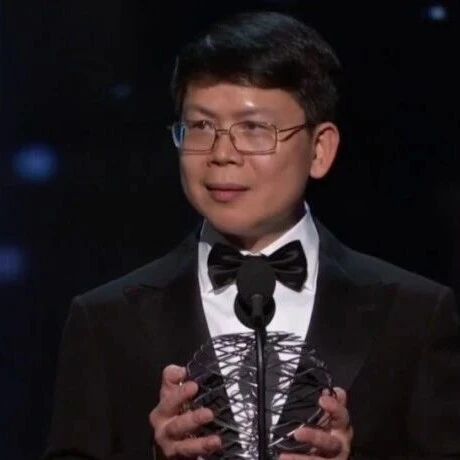
Group 1 - The Nobel Prize announcement dates for 2025 are set for October 6, 7, and 8, covering the Nobel Prizes in Physiology or Medicine, Physics, and Chemistry [2] - Chinese scientist Chen Zhijian has received multiple prestigious awards, including the Citation Laureate Award, and is considered the closest Chinese scientist to winning a Nobel Prize [2] - Chen Zhijian is recognized for his discovery of how nucleic acids trigger innate immune responses and autoimmune reactions within cells [3] Group 2 - Chen Zhijian was born in 1966 in Fujian Province, China, and graduated with a Bachelor's degree in Biology from Fujian Normal University in 1985 [5] - He obtained his Ph.D. in Biochemistry from the State University of New York at Buffalo in 1991, focusing on the ubiquitin pathway [5] - After his postdoctoral research at the Salk Institute, he worked in various biotech companies, contributing to cancer treatment drug development [5][6] Group 3 - In 1996, Chen collaborated with Harvard's Tom Maniatis to discover that kinases must be "activated" by ubiquitin for the NF-κB signaling pathway to function properly [6] - He established his laboratory at the University of Texas Southwestern Medical Center in 1997, focusing on the role of ubiquitin in immune responses [6] - His research led to significant findings regarding the immune response to RNA viruses and the discovery of key proteins involved in innate immunity [6][8] Group 4 - Chen Zhijian has received numerous awards, including the National Academy of Sciences Molecular Biology Award in 2012 and election to the National Academy of Sciences in 2014 [8] - He was awarded the Breakthrough Prize in Life Sciences in 2019 for elucidating the role of the DNA sensor cGAS in immune responses [11] - In 2023, he received the Horwitz Prize for discovering the cGAS-STING pathway, which is considered a leading indicator for future Nobel Prize winners [12] Group 5 - Chen was awarded the Lasker Basic Medical Research Award in 2024 for his work on the cGAS enzyme and its role in immune and inflammatory responses [15] - The Citation Laureate Award was given to him in 2025 for clarifying the fundamental mechanisms of the cGAS-STING pathway in innate immunity [19] - The awards he has received are indicative of a strong likelihood of future recognition with a Nobel Prize, as many past recipients of these awards have gone on to win the Nobel Prize [12][19]