全场景智能化方案

Search documents
钠电瞄准AIDC,机器人重塑产线:亿纬锂能给自己的新命题
Xin Lang Cai Jing· 2025-12-29 13:45
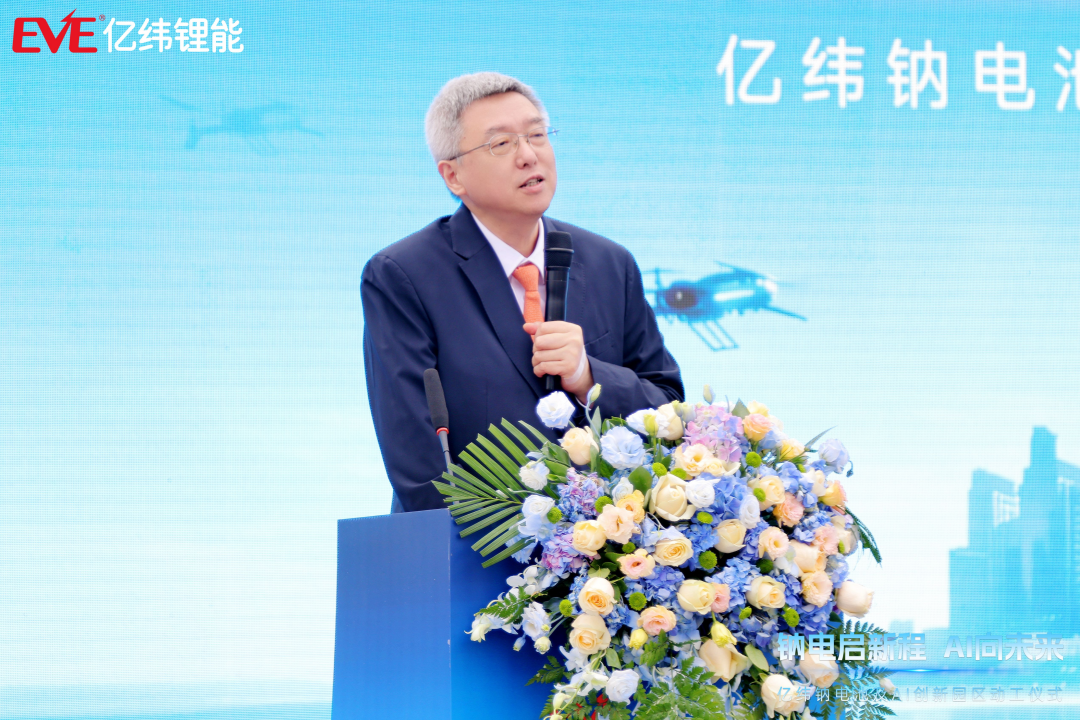
Core Insights - The construction of the EVE Sodium Energy Headquarters and the Jinyuan Robotics AI Center has officially commenced, marking a strategic shift for the company towards integrating AI and energy solutions [1][32]. - The chairman of EVE Lithium Energy, Dr. Liu Jincheng, emphasized the increasing importance of R&D and innovation in the manufacturing sector, suggesting that companies in AI-related fields may achieve higher market valuations with the same sales scale [2][32]. Group 1: Strategic Shift and Infrastructure - The original plan for the site was a traditional factory, but after three years of revisions, it has evolved into the EVE Sodium Energy Headquarters and the Jinyuan Robotics AI Center [4][32]. - The sodium battery section will cover approximately 90,000 square meters with an annual production capacity of 2GWh, encompassing the entire process from R&D to mass production [5][33]. - The Jinyuan Robotics AI Center will have a building area of about 50,000 square meters, focusing on robotics R&D, trial production, and skills training [6][33]. - EVE Lithium Energy aims to transition from a battery manufacturer to a comprehensive intelligent solution provider by integrating sodium-ion batteries and AI robotics into its strategy [7][33]. Group 2: Sodium Battery Strategy - Sodium batteries are positioned as a solution to energy sovereignty and extreme scenario demands, distinguishing themselves from lithium batteries, which are often seen as a cheaper alternative [9][35]. - The company is focusing on developing a battery technology that does not rely on scarce resources, as approximately 70%-80% of lithium resources in China are imported [13][40]. - EVE's sodium battery products demonstrate superior performance in extreme conditions, maintaining 80% capacity at -40°C and 70% energy retention, which could simplify energy systems in cold regions [20][45]. Group 3: Commercialization and Market Focus - Currently, sodium batteries are in the demonstration application stage in the domestic market, with the company focusing on accumulating operational data in extreme conditions while targeting overseas markets for commercialization [21][46]. - The cancellation of expensive liquid cooling systems in overseas projects has significantly reduced total ownership costs, indicating that sodium batteries may surpass lithium batteries in economic viability [23][48]. - EVE aims to complete the transition from laboratory products to mature industrial assets by 2027, with several global strategic customers already testing prototypes [24][48]. Group 4: Robotics and AI Integration - EVE's approach to robotics is not merely about replacing human labor but leveraging AI to drive innovation in energy manufacturing [24][49]. - The company is developing a model where AI enhances manufacturing processes, focusing on specific industrial tasks rather than general-purpose robotics [26][51]. - The integration of AI into manufacturing aims to create a flexible supply chain and ultimately an intelligent factory where robots produce batteries for other robots [26][51]. Group 5: Financial and Operational Efficiency - The restructuring of production lines through robotics could drastically reduce physical space requirements, leading to significant cost savings in construction and operational expenses [27][52]. - This transformation addresses the mismatch between rapid technological advancements in battery chemistry and the long payback periods of traditional fixed assets [53][54]. - EVE plans to introduce over 1,000 new high-tech positions, including more than 300 advanced R&D roles, to support its ambitious growth and innovation goals [56].