工业AI大模型

Search documents
钠电瞄准AIDC,机器人重塑产线:亿纬锂能给自己的新命题
Xin Lang Cai Jing· 2025-12-29 13:45
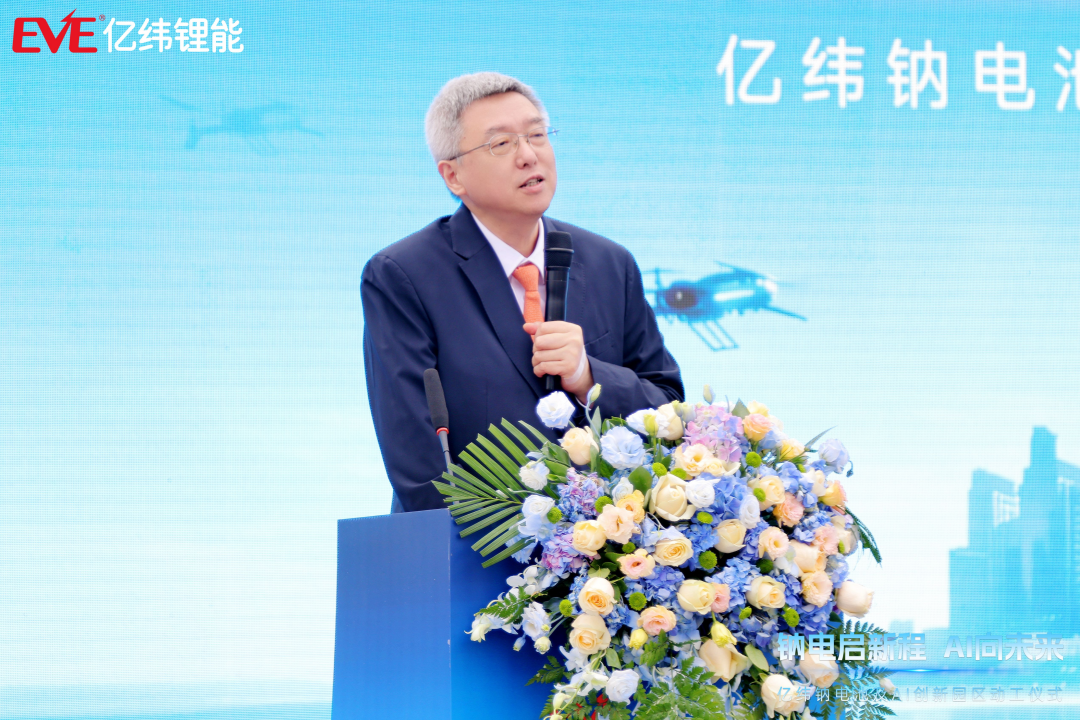
Core Insights - The construction of the EVE Sodium Energy Headquarters and the Jinyuan Robotics AI Center has officially commenced, marking a strategic shift for the company towards integrating AI and energy solutions [1][32]. - The chairman of EVE Lithium Energy, Dr. Liu Jincheng, emphasized the increasing importance of R&D and innovation in the manufacturing sector, suggesting that companies in AI-related fields may achieve higher market valuations with the same sales scale [2][32]. Group 1: Strategic Shift and Infrastructure - The original plan for the site was a traditional factory, but after three years of revisions, it has evolved into the EVE Sodium Energy Headquarters and the Jinyuan Robotics AI Center [4][32]. - The sodium battery section will cover approximately 90,000 square meters with an annual production capacity of 2GWh, encompassing the entire process from R&D to mass production [5][33]. - The Jinyuan Robotics AI Center will have a building area of about 50,000 square meters, focusing on robotics R&D, trial production, and skills training [6][33]. - EVE Lithium Energy aims to transition from a battery manufacturer to a comprehensive intelligent solution provider by integrating sodium-ion batteries and AI robotics into its strategy [7][33]. Group 2: Sodium Battery Strategy - Sodium batteries are positioned as a solution to energy sovereignty and extreme scenario demands, distinguishing themselves from lithium batteries, which are often seen as a cheaper alternative [9][35]. - The company is focusing on developing a battery technology that does not rely on scarce resources, as approximately 70%-80% of lithium resources in China are imported [13][40]. - EVE's sodium battery products demonstrate superior performance in extreme conditions, maintaining 80% capacity at -40°C and 70% energy retention, which could simplify energy systems in cold regions [20][45]. Group 3: Commercialization and Market Focus - Currently, sodium batteries are in the demonstration application stage in the domestic market, with the company focusing on accumulating operational data in extreme conditions while targeting overseas markets for commercialization [21][46]. - The cancellation of expensive liquid cooling systems in overseas projects has significantly reduced total ownership costs, indicating that sodium batteries may surpass lithium batteries in economic viability [23][48]. - EVE aims to complete the transition from laboratory products to mature industrial assets by 2027, with several global strategic customers already testing prototypes [24][48]. Group 4: Robotics and AI Integration - EVE's approach to robotics is not merely about replacing human labor but leveraging AI to drive innovation in energy manufacturing [24][49]. - The company is developing a model where AI enhances manufacturing processes, focusing on specific industrial tasks rather than general-purpose robotics [26][51]. - The integration of AI into manufacturing aims to create a flexible supply chain and ultimately an intelligent factory where robots produce batteries for other robots [26][51]. Group 5: Financial and Operational Efficiency - The restructuring of production lines through robotics could drastically reduce physical space requirements, leading to significant cost savings in construction and operational expenses [27][52]. - This transformation addresses the mismatch between rapid technological advancements in battery chemistry and the long payback periods of traditional fixed assets [53][54]. - EVE plans to introduce over 1,000 new high-tech positions, including more than 300 advanced R&D roles, to support its ambitious growth and innovation goals [56].


京东工业上市背后:用最“实”的模式,啃最“重”的骨头
Sou Hu Cai Jing· 2025-12-11 12:58
Core Viewpoint - JD Industrial has successfully transitioned from a loss of 1.269 billion yuan in 2022 to a net profit of 762 million yuan in 2024, showcasing a remarkable turnaround and strong growth potential in the industrial e-commerce sector [3][4]. Group 1: IPO and Market Reception - JD Industrial's IPO on the Hong Kong Stock Exchange raised approximately 2.827 billion HKD, with a public offering price set at 14.1 HKD per share [2]. - The offering received 72,234 valid applications, indicating a subscription rate of about 60.25 times the available shares, while international placements were oversubscribed by approximately 7.88 times [2]. Group 2: Financial Performance - The company achieved a net profit of 762 million yuan in 2024, a staggering increase of nearly 158 times compared to the previous year [3]. - In the first half of 2025, JD Industrial continued its strong performance with a net profit of 500 million yuan [4]. - The revenue compound annual growth rate (CAGR) over the past three years reached 20%, highlighting the company's ability to grow while achieving profitability [5]. Group 3: Business Model and Innovation - JD Industrial differentiates itself by utilizing a digital supply chain system called "Taipu," which emphasizes data flow over physical inventory movement, reducing costs and improving efficiency [7][8]. - The company has established a standardized product library, "Mercator," to streamline the procurement process and enhance operational efficiency [10]. - JD Industrial's "Taipu" system connects over 158,000 suppliers, transforming fragmented inventory into a cohesive network, thereby improving supply chain collaboration [11]. Group 4: Industry Impact and Future Prospects - JD Industrial aims to serve as a vital link in China's manufacturing supply chain, helping local industries connect with broader markets and optimize production based on real-time demand data [17]. - The company is also focused on supporting Chinese enterprises in establishing efficient supply chains overseas, exemplified by its "accompanying overseas" service [18]. - JD Industrial has ventured into AI with the launch of its industrial supply chain model "JoyIndustrial," aiming to revolutionize efficiency in the industrial sector [19][20].
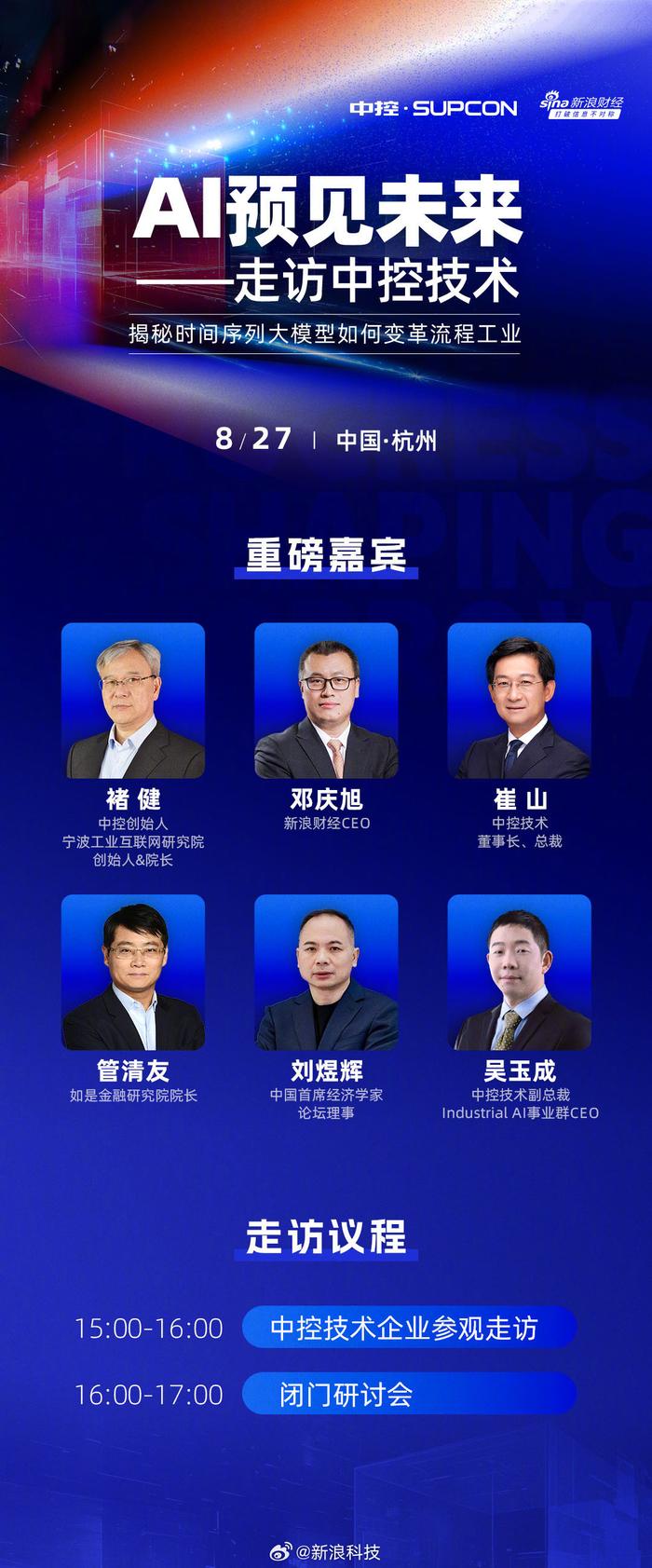
中控技术联合新浪财经8月27日揭秘工业AI大模型TPT2
Xin Lang Ke Ji· 2025-08-26 17:26
Group 1 - The core focus of the event is on the latest breakthroughs in industrial AI, specifically the time series large model TPT 2, and its potential to reshape the future of process industries [1] - The event aims to explore how data can solve challenges in industrial production and discuss the empowerment of "Made in China" through AI technology [1] - The event features prominent economists and industry leaders, indicating a significant collaboration between technology and economic thought [3][5] Group 2 - The agenda includes a company visit and a closed-door seminar, highlighting the practical engagement with the technology and its implications for the industry [6] - Key figures involved in the event include the founder of Zhongkong Technology and the CEO of Sina Finance, showcasing the leadership and expertise present [3][7]