全基因组测序

Search documents
Pacific Biosciences of California (NasdaqGS:PACB) FY Conference Transcript
2026-03-02 20:32
Summary of Pacific Biosciences of California FY Conference Call Company Overview - **Company**: Pacific Biosciences of California (NasdaqGS:PACB) - **Event**: FY Conference Call on March 02, 2026 Key Industry Insights - **Sequencing Technology**: The company focuses on long-read sequencing technology, which is gaining traction in clinical markets, particularly for whole genome sequencing in rare diseases and carrier screening applications [4][8][52] - **Competitive Landscape**: The company positions itself against competitors like Illumina, emphasizing its unique capabilities in long-read sequencing and the ability to provide comprehensive genomic data [10][11][15] Financial Performance and Projections - **2025 Performance**: The company reported a 55% growth in clinical consumables shipments, indicating strong demand and market penetration [32][44] - **2026 Guidance**: The company anticipates continued growth in clinical revenue, driven by expanding customer projects and the introduction of new products like SPRQ-Nx chemistry [6][41][66] - **Academic Market Challenges**: The U.S. academic market remains challenging, with a significant revenue gap of approximately $30 million to recover, but the company expects to grow outside the U.S., particularly in Europe [16][22][24] Product Developments - **SPRQ-Nx Chemistry**: This new product is expected to enhance performance, increase throughput, and lower costs for customers, making it competitive with short-read sequencing [5][6][73] - **Revio Utilization**: Current average utilization of Revio systems is around 20%, with expectations to increase as projects scale and the new chemistry is adopted [89][94] Market Opportunities - **Rare Diseases**: The primary focus area, with an estimated 300-400 million patients globally, highlighting the need for improved diagnostic capabilities [52][54] - **Carrier Testing**: The PureTarget 2.0 assay is gaining traction, allowing customization for specific genes across the genome [56] - **Newborn Screening**: The company is involved in initiatives in Thailand to integrate whole genome sequencing into newborn screening programs, showcasing the economic value of sequencing [57][60] Strategic Priorities - **Higher Throughput Sequencer Development**: A key priority to enable larger clinical testing laboratories to adopt the technology [65] - **Health Economics Studies**: Focus on demonstrating the cost-effectiveness of HiFi sequencing compared to other technologies [66][70] Conclusion - **Strong Positioning**: The company believes it is in a better position than ever, with a comprehensive product portfolio, improving financial metrics, and a strong global presence [96][97] - **Future Outlook**: The leadership anticipates significant growth opportunities in 2026 and beyond, with a focus on expanding clinical applications and market share [99][101]

Prophase Labs (NasdaqCM:PRPH) 2025 Conference Transcript
2025-10-30 16:00
Summary of ProPhase Labs Conference Call Company Overview - **Company**: ProPhase Labs (NasdaqCM:PRPH) - **Date of Conference**: October 30, 2025 - **Key Speaker**: Ted, CEO of ProPhase Labs Key Assets and Financials - **Crown Medical Collections**: - Total collections of approximately $150 million from COVID testing, with an expectation to net $50 million in cash from ongoing legal initiatives with Crown Medical [2][3][13] - The company is not paying any fees to attorneys working on contingency to recover these funds [9][11] - **ProPhase Biopharma (BE-Smart)**: - Focused on an esophageal cancer test that has recently been published in a major journal, a critical step towards commercialization [3][22] - The test aims to provide earlier and more accurate diagnoses of esophageal cancer, potentially transforming the market for endoscopies [18][19] - **Nebula Genomics**: - Founded by George Church, this division focuses on whole genome sequencing and has a significant database that could be worth more than the company's current market cap [24][27] - The business is currently break-even and poised for growth once capital is secured [27][28] Market Potential - **Esophageal Cancer Test**: - The test targets the 7 million endoscopies performed annually in the U.S., with a potential market value of $7 billion to $14 billion if reimbursed at $1,000 to $2,000 per test [19][21] - The test is positioned as a more accurate alternative to current diagnostic methods, which often lead to late-stage cancer diagnoses [18][20] - **Financial Outlook**: - The company has a market cap under $20 million but expects to significantly increase its valuation with the anticipated $50 million cash inflow from Crown Medical [13][14][37] - The CEO expressed confidence in turning around the company, drawing parallels to past successes [7][31] Strategic Partnerships and Developments - **Partnerships**: - Collaborations with Mayo Clinic and M Probe for the esophageal cancer test, utilizing advanced mass spectrometry and AI for accurate diagnostics [33][34] - The publication of the test in a reputable journal is expected to facilitate commercialization efforts [22][36] Challenges and Management Insights - **Operational Challenges**: - The company faced significant challenges due to overhead costs and inability to collect on COVID testing reimbursements, leading to a cash-constrained situation [6][14] - The CEO acknowledged past management issues but emphasized a renewed focus on operational efficiency and growth [24][27] - **Management Philosophy**: - The CEO has a history of turning around struggling companies and is committed to executing a similar strategy for ProPhase Labs [31][32] Conclusion - ProPhase Labs is positioned for potential growth through its innovative cancer diagnostic test and recovery of COVID testing funds. The company is focused on overcoming past challenges and leveraging strategic partnerships to enhance its market presence and financial stability [14][37]

新血检工具可提前识别HPV相关头颈癌
Ke Ji Ri Bao· 2025-09-17 23:00
Core Insights - A new blood testing tool named "HPV-DeepSeek" developed by scientists at Massachusetts General Hospital can identify HPV-related head and neck cancers up to 10 years before symptoms appear, potentially improving patient outcomes and quality of life [1][2] - In the U.S., 70% of head and neck cancers are caused by HPV, with incidence rates rising annually. Unlike cervical cancer, there are currently no screening methods for HPV-related head and neck cancers, leading to late diagnoses [1] - The "HPV-DeepSeek" method utilizes whole genome sequencing to detect trace amounts of HPV DNA fragments shed from tumors into the bloodstream, achieving 99% specificity and sensitivity in clinical applications, surpassing existing detection methods [1] Research Findings - In a study involving 56 samples from the Brigham Biobank, "HPV-DeepSeek" detected HPV tumor DNA in 22 out of 28 cancer patients, with the earliest positive sample collected 7.8 years before diagnosis. All control samples tested negative, indicating high specificity [2] - By incorporating machine learning techniques, the research team improved detection sensitivity to identify 27 out of 28 cancer cases, including samples collected up to 10 years prior to diagnosis [2] - Further research is underway using hundreds of samples collected from the National Cancer Institute's screening trials for prostate, lung, colorectal, and ovarian cancers to validate these findings [2]
《益生菌及制品的检验方法》国家团体标准在京发布
Zhong Guo Jing Ji Wang· 2025-09-15 08:35
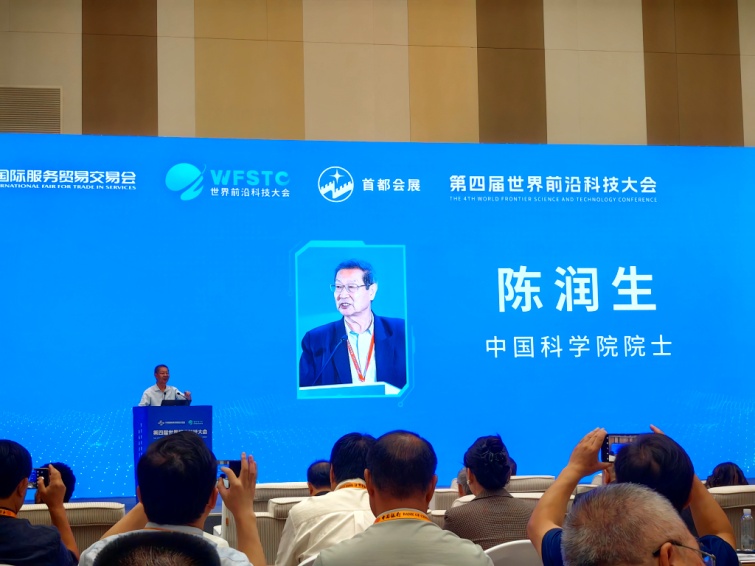
Core Viewpoint - The release of the national group standard for probiotics and related products marks a significant advancement in the regulatory framework, aiming to enhance quality control and international competitiveness in the probiotic industry [1][5][6] Group 1: Standard Overview - The standard, titled "Testing Methods for Probiotics and Products," was officially launched at the Fourth World Frontier Technology Conference in Beijing [1] - It encompasses technical specifications, quality requirements, and testing methods throughout the entire production and sales chain of probiotics, including strain identification, viable count determination, contamination detection, stability testing, and alignment with international standards [1] - The standard mandates that probiotic strains must have a clear taxonomic status and scientific naming, along with rigorous efficacy validation and safety assessment [1] Group 2: Technological Integration - The standard integrates advanced detection technologies such as whole genome sequencing (WGS) and flow cytometry, enhancing the scientific rigor of the testing methods [1] - It emphasizes the deep integration of biotechnology and testing methods, which is expected to promote collaboration between academia and industry, facilitating technological upgrades in the sector [3] Group 3: International Standards Reference - The drafting process of the standard extensively referenced international standards and guidelines from organizations such as the Codex Alimentarius Commission (CAC), ISO, FDA, and EFSA, ensuring strong scientific validity and operability [5] - The standard is designed to align with existing national food safety standards in China, which is anticipated to significantly boost the international competitiveness of Chinese probiotic products [5] Group 4: Implementation Timeline - The standard is set to be officially implemented in the near future, marking a new phase for the probiotic industry in China [6]