流式细胞术

Search documents
CYTEK(CTKB) - 2025 Q4 - Earnings Call Transcript
2026-02-26 22:32
Financial Data and Key Metrics Changes - Fourth quarter revenue for 2025 reached $62.1 million, an 8% year-over-year increase, marking the highest quarterly revenue in the company's history [4][15] - Full year revenue for 2025 was $201.5 million, a 1% increase compared to 2024, with a notable turnaround in the second half of the year where revenue grew by 5% compared to the second half of 2024 [7][25] - GAAP gross profit for Q4 was $32.9 million, a 2% decline from $33.7 million in Q4 2024, with a gross profit margin of 53% compared to 59% in the prior year [18][19] - Net loss for Q4 was $44.1 million, compared to net income of $9.6 million in the prior year quarter, primarily due to a $38.1 million valuation allowance against deferred tax assets [22][30] Business Line Data and Key Metrics Changes - Instrument revenue grew 22% in 2025, with a 26% increase in Q4 compared to the prior year [9] - Reagent revenue grew more than 20% in Q4 and over 25% for the full year 2025, driven by improvements in delivery times and a large catalog of products [10][17] - Service revenue grew 25% in Q4 year-over-year, supported by an expanding installed base and active usage of systems [17] Market Data and Key Metrics Changes - EMEA and APAC regions posted double-digit year-over-year revenue growth in Q4, with EMEA driven by strong instrument demand from academic and government customers [5][15] - U.S. revenue saw mid-single digit growth in Q4, driven by academic and government market sentiment, but was offset by declines in biotech and pharma instrument sales [6][15] Company Strategy and Development Direction - The company aims to reinforce its market leadership in next-gen cell analysis solutions through strategic pillars: instrument, application, bioinformatics, and clinical [8] - The focus remains on driving market penetration of instrument platforms, advancing technological leadership, and growing recurring revenue lines [35] Management's Comments on Operating Environment and Future Outlook - Management noted a stabilization in the market environment, with expectations for continued growth in 2026, particularly in service and reagent businesses [14][33] - The company anticipates a revenue outlook for 2026 between $205 million and $212 million, reflecting improved market conditions in EMEA and the U.S. [33] Other Important Information - The company established a new manufacturing facility in Singapore, which began generating revenue within 100 days of build-out, enhancing its operational resilience [12] - Cash and marketable securities totaled $261.5 million as of December 31, 2025, reflecting a decrease from the previous year due to stock repurchase activities [32] Q&A Session Summary Question: What drove the end-of-year growth acceleration? - Management indicated that the growth was driven by a normalization in academic and government spending, along with catch-up disbursements from the NIH [44] Question: What was the mix in 2025 between new customer acquisitions versus existing customers expanding their capacity? - Management noted that the growth was a combination of both new customer acquisitions and existing customers purchasing additional systems [52] Question: How is the company thinking about commercial investments in 2026? - The company plans to continue investing in high-end market segments and in its reagent sales force to drive future revenue growth [54][55]

CYTEK(CTKB) - 2025 Q4 - Earnings Call Transcript
2026-02-26 22:32
Financial Data and Key Metrics Changes - Fourth quarter revenue for 2025 reached $62.1 million, an 8% year-over-year increase, marking the highest revenue achieved in a quarter historically for the company [4][15] - Full year revenue for 2025 was $201.5 million, a 1% increase compared to 2024, with a notable improvement in revenue growth during the second half of the year [7][25] - GAAP gross profit for Q4 was $32.9 million, a 2% decline from $33.7 million in Q4 2024, with a gross profit margin of 53% compared to 59% in the prior year [18][19] - Net loss for Q4 was $44.1 million, compared to net income of $9.6 million in the prior year quarter, primarily due to a $38.1 million valuation allowance against deferred tax assets [22][23] Business Line Data and Key Metrics Changes - Instrument revenue grew 22% in 2025 compared to the prior year, with a 26% growth in Q4 over the prior year period [9] - Reagent revenue grew more than 20% in Q4 and over 25% for the full year 2025, driven by improvements in delivery times and a large catalog of reagents [10][17] - Service revenue grew 25% in Q4 versus the prior year quarter, supported by an expanding installed base and active usage of systems [17] Market Data and Key Metrics Changes - In the U.S., total revenue saw mid-single digit year-over-year growth in Q4, driven by academic and government market sentiment [6] - EMEA and APAC both posted double-digit year-over-year revenue growth in Q4, with EMEA driven by strong instrument demand from academic and government customers [5][15] - APAC revenue grew 15% in Q4, driven by growth in instruments, service, and reagents [18] Company Strategy and Development Direction - The company aims to reinforce its position as a market leader in next-gen cell analysis solutions through strategic pillars including instruments, applications, bioinformatics, and clinical [8] - The focus remains on driving market penetration of instrument platforms, advancing technological leadership, and growing recurring revenue lines [35] Management's Comments on Operating Environment and Future Outlook - Management noted a stabilization in the market environment, with expectations for continued growth in 2026, particularly in service and reagent businesses [14][33] - The company anticipates a revenue outlook for 2026 between $205 million and $212 million, reflecting improved market conditions in EMEA and the U.S. [33] Other Important Information - The company established a new manufacturing facility in Singapore, which began generating revenue in less than 100 days from build-out [12] - Cash and marketable securities totaled $261.5 million as of December 31, 2025, reflecting a decrease from the previous year due to stock repurchase activities [32] Q&A Session Summary Question: What drove the end-of-year growth acceleration? - Management indicated that the growth was driven by a normalization in academic and government spending, along with some catch-up disbursements from the NIH [44][46] Question: What was the mix in 2025 between new customer acquisitions versus existing customers expanding their capacity? - Management noted that the growth was a combination of both new customer acquisitions and existing customers purchasing multiple systems [52] Question: How is the company thinking about commercial investments in 2026? - The company is focused on high-end market segments and plans to continue investing in those areas to drive future revenue growth [54][55]
9家国产仪器突围,2025流式细胞仪NMPA获证盘点
仪器信息网· 2026-02-09 09:01
Core Insights - In 2025, a total of 10 flow cytometers received NMPA certification, with 9 being domestic brands, indicating a trend towards high-end, intelligent, and multi-parameter technology that supports clinical precision medicine [1][30]. Group 1: Industry Overview - Flow cytometry, developed in the 1970s, has evolved from basic research to clinical applications in disease diagnosis and treatment monitoring, with the first flow cytometer introduced in China in the early 1980s [2]. - Flow cytometers can measure cell size, internal particle characteristics, and detect surface and cytoplasmic antigens, as well as DNA and RNA content, allowing for rapid analysis of large cell populations [2]. Group 2: Certification and Product Highlights - In 2025, 10 flow cytometers were approved, including 9 domestic brands and 1 imported brand, with notable models such as Cl inStel lar AX from Chenglang Bio, which received certification in December [3][6]. - The Cl inStel lar AX is a high-end spectral flow cytometer that breaks the monopoly of imported brands in the high-end clinical field, providing cost-effective solutions for domestic medical institutions [6][30]. - The BioCy teX from Zhongsheng Medical is the first domestic 4-laser 21-color flow cytometer, marking a significant breakthrough in high-end flow cytometry capabilities [15][30]. Group 3: Technological Advancements - Prism Tech has achieved breakthroughs in PMT and APD detector technologies, creating a dual-platform system that enhances the technical breadth and application depth of domestic flow cytometers [7][30]. - Automation and intelligence upgrades are evident in devices like the Khroma series from Meiruite and EasyCell Plus from Weigong Technology, which feature high-throughput automatic sample loading systems [10][19][30]. Group 4: Market Trends and Future Outlook - The rapid increase in domestic brand certifications indicates a shift towards domestic alternatives and internationalization, with Zhongsheng Medical's BioCy te gaining registration in Indonesia, marking the beginning of overseas expansion for domestic manufacturers [31]. - The flow cytometry market is moving towards automation, intelligence, and multi-dimensional development, expanding applications from hematology to oncology, cell therapy, and infectious immunity [31].


Cytek Biosciences (NasdaqGS:CTKB) FY Conference Transcript
2026-01-15 02:17
Cytek Biosciences FY Conference Summary Company Overview - **Company**: Cytek Biosciences (NasdaqGS:CTKB) - **Industry**: Cell analysis and flow cytometry - **Recognition**: Named one of the fastest growing companies by Time Magazine and awarded Company of the Year by Clinical Leader and the Journal [2][3] Financial Performance - **Revenue**: Reported $201 million for FY 2025, slightly above the previous year [3] - **Cash Position**: $262 million by the end of Q3 2025 [3] - **Q4 Revenue**: $62 million, with a quarter-to-quarter growth trend showing recovery [17][18] - **Growth Rates**: - Q1: -8% YoY - Q2: -2% YoY - Q3: 2% YoY - Q4: 8% YoY [17][18] Market Dynamics - **Market Size**: The overall market opportunity is projected to be $5.1 billion by 2025, with a CAGR of 8.8% through 2032 [4][5] - **Revenue Sources**: - 59% from biotech and pharma - 41% from academic and government-supported agencies [4] - **Geographic Revenue Breakdown**: - 50% from the U.S. - 26% from APEC (including China) - 24% from other regions [4] Business Model and Strategy - **Five Business Pillars**: Instruments, applications, bioinformatics, clinical, and reagents [5] - **Reagent Business**: Focus on expanding reagent sales, with a growth of over 20% in 2025 [30] - **Cytek Cloud**: Over 20,000 users, providing automated panel optimization and data management [6][7] - **Clinical Applications**: Instruments approved for clinical use in China and Europe, targeting applications like leukemia MRD [8][9] Competitive Positioning - **Market Share**: Growth attributed to capturing market share from competitors, especially in a challenging market environment [26][28] - **Product Portfolio**: Broad range of cell analysis tools, including the new Aurora EVO, which has been well-received [11][12][20] - **Innovation Focus**: Continuous investment in R&D to drive product innovation and maintain leadership in flow cytometry [19][21] Future Outlook - **Growth Projections**: Anticipated substantial growth in 2026, driven by an increased installed base and stabilization in North America and EMEA [28][22] - **Recurring Revenue Potential**: Significant opportunities in reagents and services, with low current market penetration [32][33] - **M&A Strategy**: Balanced approach to capital allocation, focusing on share repurchase and opportunistic acquisitions [35] Key Takeaways - **Technology Leadership**: Cytek is positioned as a leader in flow cytometry, with essential tools for life sciences [23][37] - **Global Diversification**: Manufacturing and sales operations across multiple continents, enhancing resilience [24] - **Positive Cash Flow**: One of the few life science tool companies generating positive cash flow [25] Conclusion Cytek Biosciences is well-positioned for continued growth and profitability, supported by a strong product portfolio, innovative technology, and a strategic focus on expanding its market share and recurring revenue streams [38]
2025年,新推出了哪些流式细胞仪
仪器信息网· 2025-12-22 09:07
Core Insights - The article highlights significant breakthroughs in flow cytometry expected in 2025, with spectral flow cytometry emerging as the mainstream technology, driven by multi-laser, high-channel, and full-spectrum systems that enhance multi-color detection capabilities [1][2] - New technologies such as imaging flow cytometry, Raman spectral flow cytometry, and nano flow cytometry are making notable progress, indicating a shift from "phenotypic analysis" to "structural and functional integration analysis" [2] Product Releases - A total of 13 new flow cytometry products from 11 manufacturers were reported for release in 2025, showcasing advancements in various types of flow cytometry technologies [3] - Key products include: - BD's FlowJo™ v11 flow analysis software, which features a new code architecture and intuitive interface for high-dimensional data mining [10] - Cytek's Aurora™ Evo system, which enhances the capabilities of the previous Aurora system with improved sensitivity and resolution [32] - BaySpec's Endogen 3 Implex, a high-throughput flow cytometer based on coherent Raman spectroscopy, capable of measuring at a rate of up to 24,000 spectra per second [26] Technological Advancements - The FACSDi scover™ A8/A8 FX imaging spectral flow cytometer by BD allows for high-definition imaging of cell morphology and subcellular structures, enhancing the understanding of cell function [7] - The OMNIS ONE by Cytek integrates a 5-laser, 79-channel full-spectrum detection system, achieving over 99% cell viability and 95% single-cell rate post-sorting [13] - The iQue® 5 high-throughput flow cytometer from Sartorius supports up to 27 channels and is designed for continuous operation, significantly reducing operational maintenance time [29] Application Scope - The advancements in flow cytometry technologies are applicable across various fields, including basic research, clinical tumor immune microenvironment analysis, and pathogen fine typing in infectious diseases [9] - The new products are designed to meet diverse laboratory needs, from high-dimensional immune analysis to clinical diagnostics, enhancing the capabilities of researchers and clinicians alike [24][30]





《益生菌及制品的检验方法》国家团体标准在京发布
Zhong Guo Jing Ji Wang· 2025-09-15 08:35
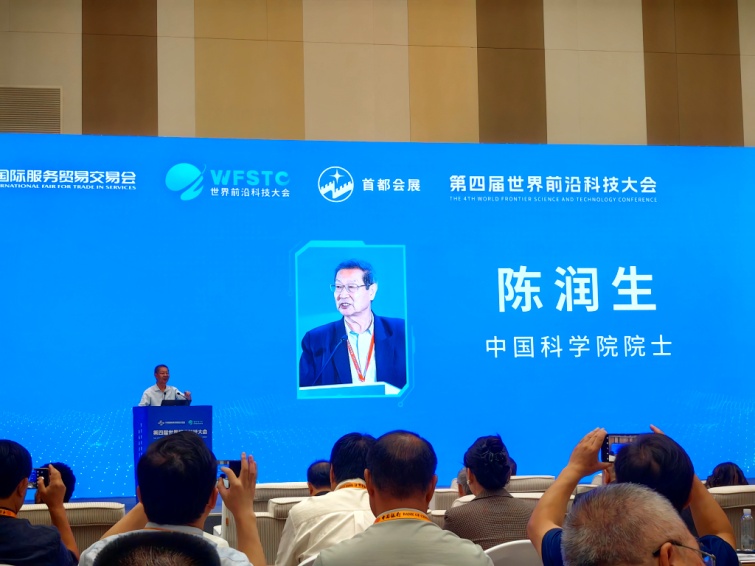
Core Viewpoint - The release of the national group standard for probiotics and related products marks a significant advancement in the regulatory framework, aiming to enhance quality control and international competitiveness in the probiotic industry [1][5][6] Group 1: Standard Overview - The standard, titled "Testing Methods for Probiotics and Products," was officially launched at the Fourth World Frontier Technology Conference in Beijing [1] - It encompasses technical specifications, quality requirements, and testing methods throughout the entire production and sales chain of probiotics, including strain identification, viable count determination, contamination detection, stability testing, and alignment with international standards [1] - The standard mandates that probiotic strains must have a clear taxonomic status and scientific naming, along with rigorous efficacy validation and safety assessment [1] Group 2: Technological Integration - The standard integrates advanced detection technologies such as whole genome sequencing (WGS) and flow cytometry, enhancing the scientific rigor of the testing methods [1] - It emphasizes the deep integration of biotechnology and testing methods, which is expected to promote collaboration between academia and industry, facilitating technological upgrades in the sector [3] Group 3: International Standards Reference - The drafting process of the standard extensively referenced international standards and guidelines from organizations such as the Codex Alimentarius Commission (CAC), ISO, FDA, and EFSA, ensuring strong scientific validity and operability [5] - The standard is designed to align with existing national food safety standards in China, which is anticipated to significantly boost the international competitiveness of Chinese probiotic products [5] Group 4: Implementation Timeline - The standard is set to be officially implemented in the near future, marking a new phase for the probiotic industry in China [6]