全球热量分配

Search documents
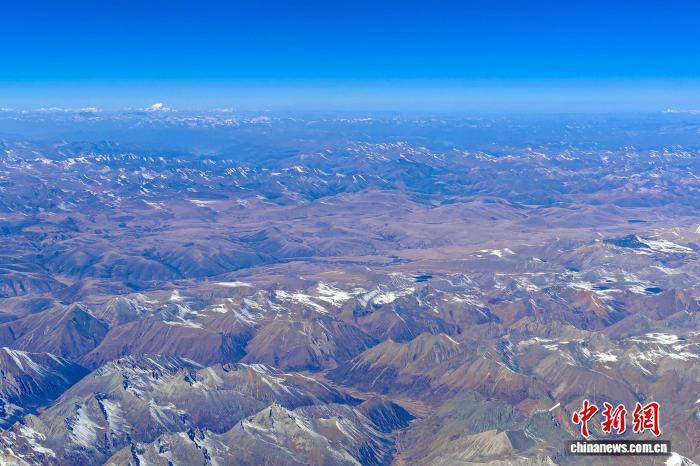
中国科学家:青藏高原隆升影响全球热量分配
Zhong Guo Xin Wen Wang· 2025-11-20 04:07
Core Viewpoint - Chinese scientists propose the "triple polar linkage" hypothesis, suggesting that the uplift of the Tibetan Plateau significantly influenced global heat distribution and climate change processes over millions of years [1][3]. Group 1: Tibetan Plateau Uplift - The Tibetan Plateau's northern region experienced rapid uplift between 12 million and 8 million years ago, altering atmospheric circulation and carbon cycling, which played a crucial role in global climate change [1][3]. - The second Tibetan scientific expedition detailed the uplift process of the Tibetan Plateau, highlighting that the central and southern parts rose rapidly from 40 million to 30 million years ago, while the northern and northeastern regions began significant uplift only from 12 million years ago [3][4]. Group 2: Climate and Ecological Impact - The uplift of the Tibetan Plateau has been linked to significant ecological changes, including the evolution of modern African savanna fauna originating from the northeastern edge of the plateau around 8 million years ago, and Arctic fauna tracing back to the plateau around 6 million years ago [3][4]. - The strong uplift in the northern Tibetan Plateau has driven significant aridification in inland Asia and global cooling, leading to a transformation of ecosystems from forests to deserts and salt lakes [4]. Group 3: Global Climate Dynamics - The uplift enhances the frozen zone, erosion, and dust nutrient transport, which boosts Pacific biological activity and organic carbon burial, contributing to global cooling and polar ice cap expansion [4]. - The northern uplift of the Tibetan Plateau is synchronized with the development of the Arctic ice cap, strengthening of westerlies and winter monsoons, and significant aridification in Asia, establishing the "triple polar linkage" [4]. Group 4: Future Research Directions - Future work aims to accurately reconstruct the uplift process and validate the "triple polar linkage" hypothesis through numerical simulations, which is crucial for understanding Earth's system responses in the context of current global warming [4].