
第二次青藏科考

Search documents
青藏高原地区树线每10年爬升1.7米
Zhong Guo Xin Wen Wang· 2025-11-20 08:12
Core Insights - The tree line in the Tibetan Plateau has been rising at an average rate of 1.7 meters per decade over the past 120 years, which is predicted to compress the natural habitats of high-altitude endemic species by 20% to 70%, increasing the risk of species loss [1][2] Group 1: Climate Change and Ecological Impact - The Tibetan Plateau, known as the "Water Tower of Asia," is undergoing a chain reaction of changes characterized by warming, increased humidity, and greening, while also becoming darker due to reduced albedo from melting glaciers and increased vegetation [2] - The darkening of the surface is expected to cause significant changes in Earth system processes, including adjustments in the Asian monsoon circulation and an increase in the frequency of extreme weather events [2] - The ecological system services of the Tibetan Plateau are gradually improving, with the proportion of high-quality grassland and forest areas increasing by 6% and 12% respectively, and soil quality improving by 40% [2] Group 2: Biodiversity Discoveries - The second Tibetan scientific expedition has achieved significant advancements in biodiversity research, including the digitalization and precise investigation of biodiversity, resulting in the publication of over 3,000 new species [3] - New species include 205 animal species, 388 plant species, and 2,593 microbial species, highlighting the unique adaptations of organisms to the high-altitude environment [3] - The research revealed that environmental heterogeneity in the southeastern river canyons of the Tibetan Plateau helps mitigate the adverse effects of climate change on amphibian species [3]

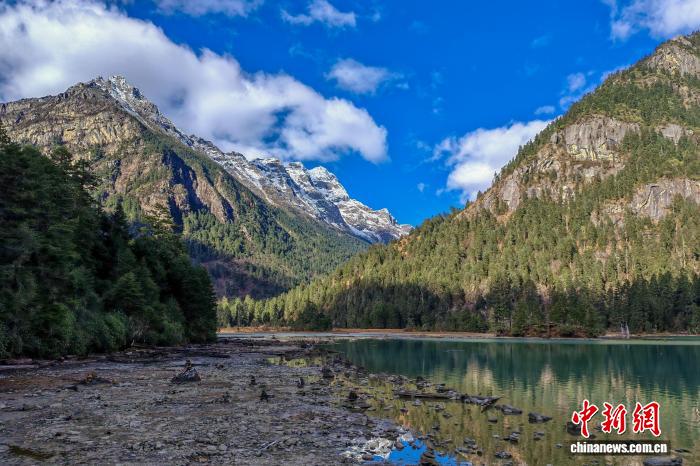
中国科学家:青藏高原隆升影响全球热量分配
Zhong Guo Xin Wen Wang· 2025-11-20 04:07
Core Viewpoint - Chinese scientists propose the "triple polar linkage" hypothesis, suggesting that the uplift of the Tibetan Plateau significantly influenced global heat distribution and climate change processes over millions of years [1][3]. Group 1: Tibetan Plateau Uplift - The Tibetan Plateau's northern region experienced rapid uplift between 12 million and 8 million years ago, altering atmospheric circulation and carbon cycling, which played a crucial role in global climate change [1][3]. - The second Tibetan scientific expedition detailed the uplift process of the Tibetan Plateau, highlighting that the central and southern parts rose rapidly from 40 million to 30 million years ago, while the northern and northeastern regions began significant uplift only from 12 million years ago [3][4]. Group 2: Climate and Ecological Impact - The uplift of the Tibetan Plateau has been linked to significant ecological changes, including the evolution of modern African savanna fauna originating from the northeastern edge of the plateau around 8 million years ago, and Arctic fauna tracing back to the plateau around 6 million years ago [3][4]. - The strong uplift in the northern Tibetan Plateau has driven significant aridification in inland Asia and global cooling, leading to a transformation of ecosystems from forests to deserts and salt lakes [4]. Group 3: Global Climate Dynamics - The uplift enhances the frozen zone, erosion, and dust nutrient transport, which boosts Pacific biological activity and organic carbon burial, contributing to global cooling and polar ice cap expansion [4]. - The northern uplift of the Tibetan Plateau is synchronized with the development of the Arctic ice cap, strengthening of westerlies and winter monsoons, and significant aridification in Asia, establishing the "triple polar linkage" [4]. Group 4: Future Research Directions - Future work aims to accurately reconstruct the uplift process and validate the "triple polar linkage" hypothesis through numerical simulations, which is crucial for understanding Earth's system responses in the context of current global warming [4].
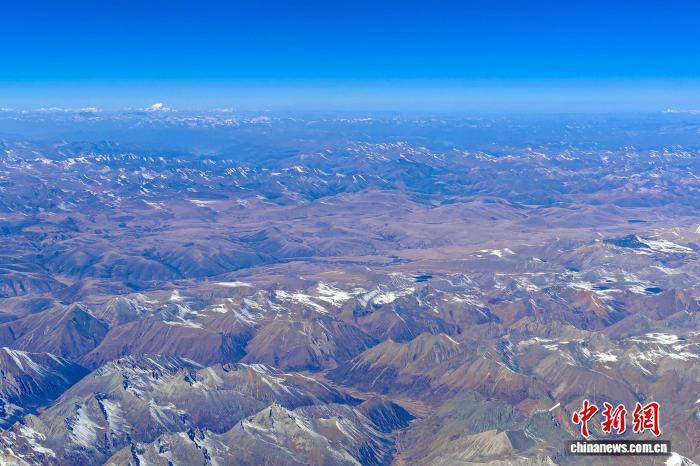
【新华社】探秘第三极!第二次青藏科考新成果发布
Xin Hua She· 2025-11-20 01:21
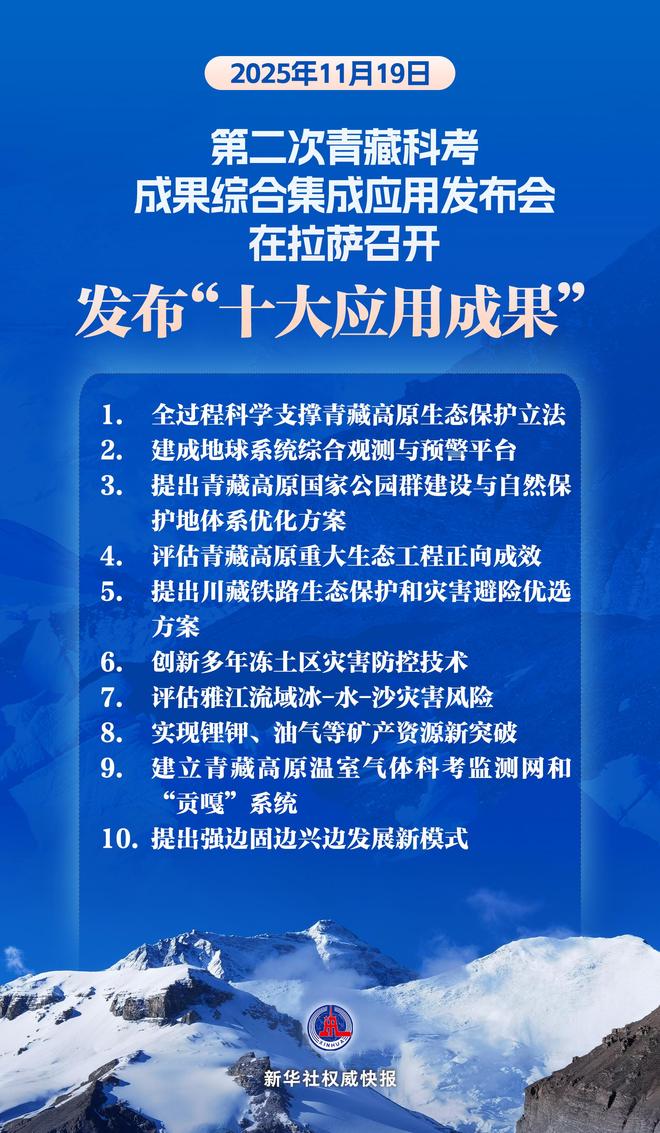
Core Insights - The second comprehensive scientific expedition to the Qinghai-Tibet Plateau has released "Ten Application Achievements," showcasing significant advancements in ecological protection, disaster prevention, resource investigation, and carbon accounting [1][4][6]. Group 1: Application Achievements - The expedition has established a comprehensive observation and early warning platform for the Earth system [4]. - A proposal for optimizing the national park system and natural protection areas in the Qinghai-Tibet Plateau has been put forward [4]. - Innovative disaster prevention technologies for permafrost regions have been developed [4]. - The assessment of major ecological projects in the Qinghai-Tibet Plateau has shown positive results [4]. - A monitoring network for greenhouse gas research has been established [1][4]. Group 2: Environmental Changes and Risks - The expedition identified significant environmental changes in the Qinghai-Tibet Plateau, including warming, increased humidity, and enhanced water supply capabilities [6][7]. - The water supply capacity of the Asian water tower has notably increased, with projected runoff increases of up to 49% by the end of the century [6]. - The expedition revealed a tripling of risks associated with ice avalanches and glacial lake outburst floods in the future [6]. Group 3: Biodiversity Discoveries - New discoveries in biodiversity include the identification of a new group of echo-locating mammals, the pig-tailed mouse, challenging previous beliefs about echo-location in mammals [8][9]. - The study found that bird migration routes can be passed down through genetic memory, providing insights into the relationship between biological behavior and geological changes [9]. - Numerous new species and records were discovered, including previously thought extinct plants and rare animals, highlighting the Qinghai-Tibet Plateau's unique biodiversity [9].
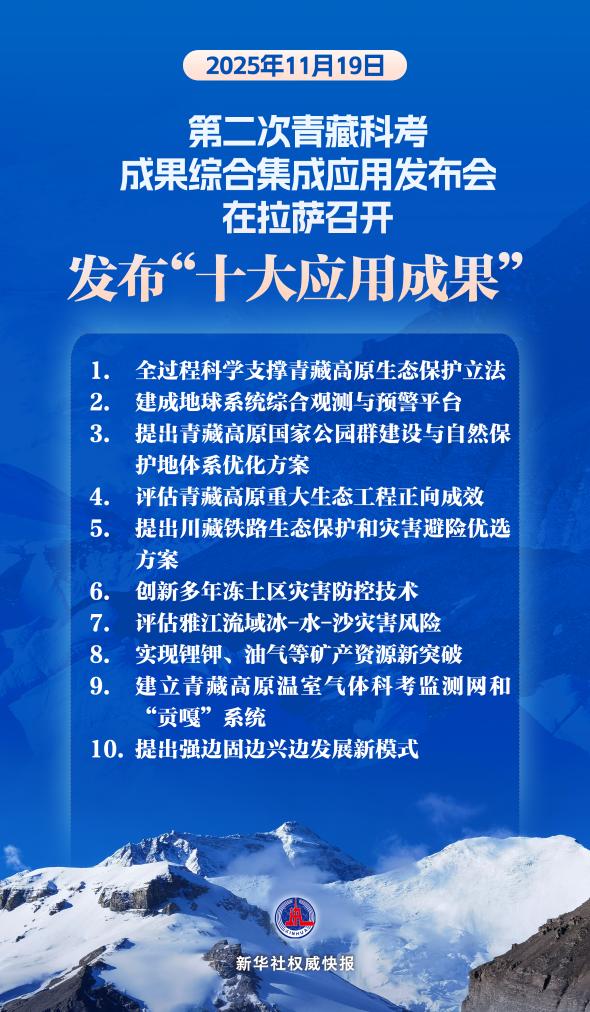
新华鲜报|探秘第三极!第二次青藏科考新成果发布
Xin Hua She· 2025-11-19 14:27
Core Insights - The second comprehensive scientific expedition to the Qinghai-Tibet Plateau has yielded significant findings, showcasing China's advancements in ecological protection, disaster prevention, and resource management [2][4]. Group 1: Key Achievements - The expedition involved over 30,000 participants and 3,000 scientific teams since its initiation in August 2017, focusing on various critical areas such as ecological protection and disaster prevention [2]. - Ten major application results were announced, including the establishment of a comprehensive observation and early warning platform for the Earth system and innovative disaster prevention technologies for permafrost areas [2][4]. - A monitoring system for meteorological disasters along the Sichuan-Tibet transportation corridor was developed, successfully avoiding over 97% of mountain disasters and optimizing over 400 kilometers of transportation routes [3]. Group 2: Environmental Changes - The expedition revealed significant environmental changes in the Qinghai-Tibet Plateau, including warming, increased humidity, and enhanced water supply capabilities, with potential runoff increases of up to 49% by the end of the century [4][5]. - Three major environmental transitions were identified, driven by various geological and climatic factors, impacting the region's ecological balance [4]. Group 3: Biodiversity Discoveries - The expedition made notable discoveries in biodiversity, including the identification of a new group of echo-locating mammals, the pig-tailed mouse, and insights into bird migration patterns influenced by genetic memory [7]. - Several previously thought extinct species, such as the Motuo lily and the Gonge green velvet, were rediscovered, highlighting the plateau's unique biodiversity [7].
第二次青藏科考成果综合集成应用发布
Yang Shi Wang· 2025-11-19 12:51
Core Insights - The second comprehensive application results of the Qinghai-Tibet scientific expedition were released on November 19, highlighting ten key application outcomes in areas such as ecological protection, disaster prevention, and border development [1][3]. Group 1: Key Application Outcomes - The ten application results include scientific support for ecological protection legislation on the Tibetan Plateau and the establishment of a comprehensive Earth system observation and early warning platform [3]. - Proposals for the construction of a national park system and optimization of natural protected areas on the Tibetan Plateau were also presented [3]. Group 2: Environmental Transformation Insights - The second scientific expedition revealed new understandings regarding environmental transformation on the Tibetan Plateau, indicating it is currently undergoing its third phase of environmental transformation characterized by warming and increased humidity [5]. - The expedition achieved the first digital, grid-based, and precise survey of biodiversity on the Tibetan Plateau, resulting in the creation of a comprehensive visual database with over 3,000 newly published species [5].
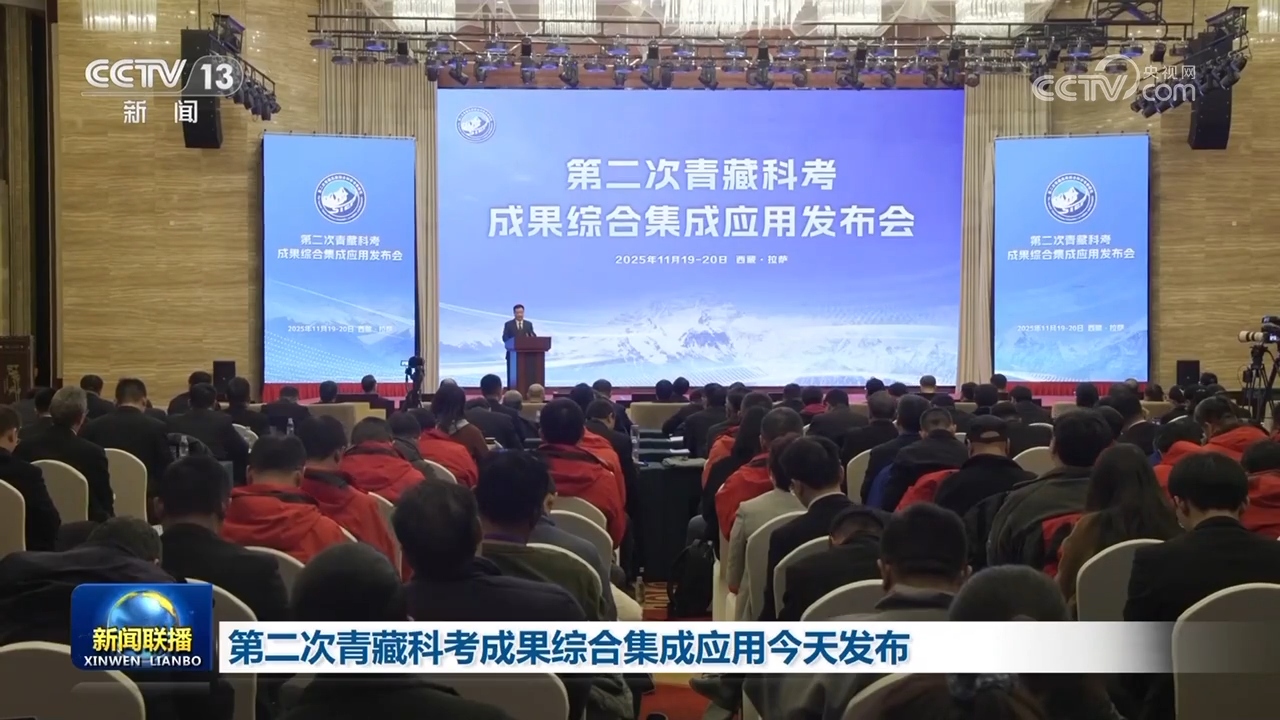
新华社权威快报|第二次青藏科考发布“十大应用成果”
Xin Hua She· 2025-11-19 02:36
Core Insights - The second comprehensive application results of the Qinghai-Tibet scientific expedition were released, highlighting ten key applications in ecological protection, disaster prevention, resource energy investigation, carbon accounting, traffic safety, and border development [3][4]. Group 1: Key Applications - Full scientific support for ecological protection legislation in the Qinghai-Tibet Plateau [3][4] - Establishment of a comprehensive Earth system observation and early warning platform [3] - Proposal for optimizing the construction of national parks and natural protection systems in the Qinghai-Tibet Plateau [3] Group 2: Environmental Transformations - The Qinghai-Tibet Plateau has undergone three significant environmental transformations driven by various factors, including monsoon progression and global changes [3]. - The new environmental transformations present opportunities for sustainable development, enhancing water supply capabilities and carbon sink potential [3]. Group 3: Conference Objectives - The conference aims to promote the integration of major scientific expedition results and accelerate the transformation of scientific achievements into productive forces [4]. - The event will continue until November 20, showcasing the top-level design and representative achievements of the second scientific expedition [4].
【科技日报】第二次青藏科考获四项成果
Ke Ji Ri Bao· 2025-03-31 00:33
Core Insights - The second Qinghai-Tibet scientific expedition has made significant contributions to ecological protection and collaborative development, focusing on four main areas [1][2]. Group 1: Legislative Contributions - The expedition clarified the systematic and unique aspects of ecological protection in the Qinghai-Tibet Plateau, providing scientific support for the legislation of the "Ecological Protection Law of the Qinghai-Tibet Plateau" [1]. - The scientific team participated in all legislative processes, including drafting, research, and finalization, integrating their findings into the law [1]. Group 2: Risk Assessment and Infrastructure Safety - The team assessed disaster risks along the Sichuan-Tibet Railway, ensuring the safety of major engineering projects [2]. - They evaluated risks at 52 critical disaster points along the railway, successfully avoiding over 97% of mountain disasters and optimizing over 400 kilometers of the railway route [1][2]. Group 3: Sustainable Development Initiatives - The expedition established multiple platforms for earth system observation and disaster monitoring, supporting local disaster prevention and promoting integrated environmental protection [2]. - The team proposed a regional model for green and sustainable development, emphasizing the integration of various ecological elements [2]. Group 4: International Collaboration and Climate Change - The team collaborated with international organizations to provide scientific solutions for global ecological protection, publishing significant reports that garnered international attention [2]. - The "Gongga Model" for atmospheric carbon balance was certified by the "Global Carbon Project," contributing to global climate change efforts [2]. Group 5: Overall Achievements - Since its launch in August 2017, the second Qinghai-Tibet scientific expedition has organized over 2,800 teams and more than 30,000 participants, establishing multiple world records and advancing foundational research in earth system science [2].