全球电价差异

Search documents
中国电价,为何仅为德国五分之一?解码多国“居民用电”价格差异
Sou Hu Cai Jing· 2025-08-17 15:23
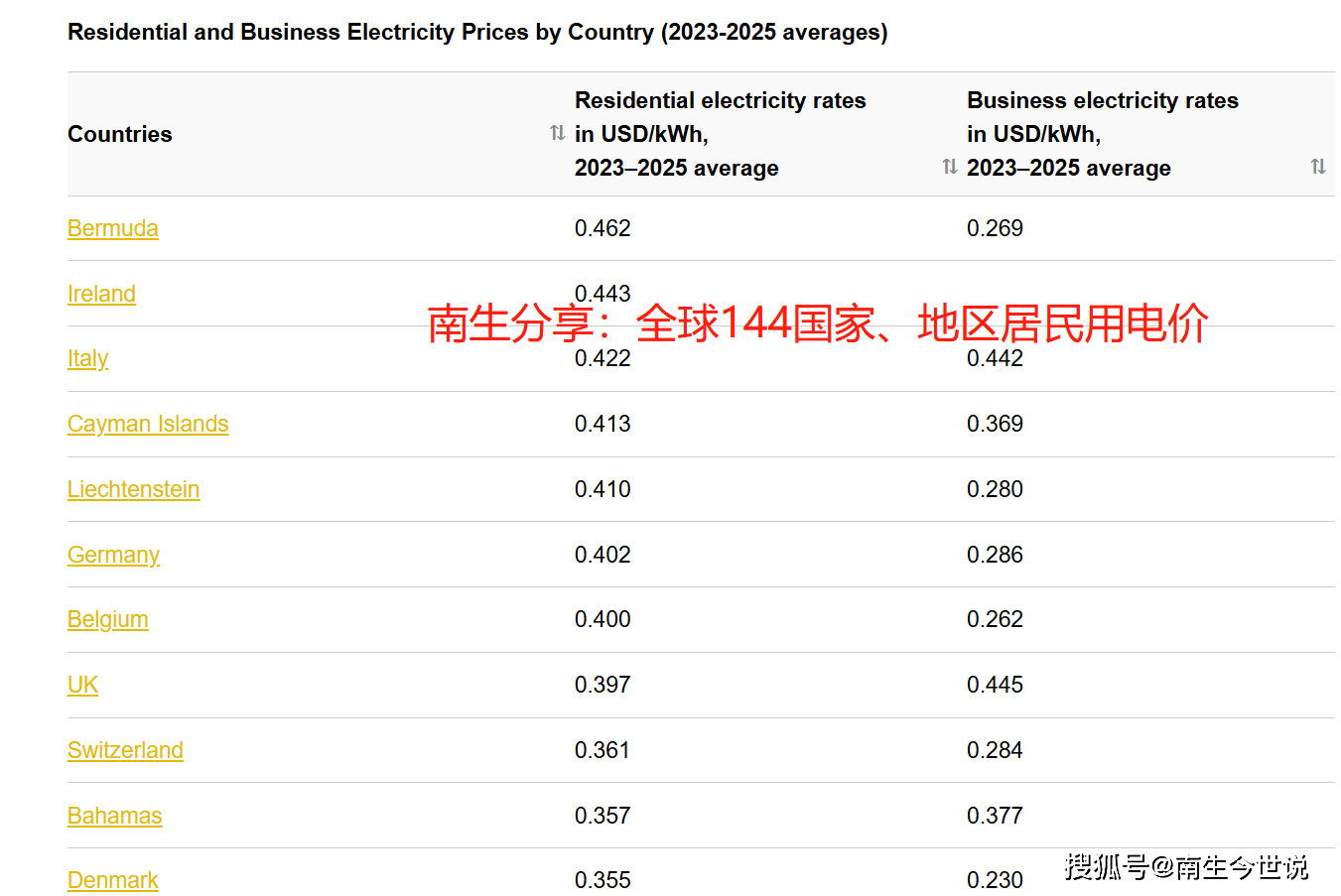
Core Insights - The article discusses the global electricity pricing landscape, highlighting the disparities in residential electricity rates across different countries and regions, influenced by factors such as resource availability, taxation, and government policies [1][2][4]. Group 1: Highest Electricity Prices - The highest residential electricity prices are found in remote islands like Bermuda, Cayman Islands, and Bahamas, primarily due to reliance on fossil fuels and high generation costs [1]. - European developed countries such as Italy ($0.422), Germany ($0.402), Belgium ($0.400), and the UK ($0.397) also feature high electricity prices, attributed to high taxes and distribution costs [2][4]. Group 2: Lowest Electricity Prices - The lowest residential electricity prices are in countries like Iran ($0.003), Ethiopia ($0.006), and Sudan ($0.007), where government subsidies and low income levels necessitate low pricing [2][4]. - Countries rich in energy resources, such as Iran and Libya, subsidize electricity prices, while others like Iraq and Qatar maintain low prices to ensure social stability [2]. Group 3: United States and China - In the U.S., the average electricity price is $0.181, with significant state-level variations; Texas benefits from low prices due to natural gas resources, while California faces higher costs due to environmental policies [4]. - China's electricity price is approximately $0.076, benefiting from government control and limited cost distribution, ranking 39th globally [4][7]. Group 4: Other Notable Countries - Russia has a low electricity price of $0.063, supported by a vast natural gas generation system and government control [7]. - Brazil's electricity price is $0.159, influenced by frequent droughts that necessitate the use of more expensive thermal power [7]. - Australia has a high electricity price of $0.254, despite being a coal-rich country, due to independent state grids and high transmission costs [7]. Group 5: Future Trends - The article suggests that as countries accelerate energy transitions, the electricity pricing landscape may undergo significant changes, reflecting the balance between energy security, economic costs, and environmental protection [11].