
公立医院公益性改革

Search documents
公立医院告别大规模扩张时代
第一财经· 2026-02-12 15:45
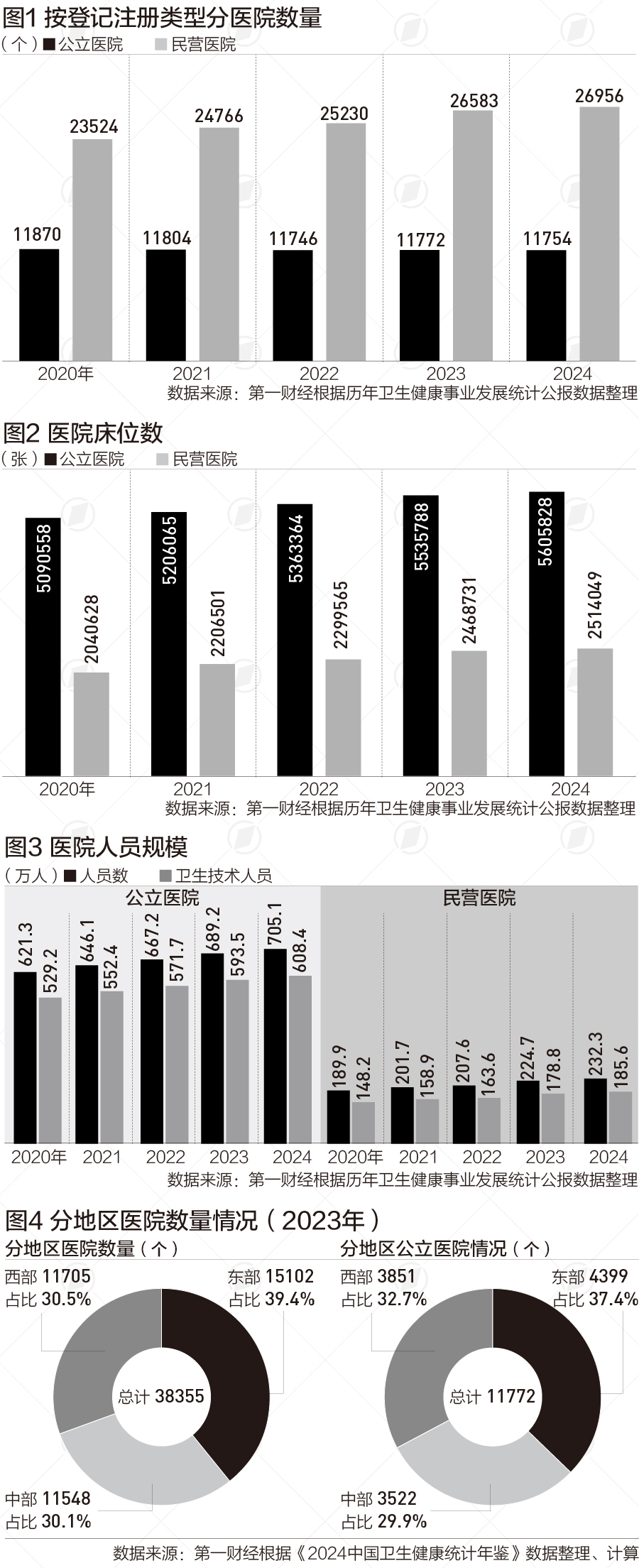
Core Viewpoint - China's public hospitals are entering a phase of reform characterized by a decline in the number of hospitals and beds, driven by demographic changes and healthcare reforms, with a focus on enhancing public welfare and service quality [3][4][12]. Summary by Sections Hospital Quantity and Structure - The number of public hospitals in China has decreased from 11,870 in 2020 to 11,746 in 2022, with a further reduction to 11,728 in 2024, marking a total decrease of 116 hospitals over five years [4][11]. - The proportion of public hospitals among all hospitals has dropped from 33.5% in 2020 to 30.4% in 2024 [4]. Bed Resources and Service Capacity - Public hospitals provided 5.091 million beds in 2020, increasing to 5.606 million by 2024, accounting for 69% of total hospital beds [4]. - The annual increase in the number of beds has shown a downward trend, with 2024 witnessing the first decline in five years, dropping to 70,000 new beds [7]. Utilization and Efficiency - Bed occupancy rates for public hospitals fluctuated between 77% and 86% from 2020 to 2024, with a notable increase to 86% in 2023 before slightly decreasing to 84.8% in 2024 [7][10]. - The average length of stay for discharged patients has been around 8.7 days during the same period [7]. Workforce and Professional Structure - The total number of healthcare personnel in public hospitals rose from 6.213 million in 2020 to 7.051 million in 2024, with technical staff increasing from 5.292 million to 6.084 million [8]. - In 2024, public hospital physicians handled an average of 6.7 patient visits per day and managed 2.2 inpatient days [8]. Regional Disparities - Public hospitals are unevenly distributed across regions, with the eastern region having 4,418 hospitals (37.6% of the total) in 2022, while the western region had 3,808 hospitals (32.4%) [11]. - The disparity in resources leads to significant differences in service quality, particularly in rural and less developed areas, where hospitals face shortages of beds and qualified personnel [12]. Recommendations for Reform - The report advocates for comprehensive reforms focused on enhancing the public welfare nature of hospitals, improving regional collaboration, and strengthening the healthcare workforce [13]. - It emphasizes the need for financial support mechanisms and reforms to curb profit-driven tendencies in public hospitals to ensure equitable access to healthcare services [13].


公立医院告别大规模扩张时代
Di Yi Cai Jing· 2026-02-12 13:03
Group 1 - The core viewpoint of the articles indicates that China's public hospitals are entering a phase of reduced expansion, driven by demographic changes and ongoing healthcare reforms, with a focus on optimizing the scale and structure of tertiary hospitals [1][2][10] - The National Health Commission has mandated the regulation of the scale and development speed of tertiary hospitals to enhance the public welfare, accessibility, and capability of healthcare services [1][2] - The number of public hospitals in China has decreased by 116 over five years, with a notable decline in the number of new hospital beds in 2024, marking the first drop in five years [2][10] Group 2 - Public hospitals account for over 80% of the diagnostic tasks in China's healthcare system, and their operational efficiency and service quality are crucial for the overall health of the population [2][10] - From 2020 to 2024, the total number of public hospitals decreased from 11,870 to 11,746, with a further reduction expected in 2024 [2][10] - The bed count in public hospitals increased from 5.091 million in 2020 to 5.606 million in 2024, representing 69% of the total hospital beds [2][10] Group 3 - The average bed occupancy rate in public hospitals has shown an upward trend, fluctuating between 77% and 86% from 2020 to 2024, with a rate of 84.8% in 2024 [10][11] - The number of healthcare personnel in public hospitals rose from 6.213 million in 2020 to 7.051 million in 2024, with a significant increase in healthcare technical staff [11][12] - The geographical distribution of public hospitals reveals significant regional and urban-rural disparities, with eastern regions having a higher concentration of hospitals compared to central and western regions [13][14] Group 4 - Despite efforts to support grassroots medical facilities, disparities in equipment, technology, and personnel remain significant, affecting the quality of healthcare services in various regions [14][15] - The report highlights a trend towards commercialization in public hospitals, which poses a risk to their public welfare role, necessitating reforms to maintain their focus on equitable healthcare services [15] - Recommendations include deepening public hospital reforms with a focus on public welfare, enhancing regional collaboration, and establishing sustainable financial support mechanisms [15]
医改重点任务:深化公立医院“公益性”改革 | 解读“十五五”
Di Yi Cai Jing· 2025-10-28 13:03
Core Viewpoint - The focus of China's healthcare reform in the next five years will be on deepening public hospital reforms guided by public welfare, as outlined in the "15th Five-Year Plan" proposal, emphasizing the need for a more equitable and efficient healthcare service system [1][2]. Group 1: Key Reforms - The proposal highlights four key reform areas: staffing, service pricing, salary systems, and comprehensive regulation, aimed at enhancing the operational sustainability of public hospitals [2][5]. - The emphasis on public welfare in public hospital reforms aims to improve the accessibility and efficiency of healthcare services for the public [1][4]. Group 2: Staffing and Salary Issues - There is a significant gap in staffing numbers within public hospitals, particularly for doctors and nurses, which affects the stability and quality of healthcare services [3][5]. - The disparity in salary between staff within and outside the official staffing system remains a challenge, necessitating a unified salary structure to motivate healthcare professionals [3][5]. Group 3: Pricing and Financial Sustainability - The reform of medical service pricing is crucial for addressing the financial pressures faced by public hospitals, with a need to optimize the cost distribution among pharmaceuticals, medical supplies, and technical services [3][4]. - Recent data indicates a decline in the proportion of revenue from medical services in some public hospitals, highlighting the need for better recognition of doctors' labor value [4][5]. Group 4: Comprehensive Regulation - The proposed comprehensive regulation reform aims to enhance the synergy between various regulatory bodies, including market regulation and taxation, to support the high-quality development of public hospitals [5]. - The focus on scientific research and innovation within public hospitals is expected to drive advancements in healthcare technology and improve service quality [5].