
全民健康数智化建设

Search documents
健康中国 有你有我
Huan Qiu Wang· 2026-01-09 03:04
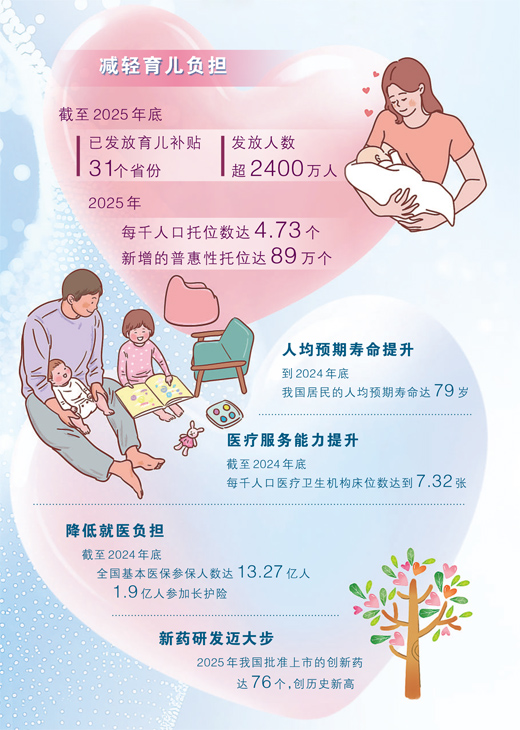
Group 1: Health Policy and Initiatives - The core viewpoint emphasizes the importance of health as a key indicator of socialist modernization and the collective aspiration of the people [1] - The "14th Five-Year Plan" suggests implementing a health-first development strategy to enhance health promotion policies and improve life expectancy and health levels [1] - The establishment of a comprehensive medical service system, disease prevention control system, and medical security system has led to an average life expectancy of 79 years in China [1] Group 2: Childcare Support and Subsidies - The introduction of the childcare subsidy policy aims to alleviate the burden of child-rearing and promote population growth, with a subsidy of 3,600 yuan per child per year for children under three years old [4][5] - As of now, over 24 million people have received childcare subsidies across 31 provinces, with an expected issuance rate of around 80% for the 2025 fiscal year [5] - Local governments are actively facilitating the application process for these subsidies through online platforms and community outreach [2][3] Group 3: Healthcare Innovations and Services - The integration of AI technology in healthcare, particularly in rural areas, has improved diagnostic efficiency and patient management, especially for chronic conditions [6] - The establishment of a three-tiered healthcare service system in urban areas aims to provide seamless medical care from community hospitals to specialized institutions [9][10] - The focus on preventive care and chronic disease management is becoming a priority, with initiatives to create health records and provide personalized health assessments [10] Group 4: Pharmaceutical Innovations - The company has successfully integrated AI into drug development, resulting in significant efficiency gains and the introduction of innovative drugs into the national healthcare system [11][12] - In 2025, seven innovative drugs were added to the national insurance directory, including a groundbreaking treatment for thyroid eye disease that significantly reduces costs [11] - The company is committed to long-term innovation despite challenges, supported by favorable policies and collaborative platforms for clinical trials [12][13]
健康中国 有你有我(新年谈“新”·五位健康工作者和群众谈健康中国建设)
Ren Min Ri Bao· 2026-01-09 01:22
Group 1 - The core viewpoint emphasizes the importance of health in achieving socialist modernization and the collective pursuit of health by the people [1] - The "14th Five-Year Plan" suggests implementing a health-first development strategy and improving health promotion policies to enhance life expectancy and health levels [1] - The construction of a health-oriented society in China is entering a new phase, requiring increased efforts in areas such as childcare, healthcare, health management, and disability care [1] Group 2 - The implementation of the childcare subsidy policy aims to alleviate the burden of child-rearing and promote population development, with a subsidy of 3,600 yuan per child per year [6] - As of now, over 24 million people have received the childcare subsidy across 31 provinces, with an expected issuance rate of around 80% for the 2025 fiscal year [6] - The policy is a significant initiative to provide direct cash support to families, helping to create a more family-friendly environment for raising children [6] Group 3 - The integration of AI technology in healthcare, particularly in rural areas, has improved diagnostic efficiency and patient care for tea farmers, addressing health risks associated with their labor [9] - The establishment of a comprehensive health service system in urban areas focuses on preventive care and chronic disease management, enhancing the overall health of the population [12][13] - The pharmaceutical industry is experiencing growth through innovation, with significant advancements in drug development, particularly in oncology and autoimmune diseases, supported by government policies [14][15]

重庆云阳:村医有了“新身份”,服务更有“新变化”
Xin Hua She· 2025-12-25 00:48
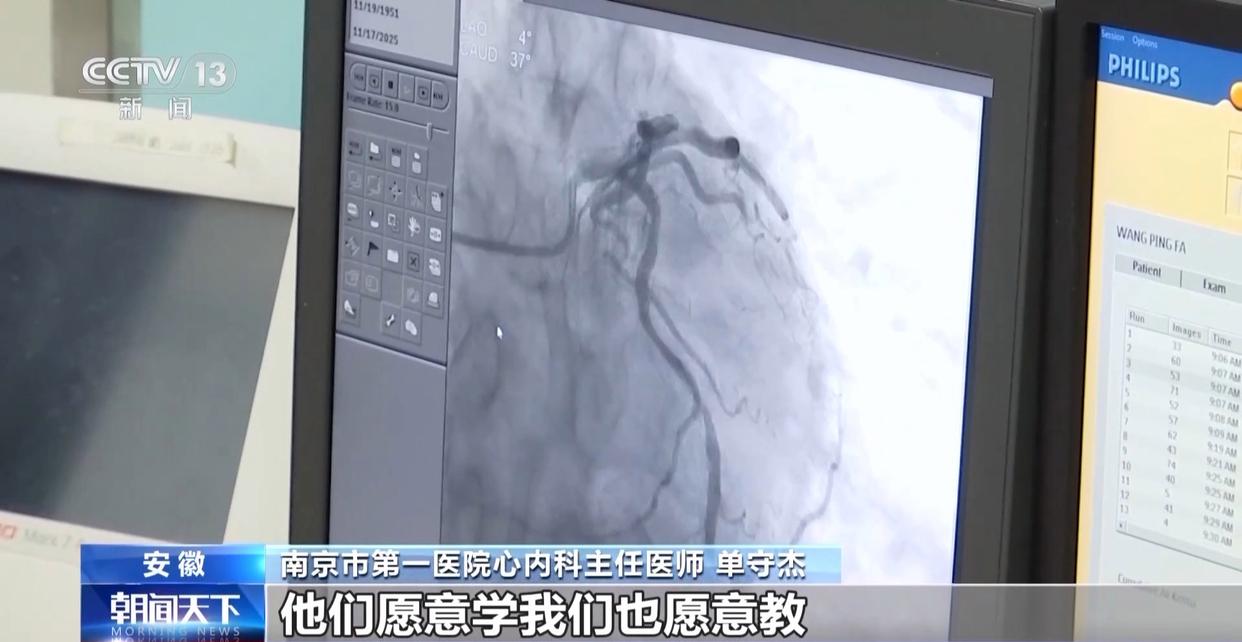
Core Insights - The article discusses the transformation of village doctors in Yunyang County, Chongqing, as they are integrated into the healthcare system through a new management mechanism that enhances their professional status and service capabilities [1][2]. Group 1: New Management Mechanism - Yunyang County has implemented a "town-hired, village-used" management system for village doctors, with over 40 township health centers and community health service centers managing more than 200 village clinics [1]. - This new system aims to address the concerns of village doctors regarding retirement and improve the attractiveness of the profession [1]. Group 2: Enhanced Service Delivery - The restructuring allows village doctors to be closer to patients, with an example showing a doctor moving from a village with a low patient volume to a new location where daily consultations increased from 4-5 to over 40 [2]. - Investments have been made to upgrade village health facilities, including the establishment of a traditional Chinese medicine pharmacy and rehabilitation therapy room, leading to an average of 3,000 patient visits per month at the newly renovated clinic [2]. Group 3: Technological Integration - The "Heart ECG Network" has been established, allowing village clinics to perform ECG tests with real-time diagnosis from county hospitals, significantly improving the diagnostic capabilities of village doctors [3]. - This network not only provides necessary equipment but also ensures that patients can quickly access emergency care if needed, enhancing the overall healthcare response in rural areas [3]. Group 4: Future Developments - The Yunyang Health Commission plans to introduce more supportive policies to stabilize the village doctor workforce and further improve the quality and accessibility of grassroots healthcare services [3].
四中全会精神在基层丨重庆云阳:村医有了“新身份”,服务更有“新变化”
Xin Lang Cai Jing· 2025-12-24 17:47
Core Insights - The article discusses the transformation of village doctors in Chongqing's Yunyang County, highlighting the new employment model that enhances their professional status and service capabilities [1][2]. Group 1: New Employment Model - Village doctors like Li Chongwu have transitioned to formal employment with local health institutions, improving job security and professional recognition [1]. - The "town-hired, village-used" management model has been implemented, allowing for unified management of over 200 village health clinics, thereby strengthening grassroots healthcare services [1]. Group 2: Service Improvement - The restructuring has led to better patient access, with village doctors now serving more patients daily; for instance, Li Chongwu's patient load increased from 4-5 to over 40 per day after relocating [2]. - Investments in facilities, such as the renovation of health clinics and the addition of services like traditional Chinese medicine and rehabilitation therapy, have significantly improved service quality [2]. Group 3: Technological Integration - The establishment of a resource-sharing center for diagnostic services, including a "one network" for ECGs, has enhanced the diagnostic capabilities of village clinics, allowing for quicker patient care [3]. - The integration of telemedicine capabilities enables village doctors to conduct immediate diagnostics and connect patients with higher-level medical facilities for urgent care [3]. Group 4: Future Developments - The local health commission plans to introduce more supportive policies to stabilize the village doctor workforce and further enhance the quality and accessibility of healthcare services in rural areas [3].
【迈向“十五五” 安徽往前赶】“家门口”的健康守护更便捷
Xin Lang Cai Jing· 2025-12-20 00:33
Group 1 - The establishment of a blood dialysis room at the Mudihe Town branch of Lujiang County People's Hospital has significantly improved local healthcare access for chronic kidney disease patients, reducing travel time and costs for treatments [1] - The blood dialysis room, covering an area of 300 square meters and equipped with 6 dialysis machines, addresses the challenges faced by patients in the region [1] - The cost of each dialysis session is 308.65 yuan, but after various reimbursements, low-income patients only pay 2.84 yuan, while regular patients pay around 29 yuan per session [1] Group 2 - The Shuanggang Community Health Service Center in Hefei has implemented the "Smart Medical Assistant" system, enhancing the diagnostic capabilities of healthcare providers through medical knowledge retrieval and big data recommendations [2] - The system has led to a 99.37% standardization rate in electronic medical record writing, significantly reducing the administrative burden on doctors [2] - The training and mentorship model for young village doctors, exemplified by the experience of a young doctor in Saikou Town, is fostering clinical skills necessary for effective primary healthcare delivery [3] Group 3 - The integration of various healthcare initiatives, such as the blood dialysis room, smart diagnostic systems, and talent development programs, illustrates a comprehensive enhancement of primary healthcare services [3] - The goal is to ensure that primary healthcare institutions can effectively manage common and chronic diseases, providing accessible and quality healthcare to local communities [3]
一线见闻丨“家门口”挂上专家号 长三角一体化破解就医难
Yang Shi Xin Wen· 2025-12-06 01:32
Core Viewpoint - The article discusses the integration of healthcare services in the Yangtze River Delta region, emphasizing the need for improved access to quality medical resources for the 160 million residents, particularly in rural areas [1][3]. Group 1: Healthcare Integration Initiatives - The "14th Five-Year Plan" proposes strong foundational projects in healthcare, promoting tiered medical services and the decentralization of quality medical resources to grassroots levels [1]. - The integration strategy has led to cross-province medical consultations, with doctors from major hospitals providing training and support to local healthcare providers, enhancing their capabilities [3][5]. - The establishment of medical alliances and expert consultation centers allows patients to receive specialized care locally, reducing the need for long-distance travel to major cities [5][7]. Group 2: Patient Experience and Accessibility - Patients in rural areas can now access top-tier medical expertise without traveling far, as demonstrated by a patient who received surgery from a Shanghai expert at a local hospital [7][9]. - The integration of digital platforms has streamlined the process of making appointments and handling insurance claims, significantly improving the experience for patients seeking care across provinces [11][13]. - The article highlights the success of direct insurance reimbursement for cross-province medical services, which was a significant pain point for residents seven years ago [13][15]. Group 3: Data Sharing and Technological Integration - The article emphasizes the importance of data sharing among healthcare institutions to eliminate redundant medical tests and improve patient care efficiency [17][19]. - A "smart hospital" initiative is being implemented to integrate medical data across the region, facilitating remote consultations and expert services for patients [17][19]. - The ongoing efforts to unify medical treatment standards and insurance payment mechanisms aim to enhance the overall healthcare experience in the Yangtze River Delta [19][20].
二十届四中全会名词卡片:防治康管全链条服务
Xin Hua Wang· 2025-11-20 03:24
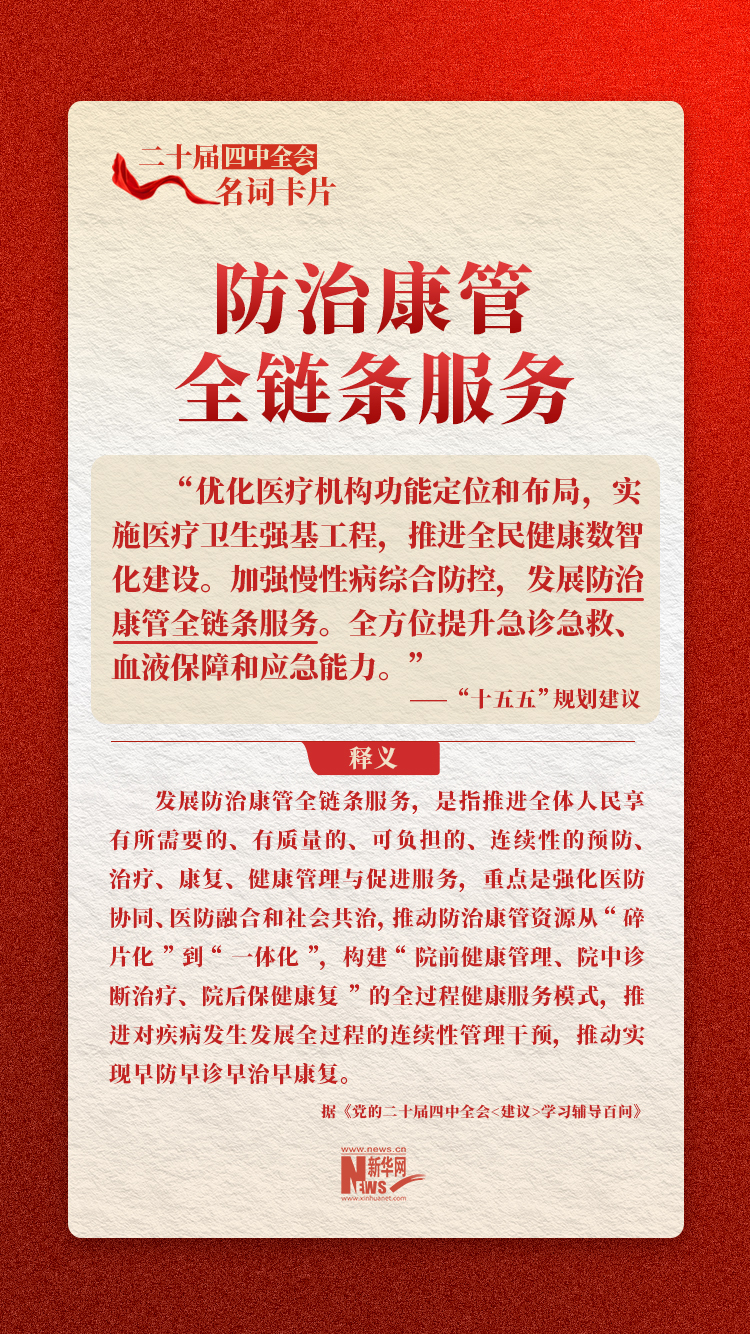
Core Viewpoint - The article emphasizes the importance of developing a comprehensive prevention, treatment, rehabilitation, and health management service system, focusing on chronic disease management and enhancing the integration of healthcare services [4][7]. Group 1: Development of Comprehensive Health Services - The initiative aims to provide accessible, quality, and continuous health services to all citizens, emphasizing the integration of prevention, treatment, rehabilitation, and health management [4][7]. - Key chronic diseases targeted include cardiovascular diseases, cancer, diabetes, and chronic respiratory diseases, with a focus on promoting healthy lifestyles and managing obesity rates [7]. - The article advocates for improved information sharing among different healthcare institutions and departments to enhance service continuity and efficiency [7][8]. Group 2: Integration of Healthcare Institutions - There is a need for systematic integration of acute treatment hospitals, rehabilitation centers, and primary healthcare institutions to ensure seamless service delivery [8]. - The establishment of a tightly-knit medical alliance is proposed to facilitate smooth transitions between different healthcare services and improve patient management [8][9]. - The article suggests enhancing the role of primary healthcare institutions and family doctors in daily health management and post-discharge follow-ups to provide comprehensive care [9].
权威访谈丨在发展中保障和改善民生
Yang Guang Wang· 2025-11-18 05:11
Group 1: Economic and Social Development - The core principle of the "14th Five-Year Plan" is to prioritize people's well-being, emphasizing the need to enhance and improve living standards and promote common prosperity for all [1] - The plan includes policies aimed at promoting high-quality and sufficient employment, as well as establishing a robust social security system [1][2] - The government aims to create more high-quality job opportunities in sectors such as digital economy, high-end manufacturing, and modern services, while also implementing universal insurance and gradually increasing basic pensions for urban and rural residents [1] Group 2: Education and Talent Development - The plan highlights the importance of education as a foundation, technology as a key driver, and talent as a fundamental resource for building a modern socialist country [2] - It emphasizes the need to integrate the education system into the broader national economic and social development framework, focusing on reforming higher education and optimizing discipline settings based on national strategies and regional needs [2] Group 3: Healthcare Improvements - The plan addresses healthcare as a major concern for the public, proposing to strengthen the operational support for grassroots medical institutions and optimize the layout of medical facilities [2][3] - Efforts will be made to enhance the capacity and quality of emergency, general, and infectious disease services, while promoting telemedicine and mobile healthcare solutions [3]
当好百姓健康守门人
Liao Ning Ri Bao· 2025-10-31 01:04
Core Viewpoint - The article emphasizes the importance of grassroots healthcare services and the implementation of the spirit of the 20th Central Committee's Fourth Plenary Session in improving local health services [1] Group 1: Grassroots Healthcare Initiatives - The session highlighted the need to promote hierarchical diagnosis and treatment and implement strong foundational healthcare projects, reflecting a high level of attention to grassroots medical institutions [1] - The health center is responsible for medical, preventive, and public health services for over 80,000 residents, aiming to provide accessible and affordable healthcare [1] - There is a strong commitment from healthcare workers to enhance both soft and hard infrastructure to gain the trust of the public [1] Group 2: Technological Integration in Healthcare - The discussion included the necessity of utilizing external resources and effectively implementing "national health digital construction" to improve remote consultation services [1] - The goal is to ensure that residents can receive expert medical care without traveling long distances [1] Group 3: Focus on Vulnerable Populations - The healthcare workers emphasized the importance of focusing on key demographics, particularly the elderly, who are prone to chronic conditions such as hypertension and diabetes [1] - There is a commitment to enhancing elderly health care, integrating medical and nursing services, and providing dignified care [1] Group 4: Future Goals and Community Engagement - The health center plans to strengthen various medical departments and develop specialized treatment projects, aiming to improve the accessibility of medical services [1] - The overarching goal is to become a trusted health guardian for the community, ensuring that residents can receive quality care close to home [1]
医改重点任务:深化公立医院“公益性”改革 | 解读“十五五”
Di Yi Cai Jing· 2025-10-28 13:03
Core Viewpoint - The focus of China's healthcare reform in the next five years will be on deepening public hospital reforms guided by public welfare, as outlined in the "15th Five-Year Plan" proposal, emphasizing the need for a more equitable and efficient healthcare service system [1][2]. Group 1: Key Reforms - The proposal highlights four key reform areas: staffing, service pricing, salary systems, and comprehensive regulation, aimed at enhancing the operational sustainability of public hospitals [2][5]. - The emphasis on public welfare in public hospital reforms aims to improve the accessibility and efficiency of healthcare services for the public [1][4]. Group 2: Staffing and Salary Issues - There is a significant gap in staffing numbers within public hospitals, particularly for doctors and nurses, which affects the stability and quality of healthcare services [3][5]. - The disparity in salary between staff within and outside the official staffing system remains a challenge, necessitating a unified salary structure to motivate healthcare professionals [3][5]. Group 3: Pricing and Financial Sustainability - The reform of medical service pricing is crucial for addressing the financial pressures faced by public hospitals, with a need to optimize the cost distribution among pharmaceuticals, medical supplies, and technical services [3][4]. - Recent data indicates a decline in the proportion of revenue from medical services in some public hospitals, highlighting the need for better recognition of doctors' labor value [4][5]. Group 4: Comprehensive Regulation - The proposed comprehensive regulation reform aims to enhance the synergy between various regulatory bodies, including market regulation and taxation, to support the high-quality development of public hospitals [5]. - The focus on scientific research and innovation within public hospitals is expected to drive advancements in healthcare technology and improve service quality [5].