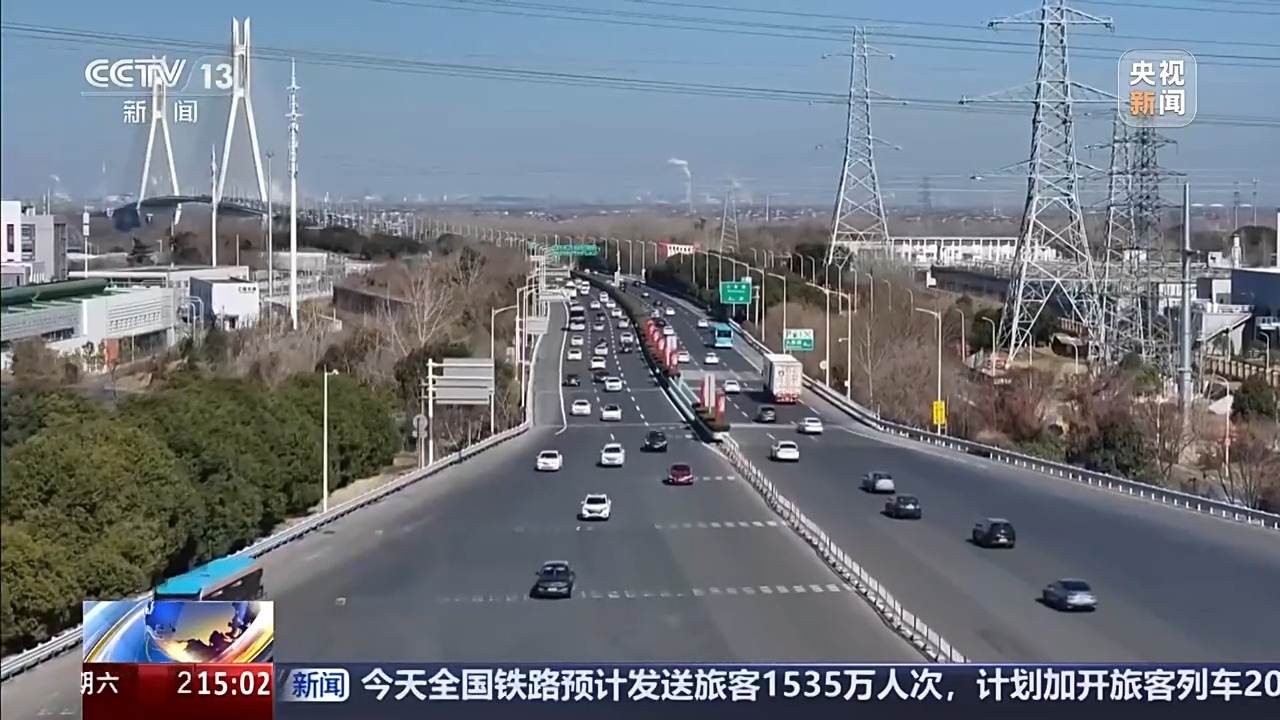
公路网流量

Search documents
春节假期公路网流量呈现“前低后高”态势
Xin Lang Cai Jing· 2026-02-15 16:55
Core Insights - The traffic flow on the national highway network during the 2026 Spring Festival holiday is expected to exhibit a "low at the beginning and high at the end, with tidal fluctuations" pattern [1] - The holiday period is from February 15 to February 23, lasting a total of 9 days [1] Traffic Flow Predictions - Daily average traffic flow on highways is projected to be approximately 55 million vehicles, representing a year-on-year increase of 4.5% [1] - The peak traffic day is expected to be on the sixth day of the lunar new year, with a flow of 71 million vehicles, about double the average daily flow [1] Traffic Flow Patterns - A regular pattern in traffic flow is anticipated: a low point from New Year's Eve to New Year's Day, followed by a rapid increase starting from the second day of the new year, with significant growth on the fifth day and a return peak on the sixth day [1] - Although there is a decline on the seventh day, the traffic will still remain at a high level [1] Congestion Times - Congestion is expected to peak during specific time slots: 9:00 AM to 12:00 PM and 2:00 PM to 7:00 PM [1] Vehicle Composition - Passenger cars will dominate the traffic composition, accounting for over 99% of the total vehicle count, with self-driving trips for family visits being the core demand [1] - The proportion of travel for tourism is expected to increase [1] Truck Traffic Trends - Truck traffic is anticipated to decrease before the holiday, reaching a low on New Year's Day, and gradually recover after the holiday [1] New Energy Vehicle Flow - Daily average traffic for new energy vehicles is expected to reach 12 million, making up 22% of the total traffic, with peak days reaching 15.3 million [1] Provincial Road Traffic - Traffic on ordinary national and provincial roads is expected to remain stable, with an average daily traffic volume of about 8,250 vehicles, reflecting a year-on-year increase of 3.5% [1] - The proportion of passenger vehicles on these roads is approximately 81%, with the lowest traffic observed on New Year's Day [1]
春节假期全国公路网流量“前低后高” 正月初六迎来7100万辆次返程高峰
Jing Ji Guan Cha Bao· 2026-02-15 15:02
Core Viewpoint - The report from the Ministry of Transport indicates that the national highway network traffic during the 2026 Spring Festival will exhibit a "front low, back high" pattern, with significant fluctuations in traffic volume, peaking at 71 million vehicles on the return trip day, which is about double the normal traffic volume [1][3]. Group 1: Traffic Volume Predictions - The average daily traffic volume on national highways during the Spring Festival is expected to be approximately 55 million vehicles, representing a 4.5% increase compared to the same period in 2025 [1]. - The peak traffic day is anticipated to be the sixth day of the lunar new year, with an expected volume of 71 million vehicles [1][3]. - Traffic volume will show a "tide-like" fluctuation, with low points on New Year's Eve and the first day of the new year, followed by a rapid increase starting from the second day [1][3]. Group 2: Vehicle Types and Travel Patterns - Small passenger cars are expected to dominate highway traffic, accounting for over 99% of passenger vehicles, with self-driving trips remaining the core demand [2]. - The report predicts that the daily average traffic volume of new energy vehicles will reach 12 million, making up about 22% of the total daily traffic, with a peak of approximately 15.3 million on the sixth day [3]. - The flow of freight vehicles is expected to remain low throughout the holiday, with a gradual recovery post-holiday [2]. Group 3: Traffic Management and Public Advisory - The report emphasizes the importance of planning travel routes in advance and utilizing various channels for real-time traffic updates and road conditions [4]. - It advises travelers to be aware of free passage times on toll roads and to choose appropriate lanes to avoid congestion at toll stations [5][6]. - Attention to weather conditions is also highlighted, recommending that drivers adjust their speed and maintain safe distances during adverse weather [4].
春节假期公路网运行情况如何?一文了解最新报告顺畅出行
Yang Shi Xin Wen· 2026-02-14 10:05
Core Insights - The report from the Ministry of Transport indicates that the national highway network traffic during the Spring Festival holiday will exhibit a "low at the beginning, high at the end, and tidal fluctuations" pattern [1] Traffic Volume Analysis - The average daily traffic on national highways during the Spring Festival is expected to be approximately 55 million vehicles, representing a 4.5% increase compared to the same period in 2025 [1] - The peak traffic day is anticipated to be the day before the end of the holiday (February 6), with an expected volume of 71 million vehicles, about double the normal daily traffic [1] Travel Patterns - Over 99% of vehicles on national highways during the holiday are expected to be small passenger cars, with self-driving trips for family visits remaining the core demand [3] - The proportion of travel for tourism is expected to increase compared to previous years, putting significant pressure on transportation in popular tourist cities [3] Congestion Hotspots - The report identifies several highway segments prone to congestion during the holiday, including: - Xuguang Expressway in Hunan - Huhang Expressway in Hubei - Jinghu Expressway in Jiangsu - Jiguang Expressway in Guangdong - Hukun Expressway in Hunan - Shenqin Expressway in Guangxi - Chengba Expressway in Sichuan - Xinyang Expressway in Jiangsu [4] Busy Toll Stations - The report lists toll stations likely to experience heavy traffic, including: - Jinghong East Toll Station on Kunming-Mohe Expressway - Baoji Toll Station on Baoji Bypass Expressway - Xuzhou East Toll Station on Huai-Xu Expressway [5] - Additional busy toll stations include: - Xingjiawan Toll Station on Xingtai-Hengshui Expressway - Chang'an Road Toll Station on Xi'an Ring Expressway - Kaizhou Toll Station on Wankai Expressway - Xuejiabawan East Toll Station on Rongwu Expressway - Gao Dong Toll Station on Shanghai Ring Expressway [6] New Energy Vehicle Trends - The report predicts a significant increase in the flow of new energy vehicles during the Spring Festival, with an average daily flow of 12 million vehicles, accounting for about 22% of total daily traffic [9] - On peak days, such as February 6, the flow of new energy vehicles is expected to reach approximately 15.3 million [9] Free Passage Policy - The free passage policy for small passenger cars (seven seats or fewer) is effective from February 15, 0:00 to February 23, 24:00, with the time based on when the vehicle exits the highway [11] - Drivers are advised to exit the highway at nearby toll stations before the free period ends to avoid safety incidents due to rushing or speeding [11]