共建共治

Search documents
观山湖区金阳街道党群合力“大扫除”
Xin Lang Cai Jing· 2026-01-28 19:57
Group 1 - The article discusses a community initiative in Guanshanhu District, Jin Yang Street, focusing on a large-scale environmental sanitation campaign called "Welcoming the New and Removing the Old" [1] - Various stakeholders, including party organizations, property companies, local units, and volunteers, collaborated to enhance community cleanliness and promote environmental awareness [1] - The campaign involved multiple communities, with specific activities such as cleaning main roads, dead corners, and green belts, while encouraging residents to participate actively in community governance [1] Group 2 - The Li Hai community worked with property management and volunteers to clean key areas and promote environmental knowledge among residents [1] - The Jin Hu community utilized the "Double Reporting" mechanism to mobilize community party members and volunteers for effective community governance [1] - The Bi Hai community organized joint efforts with residents to remove illegal advertisements and debris, significantly improving the appearance of the neighborhood [1]
五载奋进 谱写城市管理首都样本
Bei Jing Ri Bao Ke Hu Duan· 2025-12-18 22:53
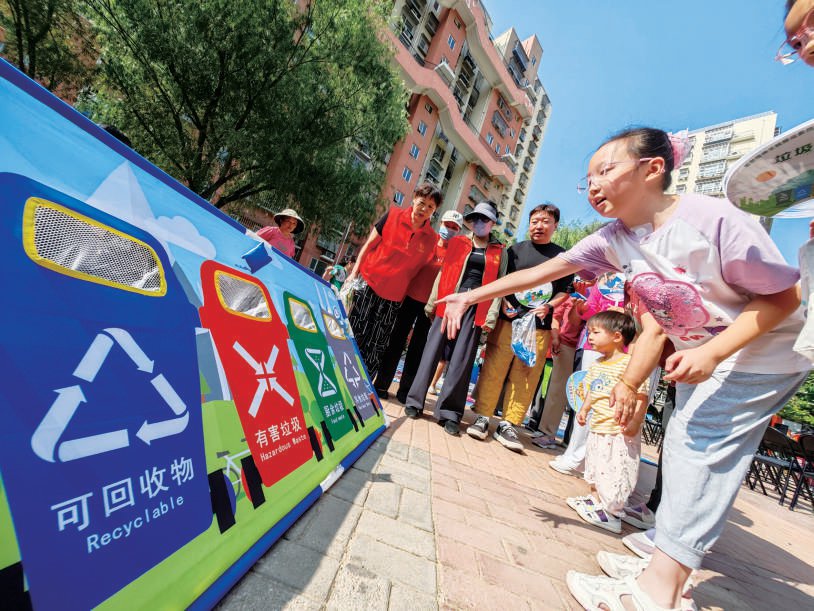
Core Viewpoint - During the "14th Five-Year Plan" period, Beijing's urban management has focused on improving the quality of life, ensuring operational safety, and enhancing public services, guided by Xi Jinping's thoughts and the spirit of the 20th National Congress of the Communist Party of China [1] Group 1: Urban Environment Improvement - The capital's urban environment quality has continuously improved over the past five years, with significant enhancements in key areas and important nodes, creating a clean, orderly, and culturally rich urban landscape [3][4] - A total of 89 municipal environmental quality improvement projects have been implemented, optimizing the urban environment and highlighting cultural charm [3] - The city has completed the governance of 156,000 urban furniture items, contributing to a clearer and more organized urban environment [3] Group 2: Waste Management and Recycling - The daily municipal solid waste treatment volume has decreased from 27,700 tons to 21,700 tons, achieving a reduction rate of over 20% [6] - The recycling rate of household waste has reached 42%, surpassing the planned target for the "14th Five-Year Plan" [7] - The city has enhanced the capacity for waste incineration and kitchen waste treatment to 31,000 tons per day, achieving zero landfill for original waste ahead of schedule [7] Group 3: Energy Transition and Resilience - Beijing has established a modern energy security network with enhanced resilience and optimized energy structure, achieving a power supply reliability rate of 99.995% [10] - The city aims to reduce coal consumption to around 300,000 tons by 2025, with significant progress in achieving "coal-free" areas [11] - The construction of hydrogen fuel cell vehicle refueling stations has been promoted, with 19 stations operational [11] Group 4: Public Services and Community Engagement - The city has implemented 4,791 "winter disease summer treatment" projects to improve heating services, resulting in increased public satisfaction [16] - A total of 13.53 million urban components have been integrated into a digital management system, enhancing governance efficiency [15] - Community engagement has been significantly improved, with volunteer services contributing millions of hours to urban management [17] Group 5: Future Directions - The next phase will focus on creating high-quality public spaces, ensuring energy efficiency, and enhancing the accessibility of public facilities, contributing to the construction of a modern, harmonious, and livable city [19]

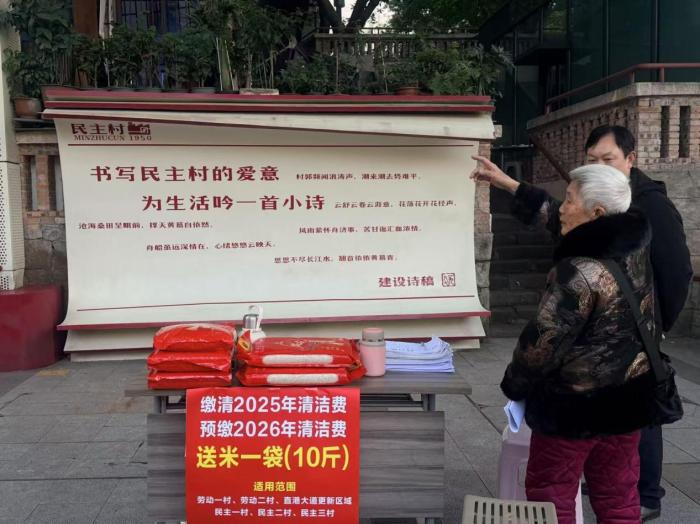
在国营老厂当“主理人”:重庆民主村靠“融”字经翻身
Zhong Guo Xin Wen Wang· 2025-12-02 03:51
Core Viewpoint - The transformation of Chongqing's Democracy Village into a vibrant community hub is driven by resident involvement and innovative governance, showcasing a successful urban renewal project that integrates local culture and economic revitalization [1][3][7]. Group 1: Community Engagement and Governance - The "Four-party Council" mechanism has been established, involving community party committees, district-level companies, urban management, and resident representatives, leading to over 30 meetings and the collection of more than 400 suggestions [3]. - Residents, particularly the elderly, have taken on roles as informal supervisors, ensuring that community issues are addressed promptly, exemplifying a collaborative approach to community management [3]. Group 2: Preservation of Local Culture and Crafts - The renovation has preserved traditional artisans such as cobblers and barbers, creating six "Beneficial Craftsmen Workshops" with 13 fixed stalls, allowing these crafts to thrive in a modern setting [4]. - The community has retained 164 yellow fig trees, which are significant to residents' memories, highlighting the importance of maintaining local heritage during urban development [6]. Group 3: Economic Revitalization - The area has attracted social capital to develop a unique commercial street and cultural creative spaces, significantly boosting local economic activity [7]. - The district now receives 2 million visitors annually, generating over 100 million yuan in tourism revenue, with local businesses forming a "Democracy Village Chamber of Commerce" comprising over 100 members [8].