冷暖快速切换

Search documents
局地降温超20℃!春节前寒潮来袭,冷暖快速切换,暴雪大雨也上线
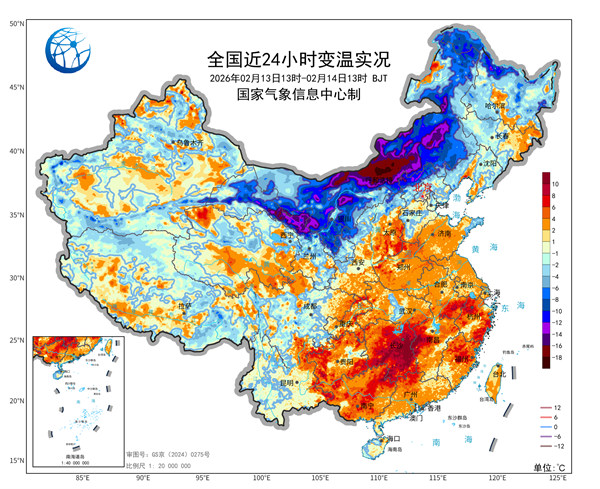
Yang Shi Wang· 2026-02-14 10:46
Core Viewpoint - A significant cold wave is impacting China, leading to rapid temperature fluctuations and widespread precipitation, particularly affecting the central and eastern regions as the Spring Festival approaches [1][5]. Group 1: Temperature Changes - The cold wave has already begun to affect regions such as Gansu, Ningxia, and Inner Mongolia, with temperature drops exceeding 10°C in many areas [3]. - Major temperature declines are expected tomorrow, with some areas in Henan, Shandong, and Jiangsu experiencing single-day drops of over 10°C, and localized drops reaching 20°C [4]. - On the eve of the Spring Festival (February 16), the core area of temperature decline will shift southward, with regions like Guizhou, Hunan, Jiangxi, Zhejiang, and Anhui seeing drops between 12°C and 22°C [4]. Group 2: Precipitation and Weather Conditions - A large-scale rain and snow event is anticipated, with the most intense precipitation occurring tomorrow, particularly in regions such as southeastern Tibet, central western Sichuan Plateau, northern Hubei, and western Henan, where heavy snow is expected [12]. - On February 16, the intensity of rain and snow will decrease, but areas like eastern Tibet and parts of Inner Mongolia will still experience light to moderate snow or sleet [13]. - By February 17 (the first day of the Lunar New Year), regions including Guizhou, Guangxi, Hunan, Jiangxi, and Fujian will continue to see overcast and rainy weather [14]. Group 3: Temperature Recovery - Following the cold wave, temperatures are expected to rise quickly starting February 17, with most areas experiencing a warming trend until February 21, when no significant cold air activity is forecasted [10]. - By February 20 (the fourth day of the Lunar New Year), many southern regions will see maximum temperatures return to above 20°C, with the 10°C isotherm moving north into southern Northeast China [11].