几何波导

Search documents
从 Meta 拆解、苹果眼镜爆料,看「不科幻但好用」的 AR 眼镜
3 6 Ke· 2025-10-16 02:58
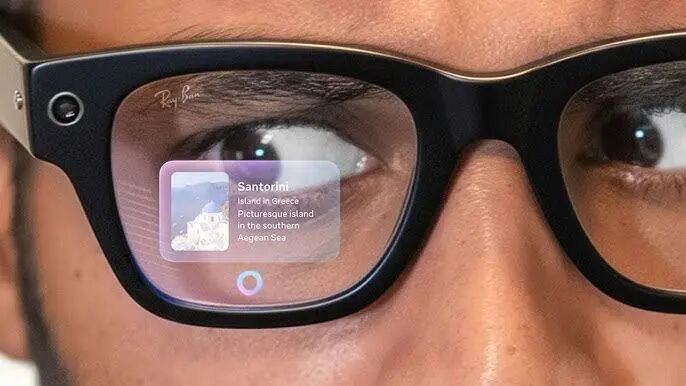
Core Viewpoint - The AR glasses market is rapidly evolving, with major tech companies like Meta, Apple, and Google competing to develop more practical and advanced solutions, marking a shift from early-stage products to a phase of "explosive growth" in the coming years [2][40]. Group 1: Product Development and Technology - Meta's Ray-Ban Display has garnered attention as a leading AR glasses product, effectively addressing issues like light leakage that plagued earlier models [3][5]. - The Ray-Ban Display utilizes a geometric waveguide technology, which significantly reduces light loss compared to traditional diffraction waveguides, allowing for a clearer display [9][21]. - The geometric waveguide's design resembles a periscope, improving light transmission efficiency and minimizing the visibility of the screen to outsiders [18][22]. Group 2: Market Positioning and User Experience - The current AR glasses are seen as a potential replacement for smartphones, but they must overcome user discomfort associated with visible technology, such as light leakage affecting social interactions [23][28]. - Apple's upcoming AR glasses are expected to feature a simplified version of the visionOS, designed to work in tandem with iPhones and Macs, rather than as a standalone device [29][33]. - The integration of AR glasses with existing Apple products aims to enhance user experience while addressing performance limitations due to the compact form factor of glasses [37][39]. Group 3: Innovations and Challenges - Quark's AI glasses introduce a "replaceable battery" design, allowing users to swap batteries easily, which addresses the common issue of battery life in AR devices [40][42]. - The industry is exploring solutions for adjusting optical prescriptions in AR glasses, with XREAL working on a transparent gel that can modify lens curvature [44][45]. - The current advancements in AR glasses technology reflect a transitional phase, moving from rudimentary devices to more functional products, akin to the evolution of smartphones from basic models to advanced devices [47].