创意产业发展

Search documents
二十国集团文化工作组南非会议通过《夸杜库扎文化宣言》
Xin Hua She· 2025-10-30 06:34
Core Viewpoint - The G20 Cultural Working Group Ministerial Meeting concluded in KwaDukuza, South Africa, adopting the KwaDukuza Cultural Declaration, which provides a framework for cooperation among members in areas such as cultural heritage protection, creative industry development, cultural diversity promotion, and international dialogue [1] Group 1: Declaration Highlights - The declaration establishes four priority guiding principles: enhancing cultural heritage protection and restitution, integrating cultural policies with socio-economic strategies, leveraging digital technology for cultural development, and addressing the interplay between culture and climate change [1] - It emphasizes that culture is a key force in bridging social divides, promoting inclusive development, and driving sustainable growth [1] Group 2: Global Cooperation and Policy Recommendations - The declaration calls for strengthened global collaboration to combat the illegal trafficking of cultural property, improvement of national policy frameworks, and increased public investment in the cultural sector to enhance heritage protection and development vitality [1] - It encourages the innovative use of digital technology to transform cultural exchange methods and align cultural policies with socio-economic and climate action strategies, providing insights and solutions for global challenges [1] Group 3: Future Implications - The outcomes of this meeting will be incorporated into the agenda of the upcoming G20 Leaders' Summit scheduled for November in Johannesburg [1]
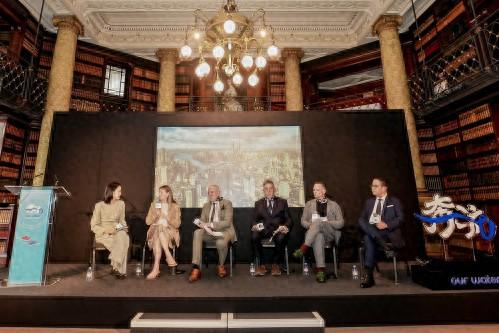
创新共生:中英商界共话产业集聚与世界滨水区合作
Xin Lang Cai Jing· 2025-06-11 04:32
Core Insights - The roundtable discussion focused on the theme of "Creative Symbiosis in Urban Renewal," highlighting the development of the creative industries in China and the UK, particularly in waterfront areas [1][19] - The event emphasized the importance of low-carbon transformation and the opportunities it presents for the creative industry [1] Group 1: Waterfront Development - The emotional connection between people and water is significant, as rivers often lead to economic, cultural, and creative prosperity [3] - Julia Solodova highlighted the transformation of the Suzhou River area into a vibrant urban space, emphasizing keywords like "renewal," "multifunctional," and "foresight" [4] - The Suzhou River area has evolved from a heavy industrial zone to a green, lively urban space with pedestrian areas and public art installations, enhancing community interaction [4] Group 2: International Collaboration - Shanghai and Liverpool share commonalities in heritage, transformation, and connectivity, which shape their urban identities [7] - The partnership between Liverpool and Shanghai is crucial for expanding trade opportunities and fostering collaboration in urban development [16] - The roundtable participants discussed the need for a "joint innovation platform" to enhance cooperation in smart city initiatives and waterfront regeneration [16] Group 3: Sustainable Development - The ecological value of waterfront spaces is increasingly recognized, with a call for operators to consider the health of the entire watershed and engage citizens in finding solutions [9] - John Thackara emphasized the importance of multidisciplinary collaboration for sustainable development in waterfront areas, with universities playing a key role [17] - The roundtable participants proposed that waterfront areas should focus on resilience, sustainability, and the integration of digital technologies [15][19] Group 4: Future Vision for Waterfront Areas - The "World-Class Waterfront Development Initiative" was launched, aiming for interconnected global waterfront cities to address common challenges [19] - Six characteristics of ideal waterfront areas were proposed: human-centered design, flexible functionality, cultural representation, climate resilience, technological integration, and community-driven governance [19] - The ideal waterfront vision includes a blend of talent and industry, cultural and ecological integration, and a globalized vibrant environment [20]